
Frequent interview indexer
You often switch between playback, pausing and typing while listening, and want keys that work with your software. Audacity lets users customise shortcuts; check what your own software offers too.


Start by looking at the shortcuts in your indexing software and the commands you repeat most often. Programmable keys are most useful when standard shortcuts aren’t enough. Then weigh typing comfort, noise and layout against the space on your desk and any configuration software you may need. A keyboard won’t create a local backup for you: manage file saving and copying separately in your software and storage workflow.
You often switch between playback, pausing and typing while listening, and want keys that work with your software. Audacity lets users customise shortcuts; check what your own software offers too.
You type for long stretches and pay particular attention to your posture, the layout and how the keys feel. A different keyboard doesn’t remove the need to break up long periods of screen work.
You store recordings or project files on your own storage and want to know what each key does, as well as how to make separate local copies.
Start with the shortcuts you need in your indexing software. Then compare the layout and typing comfort, and plan local copies as a separate step.
| Concern | What should you check? | Who is this important for? |
|---|---|---|
| Shortcuts for indexing | Check your software’s shortcuts and make sure you can assign the commands you need to keys. | If I often repeat the same playback and indexing steps while listening, I want to do them quickly; around 29% of consumers give repeated actions top priority. |
| Comfort during long sessions | Compare the keyboard’s shape, width and position on your desk, and remember to vary your work too. | For long writing sessions, I want a layout and key feel that suit my workspace; around 23% of consumers put typing comfort first. |
| Local files and copies | Check where your software saves projects and how to make a separate local copy. | If I want to keep recordings and project files myself, I need to manage storage and backups separately from the keyboard; around 18% of consumers make this local workflow their top priority. |
| Quiet typing | Check what type of keys the model has and whether their feel and sound suit your workspace. | In a shared or quiet space, I want to type without unnecessarily disturbing others; around 12% of consumers put quiet typing first. |
| Layout and connection | Compare the key layout with your input language and check that the connection is compatible with your computer. | If I enter numbers or switch between devices, I want a suitable layout and connection; around 18% of consumers give this combination top priority. |
Saving a project and keeping a separate local copy of it are two different things.
First, decide where your working file will be saved and how you’ll make a separate copy. Only then consider whether an extra shortcut would be useful.
Separate copies need extra storage space and take time to create and check.
Programmable keys or macros don’t guarantee that your indexing software supports the command you want, or that the required configuration software will work on your computer.
First check your software’s shortcuts, then test whether the required software and key settings work for you.
A compact keyboard may not have a separate number pad, while a split keyboard changes your hand position and may take some getting used to.
Think about how many numbers, timecodes and words you enter, and compare the layout with the space on your desk.
If you enter lots of numbers but your chosen keyboard doesn’t have a number pad, you may need a separate one.
Compare the MX Keys S for customisable productivity keys with the ERGO K860 if you’re considering a split design with an integrated number pad.
The S-board 840 is a compact option to compare if a separate number pad isn’t a key requirement.
According to Trust, the Ody II is a straightforward wireless keyboard for anyone who values quiet typing over extensive programmability.
The PERIBOARD-817 is a full-size model to compare if you’re looking for several connection options and a low-profile key feel.
The V1 Max is a customisable mechanical option if remapping and macros matter to you.
This selection at Joybuy is designed for interview indexing, from compact programmable keyboards to models for quiet typing or entering lots of numbers.
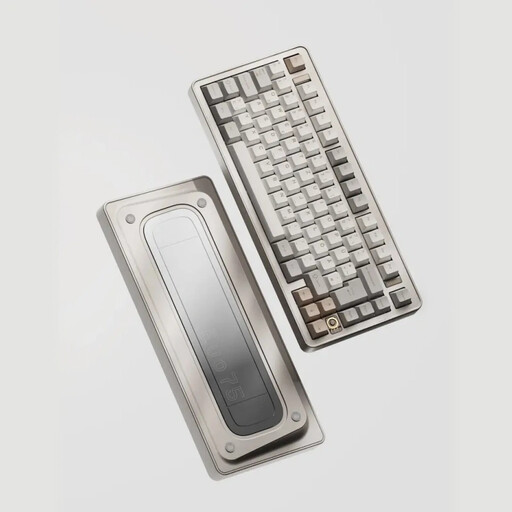 Image unavailable
An option if you want to assign recurring commands to keys; the product information lists VIA compatibility.
 Image unavailable
An option if you want to set up macros; the product information mentions settings via a Windows driver and onboard memory.
 Image unavailable
An option if quiet typing and a number pad for entering figures matter to you; the product information describes quiet, low-profile scissor keys.
 Image unavailable
A compact option if you want to save desk space and have several connection options.
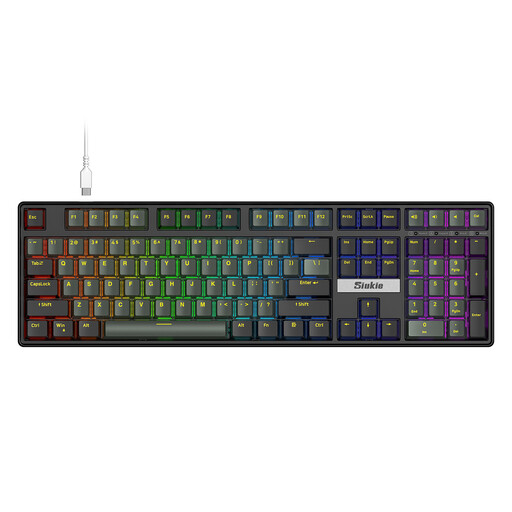 Image unavailable
An option if you enter lots of numbers and want a wired connection.
Not necessarily. Start with the shortcuts in your own software. Programmable keys are most useful if you want to assign lots of repeated commands and the required configuration works on your computer.
No. In Audacity 4, you can save a project on your computer, but saving files and making a separate copy are different steps. Audacity’s documentation was updated on 29 October 2026; check how your own software works and keep a copy separate from the working file.
Check that your computer supports the required USB connection or Bluetooth, and that the key layout suits your input language. Then test in your own software that the keys you’ve chosen respond to the commands you need.
Position the keyboard to suit your workspace, and break up long periods of screen work with other tasks or a break. Arboportaal recommends varying screen-based work; an ergonomically advertised keyboard isn’t a substitute for this.
For eligible distance purchases by consumers in the Netherlands, you generally have up to 14 days after delivery to change your mind, according to ACM ConsuWijzer. Statutory warranty also applies: the Netherlands doesn’t have a fixed general period of exactly two years; what you can reasonably expect from the product is what matters.
An organisation processing personal data must have an appropriate legal basis and decide on suitable security measures. The Dutch Data Protection Authority explains that consent is one possible legal basis, not automatically the required choice; what applies in an individual interview setting depends on how the data is processed. Buying a keyboard won’t take care of this.