
For those who type a lot
You write and edit long documents and want keys that feel comfortable without making unnecessary noise. RTINGS covers both typing feel and noise levels in keyboards for office work and writing.


Start with the keys you use when writing and editing, the space available for your mouse and the devices you work on. A low-profile keyboard with scissor switches suits anyone looking for a short, familiar typing feel; a compact model can free up desk space, while a split layout is worth considering if you want to adjust your hand and arm position. None of these features automatically makes a keyboard the right choice for every writer.
You write and edit long documents and want keys that feel comfortable without making unnecessary noise. RTINGS covers both typing feel and noise levels in keyboards for office work and writing.
You want to consider the position of your hands, arms and mouse during long periods of screen work, without expecting one keyboard to prevent discomfort. RTINGS notes that an unconventional layout can take time to get used to.
You need to fit a keyboard, mouse and documents on a limited surface and want to check which keys and connections you still need. Trust describes the Lyra as connecting to multiple devices; be sure to check the specific version and layout.
Start with the layout and typing feel you use every day. Then check that the size, connection and connectivity suit your desk and devices.
| What to consider | What should you check? | Who is this most important for? |
|---|---|---|
| Typing feel and noise | Compare the key feel with what you find comfortable, and consider the noise level in your home workspace. | If I write and edit for long periods, I want keys that feel comfortable and don’t draw unnecessary attention in a shared space. Around 36% of consumers prioritise typing feel and a quiet experience when writing. |
| Working posture | Consider the height and position of your keyboard and mouse together; try an unconventional layout if possible. | During long typing sessions, I want to be able to judge whether the position of my hands, arms and mouse suits my workspace. Around 29% of consumers prioritise an adjustable working posture. |
| Desk space and number keys | Measure the space available and consider whether you use a number pad and navigation keys. | At a small desk, I want to keep space for my mouse and documents, while still being able to enter budget figures easily. Around 21% of consumers prioritise desk space. |
| Connection and layout | Check your computer’s connection, Bluetooth or USB receiver, and the exact QWERTY variant. | If I switch between devices or use a lot of punctuation, I want to know whether the connection and key layout suit my needs. Around 14% of consumers cite device compatibility as their main concern when buying. |
A smaller model can free up desk space, but it may lack navigation or number-entry keys you use when putting together a budget.
Before choosing, think about how you use numbers, arrow keys and navigation keys. If you enter figures regularly, check whether you need a number pad.
Without a built-in number pad, you may need a separate one or find entering figures less convenient.
A keyboard’s shape alone doesn’t determine your working posture; the position of your mouse and the rest of your workspace matter too. An unconventional layout may also take time to get used to.
Consider your entire workspace and try the layout if possible. Don’t take an ergonomic description as proof that the keyboard will prevent discomfort.
A keyboard and a keyboard-and-mouse set aren’t the same purchase. The key layout can also vary between versions.
Compare the full product name, version, layout and box contents before ordering.
The wrong layout, connection or accessory could mean the version isn’t right for your intended workspace.
The MX Keys S is a full-size, low-profile wireless keyboard for those looking for a laptop-style typing feel and programmable features.
The KC 6000 SLIM is a full-size, low-profile model with scissor switches, a number pad and a USB-A connection, designed for a fixed desk setup.
The Lyra is a compact option for working across multiple devices; according to Trust, the Keyra has a full-size split layout.
Compact Break is a compact option for anyone who wants to keep space beside their keyboard and use a break indicator.
These keyboards suit writing at home, with options for entering figures, a fixed desk setup and a more compact layout.
 Image unavailable
Could suit writing tasks where you regularly enter figures and want a full-size keyboard.
Full-size with number pad; QWERTY layout; wired and plug-and-play.
 Image unavailable
An option to consider if you’re looking for a mechanical layout with a wrist rest for a fixed desk setup.
94 keys; metal casing; with phone stand and wrist rest.
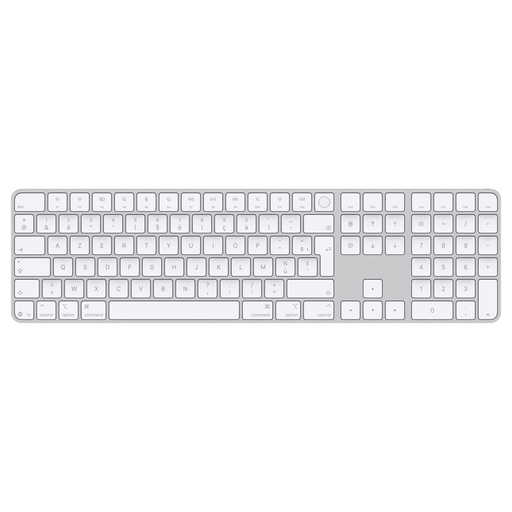 Image unavailable
Consider this version if you specifically want a number pad and Touch ID.
With Touch ID and a number pad. Check that the keyboard is compatible with your computer before buying.
 Image unavailable
The compact layout could suit you if you want to leave space for your mouse on your desk.
68 keys; mechanical switches; US keyboard layout. Check that the layout suits the punctuation you use.
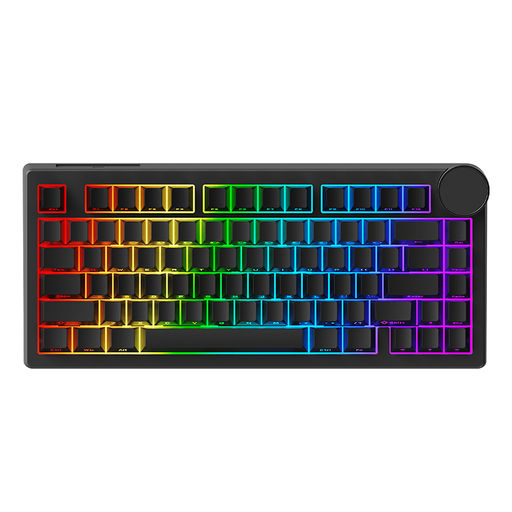 Image unavailable
The 75% layout is worth considering if you’re looking for a more compact keyboard for a fixed desk setup.
Wired; HE magnetic switches; 75% layout; US keyboard layout. Check that the layout suits the way you use your keyboard.
For employees who spend more than 2 hours a day working with a screen, Arboportaal says that the screen and keyboard must not be attached to each other. With a laptop, it must be possible to use a separate screen or keyboard; whether this applies to you depends on your work and how long you use it for.
Government guidance doesn’t require one particular keyboard model. Rijksoverheid does state that employers must provide homeworkers with a good and safe workspace; discuss any equipment you need with your employer.
Consider the position of your keyboard and mouse together, and take regular breaks from screen work. A split layout may allow for a different hand and arm position, but getting used to it and finding the right personal fit are still important.
No. According to ACM ConsuWijzer, you have statutory rights in addition to any manufacturer’s warranty if a product doesn’t perform as you could reasonably expect under normal use. The seller must resolve a valid issue; there isn’t one fixed statutory time limit for every keyboard.