
Pitch writer at a fixed workstation
If you mainly write and edit long texts on one computer with two screens, consider the key feel, layout and space the keyboard takes up.


Start by choosing a keyboard with a layout and key feel that are comfortable for long writing sessions. Using two screens with one computer doesn’t, by itself, mean you need a model that switches between devices. If you also use another computer or tablet, compare the connection options. On a cramped desk, size and posture may matter more than extra features.
If you mainly write and edit long texts on one computer with two screens, consider the key feel, layout and space the keyboard takes up.
If you use a second computer or tablet as well as your computer, check how many devices you can connect to the keyboard and which operating systems it supports.
If you want to leave room for your mouse and notes, or take the keyboard with you, compare a compact model with the keys you need, such as a number pad.
Start with your daily writing tasks and desk layout. Then compare extra connections and features.
| What to consider | What to look for | Who this matters most to |
|---|---|---|
| Writing for long periods | Compare the physical QWERTY layout, key size and key feel. Don’t assume you know the layout from the model name alone. | If I spend a lot of time writing and rewriting my pitch, I want a key feel and layout that feel familiar. Around 33% of consumers prioritise typing comfort and key layout. |
| Switching between devices | Count computers and tablets, not screens. Check how many devices you can connect and which connection types your devices support. | If I work on a tablet or second computer as well as my computer, I want to switch easily between devices. Around 27% of consumers prioritise switching between devices. |
| Desk space and posture | Measure the space available and check that there’s still room for your mouse and documents. If you’re considering a compact model, check whether you need a number pad. | If my desk also needs to accommodate a mouse and pitch documents, size is a key consideration. Around 20% of consumers prioritise desk space and posture. |
| Noise and everyday use | Compare the key feel and expected noise level; don’t assume it will be completely silent. Also check how the version you choose is powered. | If I work in a shared space, I want to take the sound and feel of the keys into account and know how to keep the keyboard ready to use. Around 20% of consumers prioritise quiet, practical use. |
If both screens are connected to the same computer, extra features for switching between devices won’t solve a separate problem.
First, work out which computers and tablets you type on. Only choose extra connection channels if you need them.
The physical layout and size determine which keys you use every day, and a model may be available in different versions.
Check the layout of the exact version you’re choosing and decide whether you need a number pad.
An unsuitable layout could mean you have to exchange or replace the keyboard.
A different keyboard shape is no substitute for a suitable workstation setup, changing your posture or taking breaks.
Assess the shape while typing, and also consider how your screens are positioned and how you vary your work routine.
Logitech describes models for different workspaces: the full-size MX Keys S, the compact Pebble Keys 2 K380s and the differently shaped Wave Keys.
CHERRY presents the KW 9200 MINI as a compact option with several connection options.
Trust describes the full-size Vaiya as a multi-device model and the Keyra as a model with a split layout.
This selection includes compact keyboards for desks where you want to save space, as well as a wired, full-size model with a number pad for a fixed workstation.
 No image available
The compact TKL layout may suit you if you want to leave room for your mouse.
US QWERTY layout; USB connection; no number pad.
 No image available
An option for a fixed workstation if you type every day and want a number pad.
QWERTY layout; number pad; wired plug-and-play connection.
 No image available
The 75% layout is a compact option if you want to save desk space.
US layout; wired, Bluetooth and 2.4 GHz; Reaper Switch.
 No image available
The compact 75% layout may suit you if you want to save space on your desk.
US QWERTY layout; Bluetooth, 2.4 GHz and USB-C; RGB lighting.
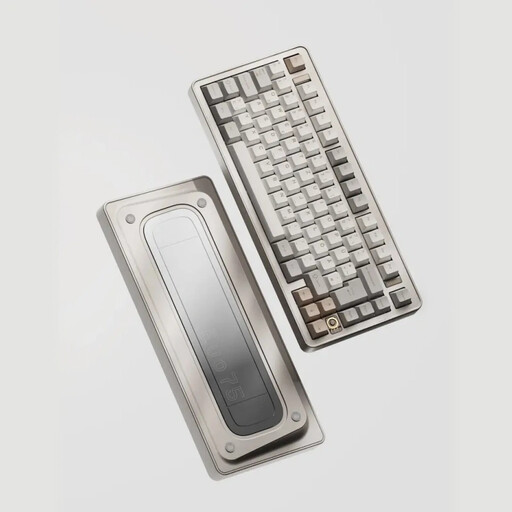 No image available
A compact layout to consider if you want to save desk space.
US layout; Bluetooth, 2.4 GHz and wired USB-C; hot-swappable keys.
No, not just because you have two screens. Check whether both screens are connected to one computer or whether you also type on a second computer or tablet. In the latter case, switching features may come in handy.
Consider your keyboard and mouse alongside your screen setup. Arboportaal advises varying screen-based work, looking away regularly and taking microbreaks. A different keyboard doesn’t replace these considerations.
For eligible online purchases from a business, you’ll often have a 14-day cooling-off period. Check the terms before you buy. If the product is faulty, the Dutch Government says the seller is your point of contact for a solution, such as a free repair or replacement.
For employees who spend more than 2 hours a day doing screen-based work, Arboportaal says the screen and keyboard must not be attached to each other. This is a conditional requirement for employees’ workstations, not a general product specification for every buyer.
For individuals, the Dutch Government describes an old-for-new scheme when buying a similar appliance, including online purchases. The scheme for individuals does not automatically apply to equipment owned by businesses.