
Careful copy editor
Writes and rewrites text at home, and mainly wants a familiar feel for comfortable typing.


For writing and editing a short biography, a familiar feel and layout are a sensible place to start; gaming features aren’t necessarily needed. Choose a shaped or more compact model if it suits your workspace or posture, but check the exact key layout and connection before you buy. A manufacturer’s comfort claim doesn’t prove that a keyboard prevents physical discomfort.
Writes and rewrites text at home, and mainly wants a familiar feel for comfortable typing.
Types for extended periods and considers their posture, whether they need a wrist rest and how much room there is for a mouse.
Wants to save space or switch between devices, so checks the size, connection and key layout.
Start with a key feel and layout that you find comfortable for typing and editing. Then check that the size and connection suit your workspace.
| What to consider | What to look for when buying | Who is this important for? |
|---|---|---|
| Familiar key feel | If possible, try the keys and check the position of the arrow, Delete and other editing keys. | If I want to write and edit without a lengthy adjustment period, I look for a familiar key feel. Around 36% of consumers prioritise a quiet, familiar feel for typing text. |
| Posture | Check that the keyboard and mouse fit in the available space. Treat a wrist rest or break indicator as an aid, not as treatment or a guarantee. | During longer typing sessions, I want to position my keyboard and mouse comfortably and remain mindful of my posture. Around 29% of consumers give posture their highest priority. |
| Layout and connection | Check the full name of the layout and whether your device supports the connection you’ve chosen, such as USB-A, a USB receiver or Bluetooth. | If I want to use my own computer and a familiar key layout, I check both before buying. Around 21% of consumers prioritise layout and connection over other needs. |
| Size and customisation | Decide whether you need a number pad and check that the key customisation you want is available on the exact model. | At a small desk, I want to leave room for my mouse or customise keys for tasks I do regularly. Around 14% of consumers make compactness or key customisation their main priority. |
A product range may include different layouts or versions. The general name doesn’t always tell you which key layout you’ll receive.
Compare the full layout name and product number of the version you want to order.
Choosing the wrong version could mean arranging an exchange or getting used to a different layout.
A keyboard is just one part of working at a screen. Repeated hand movements, a static posture and the rest of your workspace setup all matter too.
Assess the fit and layout of your workspace separately; don’t assume a product claim means it has a medical benefit.
The CHERRY KC 6000 SLIM requires USB-A, while the Trust Ody II uses a USB receiver. Check how the exact version connects.
Before buying, check which ports are available and how the keyboard connects. You may need an additional adapter, depending on your device.
The MX Keys S is a slim wireless model with backlighting and device switching. The Wave Keys has a wavy shape and an integrated wrist rest.
The KC 6000 SLIM is a slim, wired full-size model for use with Windows and USB-A.
The Ody II is a wireless keyboard with low-profile keys, a USB receiver and an adjustable typing angle.
The Compact Break is available in separate wired and wireless versions, and is designed for compact workspaces.
The K3 Version 3 ISO is a compact mechanical model with a 75% layout, for anyone who specifically wants a mechanical feel and customisable keys.
These Joybuy products are slim keyboards for typing, with a range of layouts, sizes and connections. Above all, check that the version suits your computer and the key layout you’re used to.
 No image available
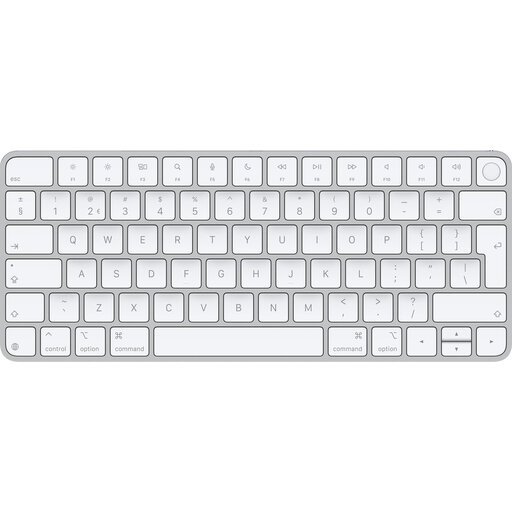
The Dutch version and compact design may suit you if you type in Dutch and don’t need a number pad.
The product information lists Bluetooth, a rechargeable battery and a design without a number pad. The stated compatibility is with Mac models featuring Apple Silicon and macOS 11.4 or later.
 No image available
The Dutch version has a number pad and navigation keys, which may be useful if you often use them when editing text.
The product information lists Bluetooth, a rechargeable battery and compatibility with Mac models featuring Apple Silicon.
 No image available
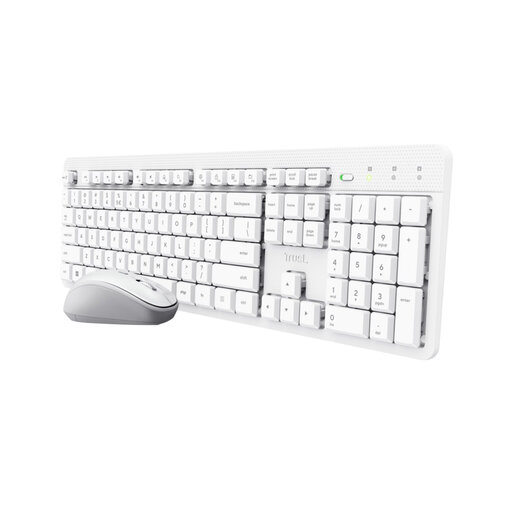
The low-profile keys and adjustable typing angle are useful features if you’re looking for a straightforward wireless set for home.
Trust describes the keys as quiet. The set uses one USB receiver for both the keyboard and mouse, and has a US QWERTY layout, which may differ from the one you’re used to.
 No image available
The compact design without a number pad may suit you if you want to free up space on your desk.
The product information lists quiet membrane keys, media keys and a wired USB-A connection. The layout described is US ANSI QWERTY.
 No image available
A full-size design with a number pad may suit you if you use those keys and have the extra space available.
Trust lists quiet scissor-switch keys and connection via USB receiver or Bluetooth. The product information says it can connect to up to four devices; the layout described is US QWERTY.
Not just because you’re editing a short biography at home. Arboportaal outlines requirements for employees who work at a screen for more than two hours a day, including that the screen and keyboard must not be attached to each other. When using a laptop, a separate screen or keyboard must then be available for use. Whether this applies depends, among other things, on the employment relationship and how long the person works at a screen.
Check which connection the exact version uses. Trust lists a USB receiver for the Ody II; Logitech says the Wave Keys uses Bluetooth or the included Logi Bolt receiver. Also check that the key layout of the version you’ve chosen suits you.
According to R-Go Tools, the R-Go Compact Break’s indicator is controlled by R-Go Break software. Use it as a reminder to take a break, not as a diagnosis or proof that discomfort will be prevented. Arboportaal also highlights repetitive actions and static posture when working at a screen.
According to ACM ConsuWijzer, online purchases from a business generally come with a statutory cooling-off period of up to 14 days after delivery; exceptions may apply. The legal guarantee is separate from the manufacturer’s warranty: if a product doesn’t meet reasonable expectations under normal use, the seller is responsible for offering an appropriate solution.