
Writer who edits frequently
You often use search, undo and other editing commands, and want to know whether customisable keys offer anything beyond the shortcuts in your writing app.


Start with a layout that suits your computer and writing app; you don’t need a programmable keyboard for standard shortcuts. Extra customisable actions are mainly useful if you want to assign repeated tasks to specific keys. Then compare the key feel, noise and desk space the keyboard takes up, and remember that a keyboard is no substitute for a suitable workspace.
You often use search, undo and other editing commands, and want to know whether customisable keys offer anything beyond the shortcuts in your writing app.
You want to assess the key feel and hand position without assuming that an ergonomic design will prevent or relieve discomfort.
You type for long periods around other people and want to take the noise of the specific keyboard version into account.
First check the layout and shortcuts in your own writing app. Then compare extra programming features, key feel and size.
| What to consider | What should you check? | Who is this important for? |
|---|---|---|
| Layout and shortcuts | Compare the physical key layout with your selected input language, and test the commands in your writing app. | If you often navigate or edit text, you’ll want to find familiar characters and commands quickly. Around 31% of consumers put this functionality first. |
| Key feel and hand position | Assess the key feel and check whether there’s room for the position you want to use; consider your workspace too. | For long writing sessions, you’ll want a key feel and hand position that suit your workspace. Around 25% of consumers prioritise comfort when typing for long periods. |
| Key noise | Check the switch type on the exact version and, if possible, try the keyboard in a similar space. | If you write while others are working or relaxing in the same room, noise may be a major consideration. Around 19% of consumers put quiet operation first. |
| Desk space | Measure the available space and decide whether you need a separate numeric keypad. | If you want to keep room next to the keyboard for a mouse or notes, size matters. Around 13% of consumers give desk space the greatest weight. |
| Switching between devices | Check which connections the exact version supports and whether settings are available on each device you use. | If you work on your novella across several devices, being able to switch easily may be important. Around 12% of consumers prioritise this. |
Writing apps may already have keyboard shortcuts for frequently used tasks. Apple Support notes that shortcuts can vary between apps, so extra configuration software isn’t automatically necessary.
First make a note of the tasks you do often, then try the existing shortcuts in your own writing app.
A model range may include different language layouts and switches. Your computer’s selected input layout may also differ from the characters printed on the physical keys.
Before buying, check the full variant name, the key images and the input layout in your operating system.
Kinesis says that the Freestyle2 is not programmable. Being able to adjust the distance between the two keyboard halves doesn’t mean you can set up your own macros.
Choose a split design for its positioning options, and check macro features separately. During long sessions, pay attention to your workspace too, and take a short break from time to time.
The MX Keys S is a low-profile keyboard with configurable actions; the MX Keys S for Mac is a separate version with a Mac layout.
The K8 Pro ISO collection is worth considering if you’re looking for a mechanical keyboard with remapping and macros.
The wired STREAM KEYBOARD is a conventional option with low-profile keys for writing at a fixed desk.
The Freestyle2 International is a physically split Windows ISO version with an adjustable distance between the halves.
This selection ranges from a foldable keyboard for mobile devices to wired and compact versions for a permanent writing space. Compare the layout, size and listed features with your writing app and workspace.
 No image available
This foldable version is designed for use with phones and tablets, making it handy if you also write on the go.
Rechargeable, with a magnetic stand and Bluetooth; according to the product description, it can connect to up to three devices. The description mentions Windows, iOS and Android, among others.
 No image available
A full-size wired keyboard to consider if you have a permanent writing space and want a numeric keypad.
The product name specifies a QWERTY layout. The product description mentions navigation and function keys, as well as a plug-and-play connection.
 No image available
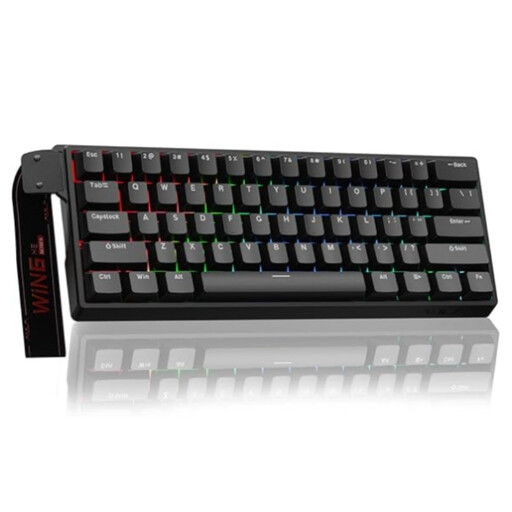
The compact 60% layout is worth considering if you have limited desk space.
The product name specifies a wired version, while the product description mentions Hall Effect switches. Check that the layout and features suit the commands you use.
 No image available
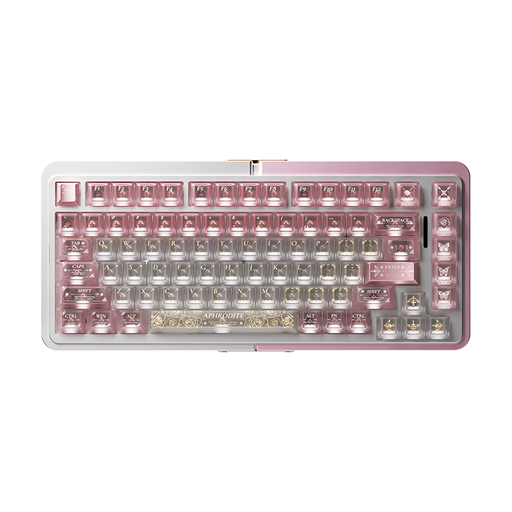
This wired 75% version is worth comparing if you’re looking for a more compact layout for a permanent writing space.
The product name specifies TTC magnetic Hall Effect switches and a hot-swappable design. Check the physical layout and stated version before choosing.
 No image available
The product description mentions macros via a dedicated driver, which may be useful if you want to set up repeated actions yourself.
The version described has 108 keys and a US layout; the product name specifies both wireless and wired use. Check the layout and driver for your own computer.
No, not for the keyboard shortcuts already available in your operating system and writing app. Programmable features are mainly useful if you want to remap keys yourself or set up recurring actions. Check that the configuration software works with your app and computer.
First check that the selected input layout matches the physical keys. Microsoft Support explains how to view and change the keyboard layout in Windows; Apple Support notes that shortcuts can vary between apps.
Arboportaal recommends changing posture, regularly looking away and taking short breaks when working at a screen. This workplace advice is not evidence that a particular keyboard treats discomfort.
According to the Dutch government, distance purchases often come with a 14-day cooling-off period; check which terms apply to your purchase. If a product is faulty, the Dutch government says the seller is your point of contact for a solution.
The workstation requirement described by Arboportaal for employees who work at a screen for more than 2 hours a day is not a general legal purchasing requirement for someone writing in their free time. However, the practical workplace tips may be useful while you write.