
Writers who want to work in peace
You write long passages at home or in a shared space and are mainly looking for a consistent, quiet typing experience.


Choose based on what most often interrupts your writing: typing noise, repetitive tasks when arranging your chapter outline, or the position of your hands during long sessions. A quiet standard keyboard, a model with customisable keys and a split layout are designed for different needs. Also check the keyboard layout, required software and connection. Manufacturers describe the features of their models, but that doesn’t prove that a keyboard will improve your writing or your health.
You write long passages at home or in a shared space and are mainly looking for a consistent, quiet typing experience.
You switch between essay text and chapter outlines as you write, and want to make repetitive keyboard tasks easier.
You type for long periods and want to assess whether a different hand and wrist position suits your workspace.
A good fit if: you mainly want to type long passages without adjusting lots of settings first. Trust describes the Ody II as quiet; Logitech describes the K120 as a wired USB keyboard.
The trade-off: check that your computer can use the Ody II’s USB receiver. The K120 is wired, and the models mentioned here don’t offer a comparable macro function.
A good fit if: you regularly carry out the same tasks in your writing software. Logitech lists Smart Actions for the MX Keys S; Keychron lists key remapping and macros via Launcher for the K3 Max.
The trade-off: test whether the tasks you want to automate work in your software. The K3 Max has a 75% layout, so check whether you need the keys found on a full-size keyboard.
A good fit if: hand position is important to you during long sessions. Logitech describes the ERGO K860 as a curved, split keyboard with adjustable palm lift.
The trade-off: it may take time to get used to a different key position. A keyboard can’t replace a well set-up workspace or regular breaks from screen work.
| What to consider | What should you check? | Who is this most important to? |
|---|---|---|
| Quiet, familiar typing | Compare the keyboard layout and sound; decide whether you want a cable or USB receiver. | When I’m writing long nature essays, I want a typing experience and layout that let me work without interruption. Around 36% of consumers give quiet, familiar typing top priority. |
| Switching between text and outlines | Note down the tasks you repeat and check the required software and how it works with your writing programme. | When I often switch between essay text and chapter outlines, I want to carry out repetitive tasks more quickly. Around 29% of consumers prioritise controlling their chapter outline. |
| Posture during long sessions | Assess the space on your desk, the position of the keys and where your screen is placed. | During long writing sessions, I want to see whether the hand position and layout suit my workspace. Around 21% of consumers give posture top priority. |
| Layout and connection | Check that the characters and keys match what you use and that your computer has the connection you need. | When I’m writing on my own devices, I want a layout and connection that suit them. Around 14% of consumers prioritise layout and connection. |
Manufacturers describe actions or macros, but that doesn’t guarantee they’ll work with your writing software or the tasks you need to carry out.
Try your programme’s keyboard shortcuts first and make a note of the tasks you repeat before setting up your keys.
Allow time to set things up and test them in your own programme.
According to Keychron, the K3 Max has a 75% layout rather than a full-size one.
Compare the layout of the exact model you’re considering with the keys you use when writing.
Arboportaal describes repetitive hand movements and static strain as factors in screen work. A different keyboard is just one part of setting up your workspace.
Also assess your screen position and vary your activities during screen work. If you develop work-related symptoms, seek professional advice if needed.
The examples below refer to the models and product ranges mentioned. A brand name alone doesn’t tell you whether a specific version is available.
The models mentioned suit different needs: customisable keys, a split layout or straightforward wired typing.
The K3 Max is a compact mechanical option if you want to customise keys or macros.
The Ody II mentioned here is designed for wireless typing on a conventional full-size keyboard.
The Ergonomic Keyboard described by Microsoft is a wired, split option if you want to try a different hand position.
This selection includes compact keyboards and models with programmable keys or document navigation. Check the layout and features of each version to make sure they suit your writing programme and computer.
 No image available
A compact wired layout may suit you if you’re specifically looking for a smaller keyboard; this model is described as a gaming keyboard.
The product name specifies a 60% layout and Hall-effect magnetic switches.
 No image available
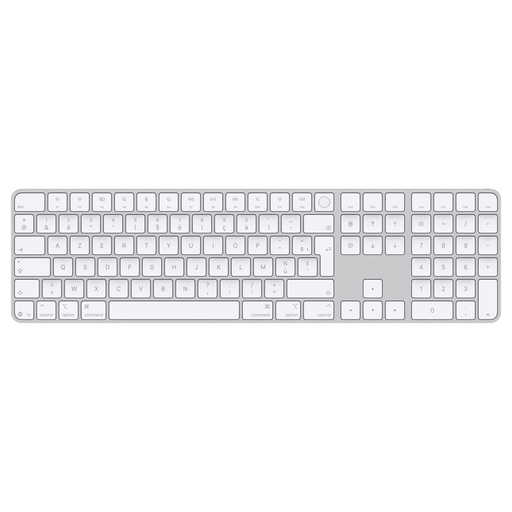
Worth considering if you write on a Mac and document navigation matters to you; check that the listed features work with your device.
The product information lists a numeric keypad, Touch ID, wireless typing and document navigation keys.
 No image available
A compact option if you specifically want a 68-key keyboard; check first that the US layout suits the way you work.
The product information lists a detachable Type-C cable and compatibility with Windows and macOS.
 No image available
May suit you if you switch between devices while writing and want to assign repetitive tasks to keys.
The product information lists programmable keys, Bluetooth for two devices and a 2.4GHz dongle for one device. It can be charged via USB-C, even while in use.
 No image available
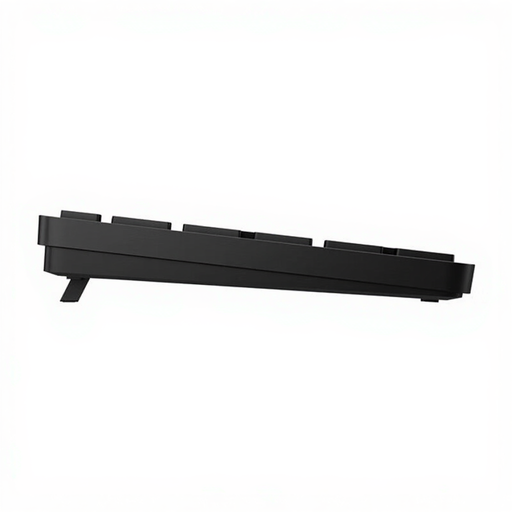
May suit you if you want a full-size layout alongside shortcuts for repetitive tasks.
The product information lists a numeric keypad, more than 20 programmable keys and settings via HP Accessory Center.
No, not necessarily: start with the keyboard shortcuts supported by your writing programme. If you often carry out the same series of tasks, the MX Keys S and K3 Max offer features for setting up actions or macros, according to their manufacturers. Test them in your programme.
It varies by model. Trust lists a USB receiver for the Ody II; Keychron lists Bluetooth, 2.4 GHz and a wired connection for the K3 Max. Before buying, check which port or wireless connection your device has.
For cleaning between the keys, Keychron recommends using items such as a soft brush or cotton buds; for stubborn dirt, the brand suggests a small amount of isopropyl alcohol. Also follow the care instructions for your exact model.
When you buy as a consumer in the Netherlands, you’re covered by the statutory guarantee: the product must have the features you can reasonably expect, and the seller is your point of contact if there’s a problem, according to the Dutch Government. Many online purchases from a business come with a 14-day cooling-off period; check the terms and exceptions that apply to your purchase before taking out extra cover.
Not if you’re writing for personal use. Arboportaal states that for employees who do more than two hours of screen work a day, the screen and keyboard must not be attached to each other; in that case, a separate screen or keyboard must be usable with a laptop. This workplace rule doesn’t automatically apply to personal use.