
Writers working on long treatments
You write lengthy pieces and want a key feel and layout that suit the way you type. RTINGS.com describes scissor-switch keyboards as an option with a familiar, laptop-like typing feel.


Start by choosing a layout that keeps the punctuation and navigation keys you use when writing and revising within easy reach. A low-profile scissor-switch model may suit extended typing at a shared desk, while programmable keys can be useful for repetitive edits. With a compact or split design, check the exact version and consider your own working posture.
You write lengthy pieces and want a key feel and layout that suit the way you type. RTINGS.com describes scissor-switch keyboards as an option with a familiar, laptop-like typing feel.
You regularly work through notes and want to know whether accessible navigation keys or customisable features will support your workflow. Check which keys and software are available with the version you choose.
You may be mindful of key noise or the space available for your keyboard and mouse. Which feature matters most depends on your workspace and the version you choose.
Start with the physical layout and typing feel. Then check whether the available keys and any accompanying software suit your revision work and workspace.
| What to consider | What should you check? | Who is this important for? |
|---|---|---|
| Extended typing sessions | Try the key feel and check the physical layout, punctuation and Enter key on the exact version. | When I write long pieces, I want the keys to feel comfortable and the punctuation to be in a familiar place. Around 31% of consumers prioritise typing feel. |
| Revisions and navigation | Check the position of the arrow and function keys, and whether the key customisation you want works with your device. | When I make frequent revisions, I want quick access to the keys I use, without setting up features I don't need. Around 25% of consumers prioritise revision work. |
| Workspace and hand position | Consider the space available for your mouse and keyboard, and try the shape to see whether it suits your hands and typing style. | If I want to rearrange my workspace, I consider the position of my hands and mouse, as well as how much space a keyboard takes up. Around 25% of consumers prioritise their workspace setup. |
| Key noise | Check the key mechanism on the version you choose and, if possible, listen to how it sounds. | At a shared desk, I want to know how noisy the keys are before choosing a version. Around 19% of consumers prioritise quiet operation. |
Keyboard variants can differ in their key legends, Enter key, arrow keys and switches. A familiar layout may therefore feel different, or keys may be in different positions.
Before buying, check the physical key layout and the full variant description, including the switch type if that matters to you.
A layout that doesn't suit you may take longer to get used to, or mean you need a different version.
According to Keychron, this feature is only available on the version explicitly labelled RGB hot-swappable.
Check the full product variant if you want to be able to change the switches.
A different keyboard shape is no substitute for adjusting your workspace or taking breaks from screen work.
Try the shape as part of your overall workspace setup, and remember to take breaks too. Arboportaal recommends varying your activities and taking microbreaks during screen work.
The MX Keys S is designed for low-profile typing, switching between devices and customisable actions. The ERGO K860 has a curved, split design.
The K3 Max is a compact 75% model for anyone looking for multiple connection options and key customisation.
The wired STREAM KEYBOARD is a low-profile model with scissor-switch keys.
The Compact Break is designed for a compact workspace setup and includes a break indicator.
The wired AK820 is a compact mechanical model with a function row and arrow keys.
This selection includes keyboards for writing and revising longer texts, from compact models to full-size versions.
 No image available
According to the product information, this foldable model is designed for typing on mobile devices.
The product information lists scissor-switch keys, quiet keys, Bluetooth for up to three devices and a magnetic stand.
 No image available
The full-size layout is an option if you'd like a numeric keypad and separate navigation keys while you write.
The product information lists arrow keys, a navigation cluster, function keys and backlighting. The title also mentions plug and play.
 No image available
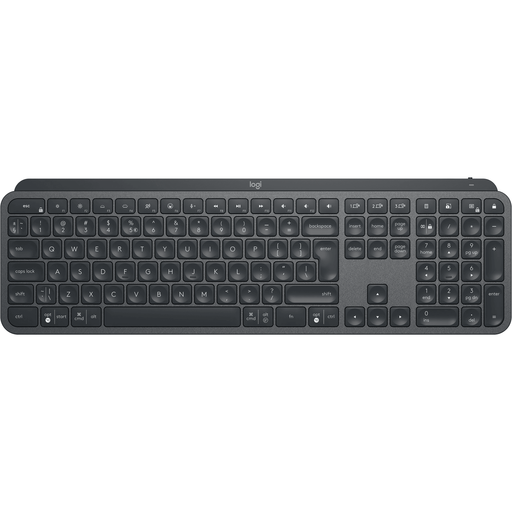
This full-size model may suit you if you want to switch between devices while working or assign functions to keys.
The product information lists wireless connectivity and switching between up to three devices. Logitech recommends Logi Options+ for assigning functions; check that it's supported by your device.
 No image available
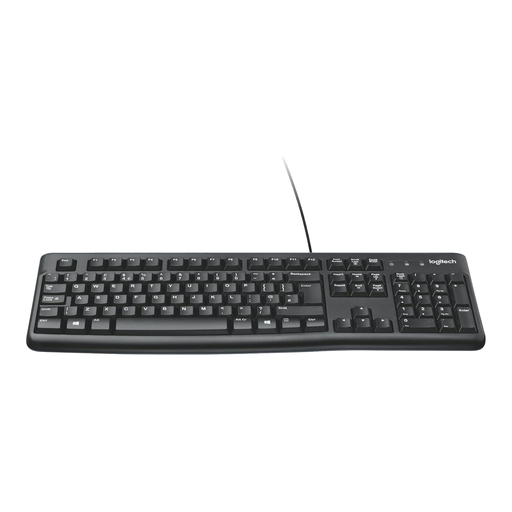
The wired full-size layout is an option if you want to keep a numeric keypad while writing.
The product information lists low-profile keys, a numeric keypad and a 1.5-metre USB cable.
 No image available
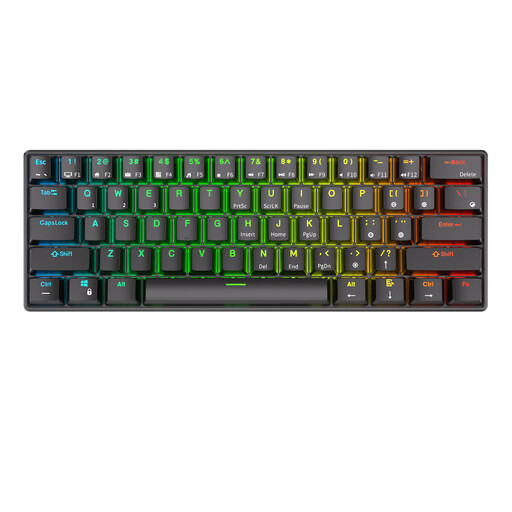
The compact 60% layout may suit you if you want to free up desk space and prefer a mechanical typing feel.
The product title lists 61 keys, three connection modes, RGB lighting and hot-swap. It also mentions quiet red switches and support for Windows and Mac.
First, check where the punctuation, arrow and function keys are. Keychron says the K3 Max has a 75% layout with arrow keys and a function row, but no separate numeric keypad. Customising keys can be useful if you carry out repetitive tasks.
It depends on the feature and version. Logitech lists Logi Options+ for Smart Actions on the MX Keys S; Keychron lists Keychron Launcher for customising keys on the K3 Max. According to R-Go Tools, the break indicator on the R-Go Compact Break is controlled by R-Go Break Software. Check what's supported by your operating system.
No. A different keyboard shape is no substitute for adjusting your workspace and taking breaks from screen work. Arboportaal recommends, among other things, looking away from the screen regularly and taking microbreaks.
For a standard online consumer purchase, you generally have a statutory cooling-off period of up to 14 days after delivery, although exceptions may apply. Separately, according to ACM ConsuWijzer, the seller must offer an appropriate free-of-charge solution if, under normal use, the product does not do what you could reasonably expect it to.
Not every buyer is. For employees who use a screen for more than 2 hours a day, Arboportaal explains that the screen and keyboard must not be attached to each other. When using a laptop, it must be possible to use a separate screen or keyboard; this is not a general product specification for private use.