Start with the keys you use while debugging: check where the arrow, Delete and function keys are, and whether the key legends match your selected layout. Compact models take up less space, while TKL models can retain a separate navigation cluster. A split keyboard offers a different hand position, but takes time to adjust and get used to. Sound, feel and connectivity can also influence your choice.
Which keyboard is right for you?
For coders who navigate frequently
You switch between code, output and error messages while debugging, and want quick access to the arrow and editing keys. Keychron describes TKL keyboards as models without a number pad, usually with a separate navigation cluster.
For coders looking to adjust their working position
You spend long periods at a screen and want to be able to adjust the distance and angle of your hands, without treating a keyboard as a solution to aches and pains. Arboportaal considers keyboard positioning part of setting up your workstation.
For coders in a shared workspace
You want to choose carefully between key feel and sound while typing and debugging, for example when colleagues or others are working in the same room. Logitech, Kinesis and CHERRY describe different key types and mechanisms; check the exact model.
What should you look for in a keyboard for coding?
Compact keyboard
Best for: keeping desk space free when you don’t need a number pad.
Bear in mind: check that the keys you use for debugging are in the right places; mechanical models may come with different switches.
TKL with navigation keys
Best for: keeping separate navigation and editing keys while doing without a number pad.
Bear in mind: key legends and features such as hot-swap vary by regional layout and model.
Adjustable split keyboard
Best for: adjusting the distance and angle between the two keyboard halves.
Bear in mind: adjustment and getting used to it take time; an ergonomic design is not a treatment or a guarantee against discomfort.
Flat, full-size keyboard
Best for: keeping a number pad if you regularly enter figures as well as code.
Bear in mind: a full-size model needs more desk width; check the connection and regional layout too.
| What to consider |
What should you check? |
Who is this important for? |
| Layout and navigation |
Compare the exact key layout with your settings and check where your debugging shortcuts are. |
If I want quick access to the arrow, Delete and other editing keys while reviewing code, their position is crucial. Around 36% of consumers prioritise layout and direct access. |
| Adjustable working position |
Check that both halves fit on your desk and find out which supports or riser accessories come with the model. |
If I want to adjust the distance and angle of my hands, I look at both the adjustment options and my workstation setup. Around 29% of consumers prioritise an adjustable working position. |
| Sound and key feel |
Check the exact switch or mechanism; the product range alone won’t tell you how the keys feel. |
If I work in a shared space, I want a key feel and sound level that suit the surroundings. Around 21% of consumers start with sound and feel. |
| Customisable keys |
Check remapping, macros and hot-swap support separately for the specific model. |
If I want to set up functions for recurring tasks in my editor or debugger, I check exactly what I can customise on the keyboard. Around 14% of consumers prioritise programmable key functions. |
Common buying mistakes
-
Assuming every K8 Pro model is the same
The ISO collection includes different regional layouts, and not every model has the same features. As a result, the version you choose may have different key legends or switch options from what you expect.
Before buying, check the full model name, physical layout, switches and whether hot-swap is listed.
Different key legends or a model without the hot-swap feature you expected may mean you need to reconsider your choice.
-
Choosing a small keyboard based on desk width alone
Compact layouts may move or combine keys you use frequently. This can mean using extra key combinations when navigating code.
Before choosing, compare the image of the exact layout with the debugging shortcuts you use.
Frequently used navigation keys may be less accessible, so you may need to use combinations more often.
-
Taking an ergonomic claim as a guarantee against discomfort
Kinesis states that an ergonomic keyboard is not a medical treatment and does not guarantee discomfort-free use. According to Arboportaal, taking breaks and setting up your workstation also play a part in screen-based work.
Assess the keyboard as one part of your workstation and seek appropriate professional advice if you experience discomfort.
Brands to compare
Logitech
The MX Mechanical Mini is a compact mechanical alternative if you want to keep desk space free.
- The manufacturer lists Tactile Quiet, Clicky and Linear versions, as well as switching between up to three devices.
- Choose your preferred switch carefully; an ergonomic product description does not mean it will work better for every user.
Keychron
The K8 Pro ISO collection is worth considering if you’re looking for a TKL layout and customisable key functions.
- The manufacturer lists remapping and macros; features such as hot-swap depend on the model.
- Check the full model name and key legends: the ISO regional layouts listed do not include a separately specified Dutch version.
Kinesis
The international Freestyle2 is an adjustable split alternative with membrane keys.
- The manufacturer describes two halves that can be separated; the available spacing varies by model.
- Check the region-specific key legends and any accessories. Its ergonomic design is not a medical treatment or a guarantee against discomfort.
CHERRY
The KC 6000 SLIM shows what a flat, full-size keyboard offers if you want to keep a number pad.
- The manufacturer lists a scissor mechanism, full-size layout and USB-A for Windows.
- It needs more desk width; check the specific regional layout and connection.
Keyboards at Joybuy
This Joybuy selection includes keyboards for coding and debugging, from compact layouts to models with a navigation cluster or number pad. Check the exact layout and the features that matter for the way you work for each model.
 No image available
Wired QWERTY keyboard with number pad
The separate navigation cluster and number pad are handy for coding work that also involves entering figures.
Full-size; wired; QWERTY layout.
Joybuy
 No image available
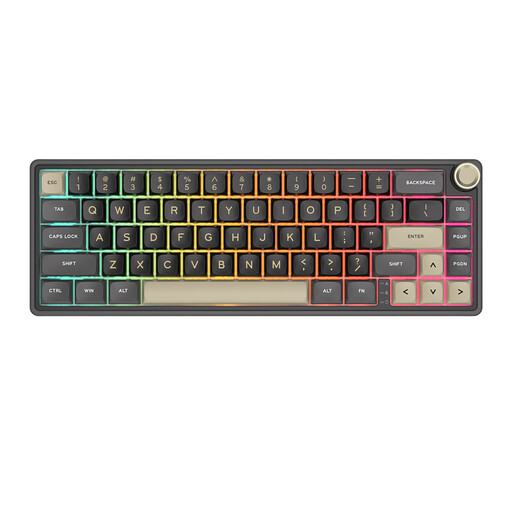
RK Royal Kludge R65
The compact 60% layout may suit you if you want to save desk space and don’t mind using key combinations.
Wired; 60% layout; QMK/VIA; 66 keys; hot-swappable Chartreuse switches.
Joybuy
 No image available
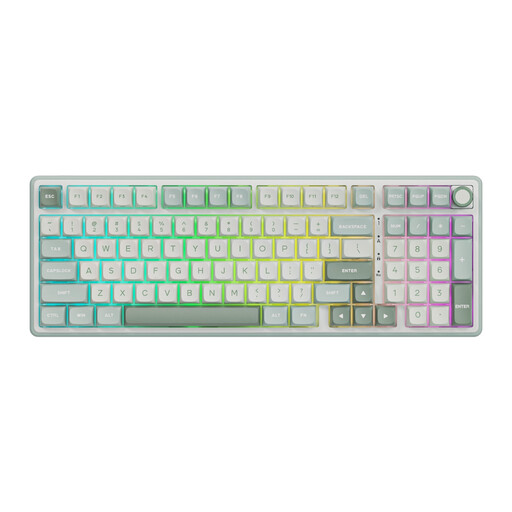
RK Royal Kludge R98 Pro
The number pad can come in handy if you regularly enter figures as well as code.
Wired; mechanical; number pad; hot-swap switch sockets.
Joybuy
 No image available
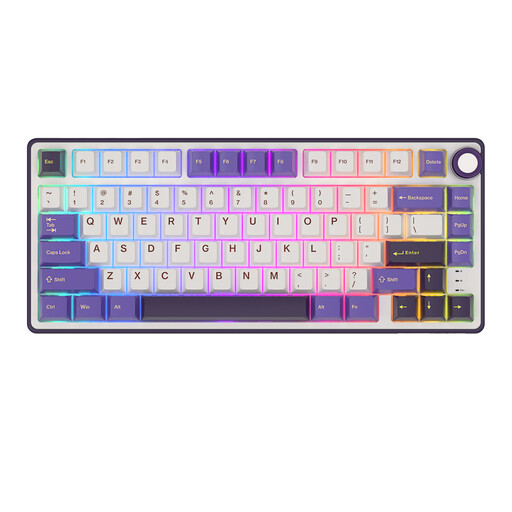
RK Royal Kludge R75
The 75% layout has separate navigation keys, including Delete, for anyone who wants to use them while editing.
Wired; 75% layout; QMK/VIA; programmable functions and macros; hot-swappable K Silver switches.
Joybuy
 No image available
AULA F75 MAX
The 75% layout is designed for a more compact setup with arrow and function keys.
Mechanical; US QWERTY layout; wired, Bluetooth and 2.4G.
Joybuy
Frequently asked questions
Which keys should you check for your debugger before buying?
Check the position of the arrow, editing and function keys on the exact model. Keychron describes TKL as a layout without a number pad, usually with separate navigation keys; layouts vary by model.
How do you set up a split keyboard?
According to Kinesis’s user information, start with the two halves close together, then gradually increase the distance or adjust the angle to suit you. This is guidance on using the keyboard, not a medical treatment; consider seeking appropriate professional advice if you experience discomfort.
What can you do if a keyboard bought online isn’t suitable?
For online purchases from a business, you’re often entitled to a statutory 14-day cooling-off period; check the terms and any return costs before ordering. According to the Dutch Government, there is no fixed statutory warranty period in the Netherlands. If a product is faulty, contact the seller to discuss a solution.
Is a separate keyboard always required for laptop work in the Netherlands?
No, not for every laptop session. According to Arboportaal, employees who work at a screen for more than 2 hours a day must be able to use a screen and keyboard that are not attached to each other; when using a laptop, it must be possible to use a separate screen or keyboard.


