Start with a layout that makes it comfortable to use coding and browser shortcuts. Then decide whether space, quiet typing or hand positioning matters most to you. A compact programmable board, a quiet low-profile keyboard and a split model each offer different benefits, but no keyboard makes a website responsive on its own. Before buying, check the exact layout, version and connection.
Who is this choice for?
Developer who writes a lot of code
You want familiar places for symbols and shortcuts while you work on your site. Start by checking the exact key layout. Programmability matters most if you plan to use that feature. Keychron describes key remapping for its K8 Pro ISO collection.
Developer spending long days at a screen
You want to be able to position your hands and workspace comfortably. Compare the keyboard’s shape with the space available for your screen and mouse, and change your posture as you work. Arboportaal highlights the importance of varying your posture.
Developer in a shared workspace
You want to minimise disruption to others or switch easily between work devices. Pay attention to the typing feel, connection and specific version, rather than just the brand. Logitech describes device switching for the MX Keys S, while Trust lists quiet keys for the Ody II.
What should you look for?
Compact, mechanical and programmable
Best for: you often use shortcuts or want to remap keys, and can work without a number pad.
Trade-off: a TKL layout leaves out the number pad; ISO language variants can differ in symbol placement.
Low-profile keyboard for shared workspaces
Best for: a low-profile typing feel or switching between devices matters more to you than mechanical switches.
Trade-off: the MX Keys S is wireless and has customisable keys; the CHERRY KC 6000 SLIM uses USB-A and has no backlighting, according to the manufacturers.
Split and adjustable
Best for: you want to adjust the distance between your hands and their positioning independently.
Trade-off: ZSA describes an adjustment period for people moving from a traditional keyboard; an adjustable board is no substitute for a well-set-up workspace.
Quiet everyday keyboard
Best for: you want to type quietly in a shared space and don’t need extensive key remapping.
Trade-off: Trust lists quiet, low-profile keys for the Ody II; check whether the offer includes the keyboard on its own or as part of a set.
| What to consider |
What to look for when buying |
Who is this important for? |
| Key layout and coding symbols |
Check the exact language layout, where commonly used symbols are placed and whether you need a number pad. |
When I write code often, I want to find brackets and other symbols in familiar places. That’s why around 33% of consumers in this use case put the key layout first. |
| Working posture |
Check whether you can position your keyboard, screen and mouse comfortably at your desk; try an alternative layout if possible. |
During long work sessions, I want to position my hands and keyboard comfortably. Around 25% of consumers prioritise working posture. |
| Typing noise |
Check whether the quiet-typing claim applies to the specific keyboard version; the typing feel varies by model. |
In a shared space, I want to type without unnecessarily disturbing others. Around 25% of consumers choose quiet operation as their main consideration. |
| Connection and device switching |
Check which USB port or wireless connection you need, and whether the feature you want works with your devices. |
When I work across several devices, I want to know whether the connection and switching options suit my needs. Around 17% of consumers prioritise this practical consideration. |
Common buying mistakes
-
Assuming all ISO or QWERTY versions have the same layout
The K8 Pro ISO collection includes different national layouts, so coding symbols may be in different places from the ones you’re used to.
Check the exact variant and key legends, not just the model name.
-
Assuming an ergonomic shape is a complete solution for long working days
A keyboard is only one part of your workstation setup. Arboportaal also points to the overall setup and varying your posture.
Consider your keyboard, mouse, screen and workspace together, and change your posture as you work.
-
Confusing a standalone keyboard with a keyboard and mouse set
Trust sells the Ody II keyboard on its own as well as in a set with a mouse. The product titles make it clear which bundle you’re looking at.
Read the exact title and check what’s in the box before comparing versions.
Brands to compare
Keychron
The K8 Pro ISO collection is worth considering if you’re looking for a mechanical TKL board with configurable keys.
- Keychron describes key remapping and several ISO language variants for this collection.
- The language and switch versions are separate choices; don’t assume every variant has the same keys or keycaps.
Logitech
The MX Keys S is a good option to compare when looking at low-profile, wireless keyboards for working across multiple devices.
- Logitech lists programmable keys and switching between up to three devices for the MX Keys S.
- These features don’t guarantee faster coding and don’t automatically apply to every Logitech keyboard.
CHERRY
The KC 6000 SLIM is a full-size, low-profile keyboard for anyone comparing wired Windows setups.
- CHERRY specifies a scissor mechanism and USB-A connection for this model.
- The specifications don’t mention backlighting. Check the national layout too.
ZSA
The ErgoDox EZ is worth considering if individually positioned keyboard halves and customisable keys are your priorities.
- ZSA describes two independently positioned halves, customisable keys and an optional tilt adjustment.
- According to the manual, switching from a traditional keyboard takes some getting used to; this does not establish any health benefits.
Trust
The standalone Ody II is a quiet, wireless everyday option for a shared workspace.
- Trust lists quiet keys, a low profile and a stowable USB receiver for the Ody II.
- The Ody II set with a mouse is a different bundle; check which version the offer includes.
Keyboards at Joybuy
This selection includes quiet everyday keyboards and compact mechanical models for coding; check the layout and connection for each version.
 No image available
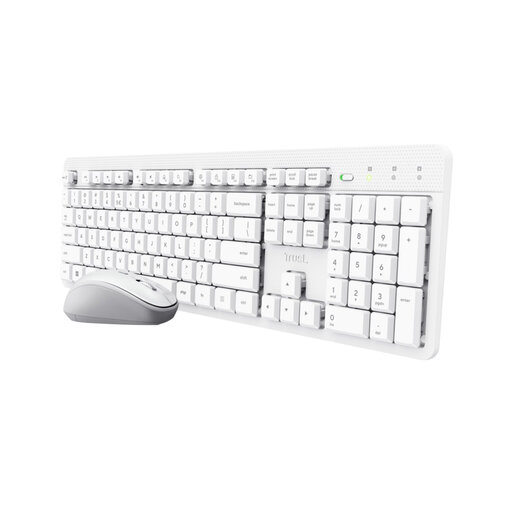
Trust Ody II wireless keyboard and mouse set, white
Ideal if you’re looking for a quiet keyboard for a shared workspace.
The product title describes a wireless set with quiet keys in white. This is a keyboard and mouse set, not a standalone keyboard.
Joybuy
 No image available
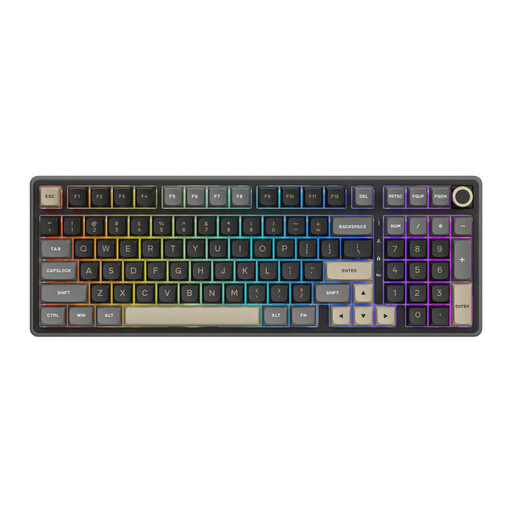
RK Royal Kludge R98 Pro wired mechanical keyboard, Beige Switches
Ideal if you’re comparing mechanical keyboards with a number pad.
The product title lists a wired model with a number pad, volume knob and PBT keycaps. The specified switch variant is Beige Switch.
Joybuy
 No image available
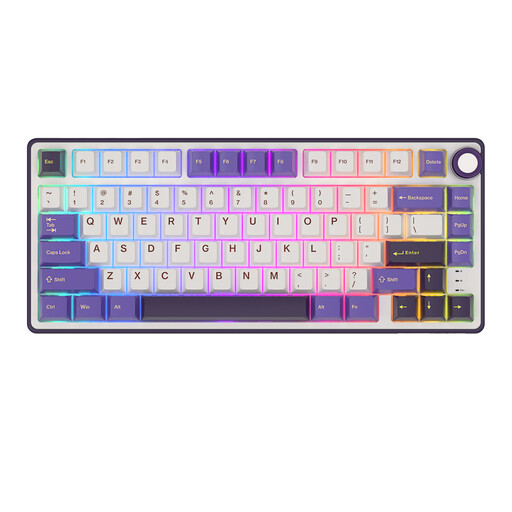
RK Royal Kludge R75 wired mechanical keyboard, K Silver Switches
Ideal if you’re looking for a wired mechanical keyboard with a compact layout.
The product title lists a 75% layout, volume knob, PBT keycaps and hot-swappable switches. The specified switch variant is K Silver Switch.
Joybuy
 No image available
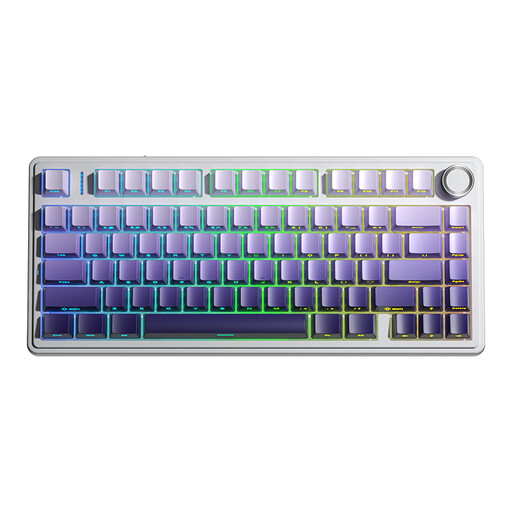
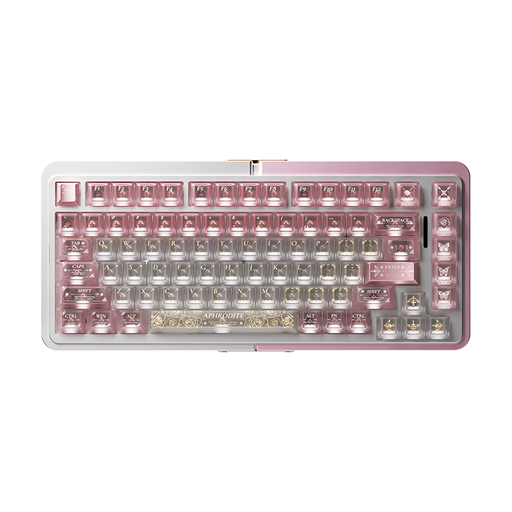
AULA F75 PRO 75%, US QWERTY, Tri-Mode, Gradient Purple
Ideal if you’re comparing compact mechanical layouts with arrow keys.
The product title lists US QWERTY, Tri-Mode (wired, Bluetooth and 2.4G) and Star Vector Switch.
Joybuy
 No image available
Royalaxe E75 Custom 75% Hall Effect, TTC Magnetic HE Switches
Ideal if you’re looking for a compact mechanical layout with hot-swappable switches.
The product title lists an aluminium keyboard, a wired mode and Rapid Trigger.
Joybuy
Frequently asked questions
Do I need a special keyboard to build a responsive website?
No. Choose a keyboard that suits the way you code and work. For example, the Keychron K8 Pro ISO lets you remap keys, but you don’t need this feature to build a responsive website.
How do I get started with a split keyboard?
Position the halves to suit your workspace and give yourself time to get used to the different layout. The ErgoDox EZ manual explains how to connect the halves and describes the adjustment period.
Can an employee in the Netherlands use only a laptop’s built-in keyboard for extended periods?
For the employee situation described by Arboportaal, the screen and keyboard must not be attached to each other if someone works at a screen for more than 2 hours a day. For laptop work, a separate screen or keyboard must then be available. This is not a general ban on laptops for every buyer.
What are my rights as a consumer when buying online in the Netherlands?
When you buy online from a business, you generally have 14 days from delivery to change your mind, according to ACM ConsuWijzer. If a product is faulty, you can also contact the seller to seek a solution. The Dutch government states that the Netherlands has no fixed statutory guarantee period for this.
How do I maintain my keyboard without missing model-specific instructions?
Check the manual for the version you bought before removing any keys or switches. ZSA explains which of the supplied tools to use to remove keycaps and switches from the ErgoDox EZ; these instructions don’t apply to other models.


