
Teacher with a permanent computer setup
You write lesson plans in one place and need a suitable connection without adding another keyboard-charging task.


For a permanent computer setup, a wired USB keyboard may be suitable if you have a spare, compatible computer port: it doesn’t need a separate power socket or keyboard battery. If you want to work wirelessly or switch between a laptop and tablet, compare Bluetooth with a USB receiver, and decide whether you’d prefer replaceable batteries or periodic charging. Also check the physical keyboard layout and the space on your desk; stated battery life comes from the manufacturer and isn’t a guarantee of how long it will last for you.
You write lesson plans in one place and need a suitable connection without adding another keyboard-charging task.
You consult resources on different devices and want to switch easily between them while writing.
You create or edit lots of teaching materials and want to position the keyboard separately from the screen and set up your workspace to suit you.
First, work out whether you’re short of power sockets or spare computer ports. Then decide which connection, power source and setup suit your lesson preparation.
Suitable if: you mainly use one computer, have a spare USB port and don’t want to replace or recharge batteries.
The trade-off: the cable limits where you can position the keyboard and uses a compatible computer port.
Suitable if: you don’t want a keyboard cable on your desk and would rather replace batteries than recharge them.
The trade-off: check whether your devices support Bluetooth or have a suitable USB port for the receiver.
Suitable if: you want to switch between devices and don’t want to replace separate keyboard batteries.
The trade-off: you’ll need to recharge the keyboard periodically; also check whether a bundled mouse would be useful to you.
| What to consider | What should you look for? | Who might value this most? |
|---|---|---|
| Power without an extra socket | For wired use, check that you have a spare USB port. For wireless use, see whether you can replace the batteries or recharge the keyboard. | If I don’t want to reserve a power socket for the keyboard or be interrupted by an unexpected need to recharge, I look for a power source that suits my workspace. Around 33% of consumers prioritise typing without an extra charging task. |
| Connecting to devices | Make a note of your devices and available ports. Check for Bluetooth support or the connection needed for a USB receiver. | If I use a laptop and tablet, I want to know whether the keyboard connects to both and how I can switch between them. Around 27% of consumers give switching between devices top priority. |
| Extended typing and workspace | Check whether you can position the keyboard separately from the screen and whether there’s room for it and your other work materials. A keyboard on its own won’t prevent discomfort. | If I write a lot of teaching materials, I want to position the keyboard to suit my screen and the rest of my workspace. Around 20% of consumers choose mainly based on extended typing and workspace setup. |
| Keyboard layout and desk space | Check the physical layout of the exact version, whether you need a number pad and whether the keyboard will fit on your desk. | If I need space for resources and notes, I pay attention to the keyboard’s dimensions and the keys I use most often. Around 20% of consumers prioritise layout and available desk space. |
A wired USB keyboard uses a computer port, while a wireless keyboard needs batteries or time to recharge. The cable does, however, limit where you can place the keyboard.
Before choosing a connection, count your spare power sockets and compatible computer ports separately.
Trust describes the Ody II as using a USB receiver, while Logitech describes the Pebble Keys 2 K380s as using Bluetooth. This can determine whether a tablet or computer can connect to the keyboard.
Check the connection used by the exact model and the ports on each device you want to use.
Logitech states that the Pebble Keys 2 K380s lasts 36 months under standard conditions. HP gives a maximum of 16 months for the HP 230. These model-specific claims aren’t directly comparable real-world tests.
First decide whether you’d rather replace batteries or recharge them. If you go wireless, also consider how you’ll keep working when the power runs out.
The K120 is a wired USB model for a permanent workstation; the Pebble Keys 2 K380s is a compact Bluetooth keyboard that lets you switch between devices.
The HP 230 is a wireless keyboard with a 2.4GHz connection, for a traditional typing setup without a keyboard cable.
The Ody II uses a wireless USB receiver; the Lyra is a rechargeable keyboard and mouse set that lets you switch between devices.
The KC 1000 is a wired office keyboard for a permanent computer setup.
The E9800M is one example of a rechargeable wireless keyboard and mouse set.
This selection includes wired USB keyboards and wireless models with Bluetooth or a USB receiver, including rechargeable versions. Before your history lesson, check the connection, device compatibility and physical keyboard layout of the model you choose.
 No image available
May suit anyone who consults teaching resources on a phone or tablet and wants a wireless keyboard.
The product name mentions Bluetooth, a rechargeable battery, a magnetic stand and an aluminium body. The description lists phones and tablets as compatible devices.
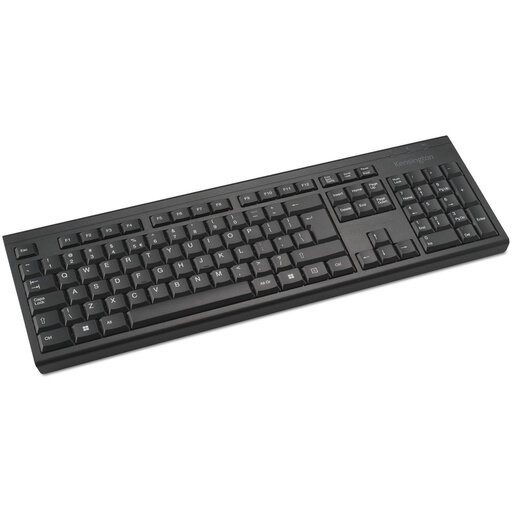 No image available
May suit a computer setup without a keyboard cable, provided you have a spare, compatible USB port for the receiver.
The product description lists a wireless 2.4GHz connection, a USB receiver and a full-size layout. Windows and macOS are listed as compatible operating systems.
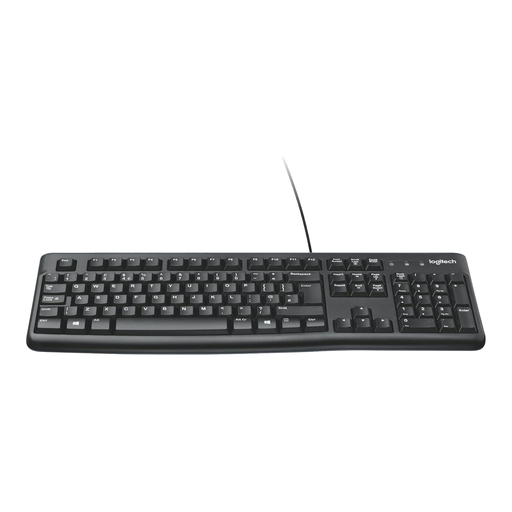 No image available
May suit a permanent computer setup with a spare USB port if you don’t want a separate keyboard battery.
The product description lists a wired USB connection, a number pad, low-profile keys and adjustable feet. The cable limits where you can position it.
 No image available
May suit you if you want to switch between devices and are looking for a rechargeable keyboard with a number pad.
The description lists Bluetooth and a USB receiver, switching between up to four devices and quiet scissor keys. The physical layout is US/QWERTY. The built-in battery needs to be recharged periodically via USB-C.
 No image available
May suit you if you’re looking for a rechargeable Bluetooth keyboard with the listed QWERTY Dutch layout.
The product description lists a rechargeable battery, USB-C charging and a number pad. It also mentions automatic connection to a Mac.
No. A wired model may be an option if you have a spare USB port on your computer. Logitech says the K120 connects via USB, so check whether you’re short of power sockets or computer ports.
First, check which connections your tablet supports. Logitech lists Bluetooth and switching between three devices for the Pebble Keys 2 K380s. According to Trust, the Ody II uses a USB receiver, which needs a compatible USB connection.
No. Stated battery life depends on the model and the manufacturer’s conditions. Logitech gives 36 months under standard conditions for the Pebble Keys 2 K380s; HP gives a maximum of 16 months for the HP 230. These claims aren’t directly comparable real-world tests.
It depends on the situation. Arboportaal explains that for employees who work at a screen for more than two hours a day, the screen and keyboard must not be attached to each other. In that situation, laptop users must be able to use a separate screen or keyboard.
According to ACM ConsuWijzer, a product should last as long as you could reasonably expect it to with normal use. If it breaks sooner, the seller must offer an appropriate free remedy; this doesn’t mean there’s one fixed warranty period for every keyboard.
According to the Dutch government, used batteries shouldn’t go in the bin; take them to a collection point, such as a shop that sells batteries. For a privately owned old electrical appliance, the old-for-new scheme applies when you buy a new appliance of the same kind.