
Arpeggio player with a limited range
You want to practise note sequences and are looking for an instrument with a range and key response suited to your exercises.


Choose based on the lowest and highest notes in your arpeggios, and the key response you want to practise. A 61-key keyboard may suit you if your exercises fit within its range. An 88-key digital piano is a better fit if you need a wider range or a piano-style touch, and have enough space. A headphone socket lets you listen through headphones, but it won’t automatically stop others in your home from hearing you play.
You want to practise note sequences and are looking for an instrument with a range and key response suited to your exercises.
You’re mindful of housemates or neighbours, so you’re considering your listening options and where to put the instrument.
You practise techniques that call for a wider keyboard range and a piano-style touch, rather than the most compact setup possible.
A good fit if: the lowest and highest notes in your exercises fall within its range and you’re looking for a compact instrument. Yamaha lists this key count and a touch-sensitive keyboard for the PSR-E383.
The trade-off: touch sensitivity doesn’t automatically mean the keyboard has a piano hammer-action mechanism.
A good fit if: you want to practise across a wider range or with a piano-style key response, and have room for the instrument and seating. Roland lists an 88-key PHA-4 Standard keyboard for the FP-10; Korg specifies an 88-key NH keyboard for the B2+.
The trade-off: measure the space needed for the complete setup. Using headphones won’t automatically stop others from hearing you play.
| What to consider | What should you check? | Who is this important for? |
|---|---|---|
| Keyboard range | Compare the lowest and highest notes in your arpeggios with the range of the exact model. | I want to play my exercises without the highest or lowest notes falling outside the keyboard’s range. Around 31% of consumers in this practice scenario prioritise a suitable keyboard range. |
| Sound heard by others | Check for a headphone socket and listen to what can still be heard in your own space while you play. | I practise in a shared home and want to be considerate of housemates or neighbours. Around 25% of consumers in this practice scenario prioritise this consideration. |
| Key response | Check what type of keyboard the exact model has and, if possible, try the touch for yourself. | I want to practise piano technique and need a suitable key response. Around 25% of consumers in this practice scenario prioritise the touch. |
| Setup and accessories | Measure the available space and check the dimensions and included accessories for the specific version. | I need to fit the instrument, a seat and any accessories into my loft. Around 19% of consumers in this practice scenario prioritise a suitable setup. |
Yamaha describes the PSR-E383 as touch-sensitive, while Roland describes the FP-10 as having a PHA-4 keyboard with hammer action. These descriptions don’t mean the same thing.
Choose according to the touch you want to practise and check the key type of the exact model.
For a digital piano, you also need room for a seat and any accessories. Korg says the STB1 stand and PU-2 pedal unit for the B2+ are available separately.
Measure the space needed for the complete setup and check what’s included with the specific version.
A stand or upgraded pedal unit may be available separately.
Headphones let you listen to the sound through them, but whether others can hear you play or are disturbed also depends on your home and circumstances.
Test the setup in your own space and, if needed, agree arrangements with your housemates or neighbours. The Dutch Government notes that noise nuisance between neighbours can be covered by local municipal by-laws in many areas.
The PSR-E383 is a portable 61-key keyboard. Yamaha lists a touch-sensitive keyboard for this model.
Roland describes the FP-10 as a digital piano with an 88-key PHA-4 Standard keyboard and the option to play through headphones.
According to Korg, the B2+ is an 88-key digital piano with an NH keyboard and a combined headphone/line output.
The CT-S1BK is part of the compact Casiotone range. Casio lists 61 tones for the CT-S1, including piano, electric piano and organ sounds.
Here are some Joybuy keyboards and digital pianos. Compare the listed version and features with the range and touch you need for your arpeggios.
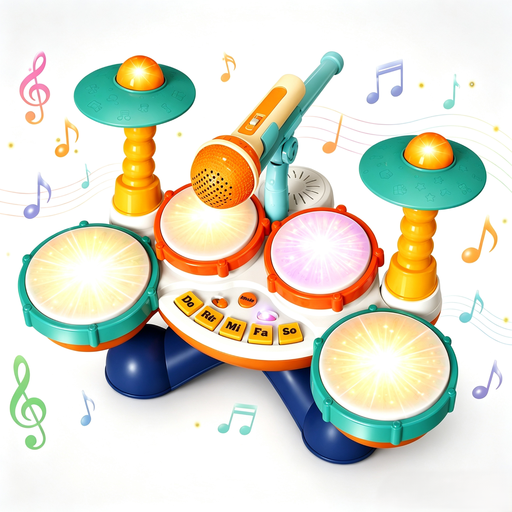 No image available
The product title describes this as a toy for children aged 1–3; consider whether it suits the intended use.
The title lists 10 melodies, soft lighting, volume control and sound modes.
 No image available
The title lists 61 keys and a weighted keyboard; check whether this range and key response suit your exercises.
The title also mentions USB-MIDI and a headphone socket.
 No image available
A 61-key keyboard may suit you if the highest and lowest notes in your arpeggios fall within its range.
The title lists MIDI, a recording function, speakers, a metronome and a music stand. The product description mentions a headphone socket.
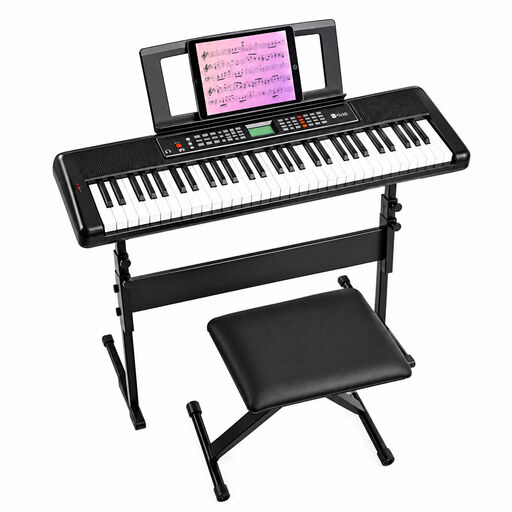 No image available
The 61 keys suit exercises where the lowest and highest notes fall within the keyboard’s range.
The title lists a stand, stool, music stand, 300 tones, 300 rhythms, a three-level lesson mode and USB-MIDI. The product description mentions a headphone socket.
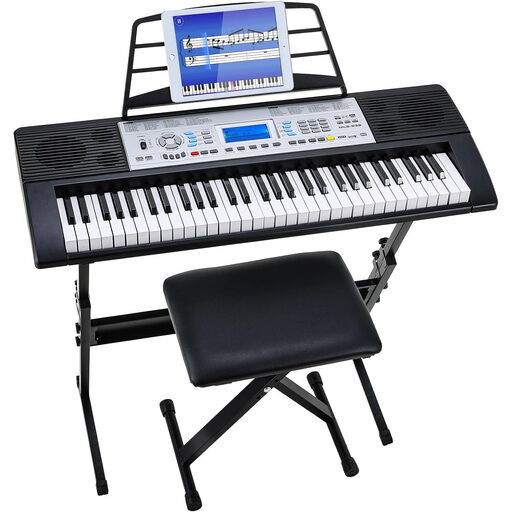 No image available
The title lists 61 keys; check whether that range suits the notes in your exercises.
The title mentions a stand and stool. The product description lists 500 built-in tones and a three-step lesson function.
No, not if you want to learn to play the notes yourself. First check the range and key response. Automatic accompaniment is a separate feature listed by Yamaha for the PSR-E383.
Measure the available space, including room to sit, and check what’s included with the version you choose. Korg lists the B2+ dimensions as 1.312 × 336 × 117 mm, excluding the music rest, and says the STB1 stand is available separately.
In the Netherlands, online purchases generally come with a statutory cooling-off period of up to 14 days after delivery. Check which exceptions and returns terms apply. ACM ConsuWijzer also states that you’re entitled to a product that meets what you could reasonably expect from it.
No, using headphones doesn’t give you a general exemption from rules on noise nuisance. The Dutch Government notes that noise nuisance between neighbours can be covered by local municipal by-laws in many areas, and advises speaking to your neighbours first if noise is an issue. The rules and arrangements that apply depend on your municipality and living situation.