
Writer who edits frequently
You want familiar letter, navigation and editing keys for writing and revising text. Check the physical layout before you buy.


Start with the keys you use to write and edit your covering letter, and how much desk space you want to keep free. A compact keyboard leaves out the separate number pad, a split model changes your hand position, and a wireless model can be useful if you type on several devices. None of these designs guarantees greater typing comfort or prevents discomfort; also check the layout and connection of the exact model.
You want familiar letter, navigation and editing keys for writing and revising text. Check the physical layout before you buy.
You want to keep space free next to your keyboard and may not use a separate number pad.
You want to take the position of your hands and forearms into account when working at a computer for longer periods, without assuming an ergonomic keyboard will prevent discomfort.
| What to consider | What should you check? | Who might prioritise this? |
|---|---|---|
| Familiar key feel and text editing | Try the letter, arrow and editing keys, and check the physical layout of the model. | If you often go back to edit text as you write, you’ll want keys that suit the way you’re used to typing. Around 33% of consumers prioritise familiar text entry. |
| Layout and desk space | Think about how often you enter numbers and compare the layout with your current keyboard. | If you want to keep space free next to your keyboard, a layout without a separate number pad may suit you; just consider whether you’ll miss those keys. Around 27% of consumers prioritise layout and space. |
| Hand position | Consider whether the shape suits your hands and workspace, and position your screen and keyboard accordingly. | A different hand position may matter when you work at a computer for longer periods, but a split design won’t automatically suit everyone. Around 20% of consumers prioritise hand position. |
| Key noise | If possible, try the keyboard in a setting similar to your own. | If you share a room at home, you’ll want to know how the keys sound in your surroundings. Around 13% of consumers prioritise quiet keys. |
| Switching between devices | Count the devices you type on and check the connection options for the exact model. | If you switch between devices while writing, a suitable wireless connection may be useful; you may not need this feature for a single desktop computer. Around 7% of consumers prioritise switching between devices. |
The ISO versions of the Keychron K3 Max may have different country layouts. So compare the model itself with the keys you use when writing and editing.
Check the photo and specifications for the exact variant before you buy. A layout that differs from the key positions you’re used to may take some getting used to.
According to CHERRY, the CHERRY STREAM KEYBOARD TKL leaves out the separate number pad while retaining the main key block.
Choose this more compact layout if extra desk space matters more to you than having a dedicated number pad.
A split design changes the position of your hands and may take some getting used to. Your workspace setup matters too. Kensington says the Pro Fit Ergo Wireless Keyboard is suitable for people with medium to large hands; this doesn’t mean the model prevents discomfort.
Assess the shape and your workspace setup separately, and try the key feel and position if possible.
Trust describes a standalone wired Primo Keyboard; the Joybuy listing mentioned here is for a wireless keyboard and mouse set.
Check the model, connection and what’s included in the box, not just the brand and range name. This helps you avoid accidentally choosing a mouse as well or a different connection type.
The MX Keys S is a full-size wireless option. According to RTINGS, its key feel may be familiar if you’re used to a laptop keyboard.
The STREAM KEYBOARD and STREAM KEYBOARD TKL are wired models. The former is full-size, while the TKL version leaves out the separate number pad.
The Pro Fit Ergo Wireless Keyboard is an option if you want to try a split design deliberately.
The standalone Primo Keyboard is a simple, full-size wired keyboard with low-profile keys.
The K3 Max ISO is a compact mechanical option for anyone looking for a particular switch feel and programmability.
These keyboards are designed for home use, with options ranging from models with a number pad to compact wired layouts. Check the key layout, connection and listed accessories for each model.
 No image available
An option if you want to keep a separate number pad for typing and editing documents.
QWERTY layout, number pad and plug-and-play wired connection.
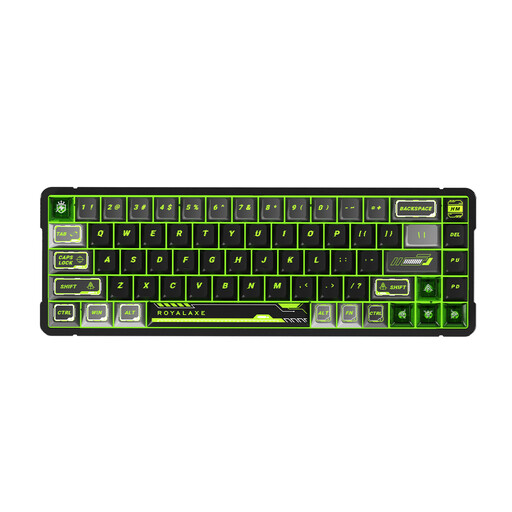 No image available
A compact option if you want to free up desk space and prefer a wired connection.
68 keys, US layout, wired and mechanical with magnetic switches. Check that the US layout suits the key positions you’re used to.
 No image available
A wired mechanical option if you’re looking for a keyboard with a wrist rest.
The product name lists 94 keys, a metal case, a wrist rest and a phone stand.
 No image available
A compact wired option if you want to free up desk space.
68 keys, US layout and magnetic switches. Check that the US layout suits the way you use your keyboard.
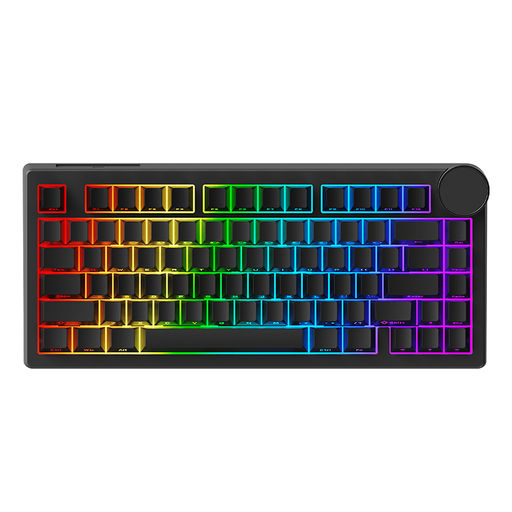 No image available
A compact wired option if you’re looking for a keyboard for desk use.
The product name lists a wired version with magnetic switches.
Not if you rarely use one. According to CHERRY, the CHERRY STREAM KEYBOARD TKL retains the main key block but leaves out the separate number pad. Choose based on the keys you use yourself.
Position your screen and keyboard to suit your workspace. Arboportaal explains that for employees who work at a screen for more than 2 hours a day, the screen and keyboard must not be attached to each other; in that situation, a separate screen or keyboard must be available when using a laptop. This requirement does not automatically apply to someone writing a single letter.
For online consumer purchases in the Netherlands, ACM ConsuWijzer says the statutory cooling-off period usually ends 14 days after the product is delivered. You also have a statutory guarantee, which is separate from any seller’s guarantee.
The European Commission describes the Radio Equipment Directive as the regulatory framework for making radio equipment available on the market. RVO explains that CE is a conformity marking, not an independent safety certification. Don’t assume from a product description alone that a specific model has been shown to meet the applicable requirements.