Choose based on the physical layout and the keys you need in your editor. Split editor windows don’t require a physically split keyboard. A programmable keyboard may suit you if you often want to customise commands or symbols, while a familiar layout means less adjustment. Choose a physically split keyboard mainly if you want to change where you position your hands.
Who is this for?
Developers who often switch between editors
You switch between code, game text and word lists, and want navigation keys or custom commands close at hand. Visual Studio Code describes splitting an editor as a software feature, so you don’t need a physically split keyboard.
Developers who type lots of words and symbols
You want to know in advance where to find letters, punctuation and programming symbols. Keychron describes the original V1 as supporting QMK; check the layout of the specific version before relying on this.
Developers who want to adjust their hand position
You’re comparing a familiar fixed layout with a keyboard whose halves can be positioned independently. Consider the layout and the rest of your workspace too; a keyboard alone doesn’t determine how comfortable a working position will be for you.
What should you look for when choosing?
| What to consider |
What to check before buying |
Who values this most? |
| Moving between editor windows |
Check the shortcuts for your own editor and operating system. In Visual Studio Code, you can split the active editor using a command. |
If I often switch between files and windows, I want to navigate without constantly reaching for the mouse. Around 36% of consumers prioritise having editor commands within easy reach. |
| Layout for text and code |
Check the physical layout supplied, your language settings and the position of frequently used symbols. With compact keyboards, check where the navigation and function keys are too. |
If I type lots of words, punctuation and code, I want to find the characters I need easily. Around 29% of consumers prioritise the physical key layout. |
| Hand position during longer typing sessions |
Compare a fixed, curved layout with one that has independently positioned halves. Also consider your workspace and whether you can vary your tasks. |
If I work on code and word lists for long periods, I want to choose the position of my hands. Around 21% of consumers prioritise an adjustable hand position. |
| Ease of use and configuration |
Check that the keys you need are readily available and that the adjustments you want work with your model, system and editor. |
If I want to get started straight away with my existing way of working, I’d rather not have to learn a new layout or configure extra settings. Around 14% of consumers prioritise getting started easily. |
Common buying mistakes
-
Confusing split editor windows with a physically split keyboard
An editor can be split into windows using software. Physical keyboard halves address a different question: where you place them.
First, try the editor commands on your current keyboard, and assess hand position as a separate buying consideration.
-
Treating similarly named keyboard versions as the same model
The original Keychron V1 and the separately named V1 8K and V1 Ultra are different product listings. Features of one version don’t automatically apply to the others.
Compare the full model name, version, physical layout and connection on the product page.
-
Confusing the manufacturer’s warranty with your statutory rights
ACM ConsuWijzer explains that a manufacturer’s warranty doesn’t automatically replace your statutory guarantee with the retailer.
Keep your purchase and seller details, and check the returns information that applies to your order.
-
Judging an offer from outside the EU on the displayed price alone
When buying from outside the EU, you may have to pay import duty, VAT or customs clearance fees; this depends on the order.
Before paying, check where the seller and shipment are based and what the total costs are.
Brands to compare
Keychron
The original V1 is an example of a compact, programmable mechanical keyboard.
- Keychron describes the original V1 as a 75% layout model with QMK support.
- Check the specific version: the V1 8K and V1 Ultra are separately named products and shouldn’t be confused with the original V1.
Logitech
The ERGO K860 is an example of a fixed split layout, while the MX Keys S has a conventional layout with customisable shortcuts.
- Logitech describes the ERGO K860 as curved and fixed-split, with an integrated number pad. For the MX Keys S, the brand highlights customisable shortcuts and use with multiple devices.
- The halves of the K860 can’t be positioned independently. Logitech’s ergonomic claims don’t guarantee the same experience for every user.
ErgoDox EZ
The ErgoDox EZ combines independently positionable halves with an unconventional, programmable key layout.
- The manufacturer lists a columnar layout, hot-swappable switches and QMK.
- The key layout differs from that of a conventional keyboard. Check the version you choose and which accessories are included.
Kinesis
The Freestyle2 is an example of a keyboard with movable halves, which you can compare with a conventional layout.
- Kinesis describes the Freestyle2 as having movable halves and tactile membrane switches.
- This is a different option from a programmable mechanical keyboard. Product claims don’t prove which model is right for an individual user.
Keyboards at Joybuy
This selection includes keyboards for coding and text input, including compact models and models with customisation options. Check the physical layout and the keys you need for each version.
 No image available
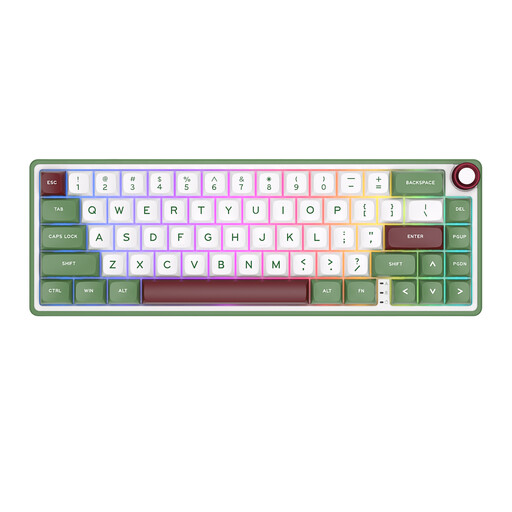
RK ROYAL KLUDGE R65, 60%, Green Sand, Chartreuse Switch
Could suit you if you want to customise key functions; check that the keys you use often are easy to reach on this compact layout.
The product title lists 66 keys, QMK/VIA and hot-swappable switches.
View at Joybuy
 No image available
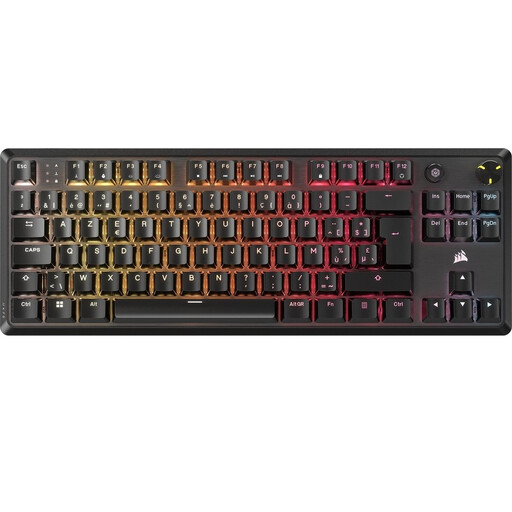
Corsair K70 CORE TKL, BE AZERTY, MLX Red
Could suit you if the BE AZERTY layout matches your language settings and typing habits; check where to find the punctuation and symbols you use most.
The product title lists a TKL layout, MLX Red switches and a black version.
View at Joybuy
 No image available
Ajazz AK820 Pro 75%, US QWERTY, Purple Flying Fish Switch
Could suit you if you want a compact layout but also need navigation and function keys; check where they are on the version you choose.
The product title lists a 75% layout, US QWERTY and tri-mode connectivity.
View at Joybuy
 No image available
KEYSME Lunar 01 80%, US QWERTY, white
Could suit you if you want customisable controls; check which functions are available with the programmable knob on your system.
The product title lists an 80% layout, US QWERTY, tri-mode connectivity and a programmable knob.
View at Joybuy
 No image available
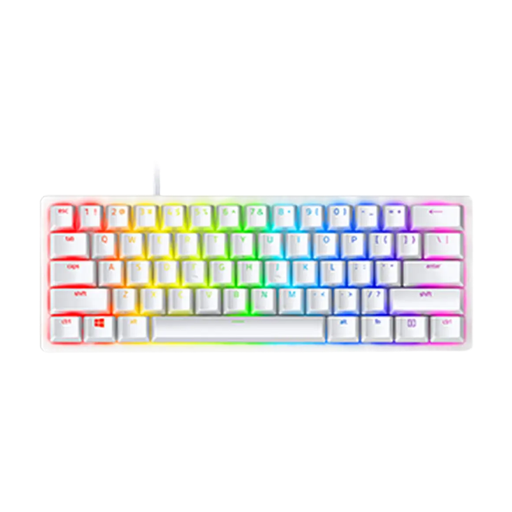
Razer Huntsman Mini, Linear Optical Switch, US, Mercury
Could suit you if you want to explore a compact layout and customisable keys; check that the US layout works for the symbols you use.
The product title lists linear optical switches. The product description states that it has a 60% layout.
View at Joybuy
Frequently asked questions
Do you need a physically split keyboard for split editors?
No. In Visual Studio Code, you can split the active editor using a software command; the documentation lists Ctrl+\ for Windows and Linux and ⌘\ for macOS. Check the command for your editor and keyboard layout.
How do you get started with a programmable key layout?
First, make a note of the commands and symbols you use often. QMK Firmware describes layers for alternative key functions; check that your specific keyboard supports them and save a working base layout before making changes.
Will a split keyboard automatically reduce physical discomfort?
No, that doesn’t follow from the product layout. Compare the positioning options, and consider your workspace, changing tasks and taking breaks too. The Dutch Arboportaal offers advice on working with display screens; manufacturers’ claims about their own products aren’t an individual medical guarantee.
What warranty and cooling-off period apply to an online purchase in the Netherlands?
ACM ConsuWijzer explains that the statutory guarantee exists alongside any manufacturer’s warranty, and that the retailer may be responsible for providing an appropriate solution if a product breaks down too soon under normal use. Online purchases generally come with a statutory 14-day cooling-off period, starting from delivery. Check the exceptions and returns information for your order.
Are there workplace rules for using a laptop keyboard?
For employees who work with display screens for more than 2 hours a day, the Dutch Arboportaal describes requirements stating that the screen and keyboard must not be attached to each other. A separate screen or keyboard must be usable with a laptop. This applies to a specific working situation and isn’t a general buying requirement for every hobbyist.


