What should you look for when choosing?
First, decide which keys you want to use directly while coding and testing. Then consider how much space you have and whether customisable keys, hand position or switching between devices matter for your work.
| What to consider |
What to look for when buying |
Who is this important for? |
| Layout and direct access |
Check whether it’s ANSI or ISO, the language variant, and whether arrow and function keys are included as dedicated keys. |
If I use lots of symbols, arrow keys and editor commands while coding, I want to know where those keys are. Around 29% of consumers prioritise direct access to coding keys. |
| Hand position |
Compare a compact model with a keyboard whose two halves can be positioned separately. |
If I type for long periods, I want to be able to adjust my hand position to suit my workspace. Around 23% of consumers focus mainly on this adjustability. |
| Key feel and sound |
Check the switch or scissor mechanism version; the sound may vary between models. |
If I work in a shared space, I want to choose a key feel and sound level that suit the environment. Around 18% of consumers prioritise key feel and sound. |
| Customisable keys |
Check which remapping options or macros the exact model supports, and what software you’ll need. |
For recurring editor or test tasks, I want to be able to configure keys if my software supports it. Around 18% of consumers focus mainly on this customisability. |
| Connection |
Check the USB connection or Bluetooth, and whether the exact model can switch between devices. |
If I work with more than one computer, I want to check how the keyboard connects to them and switches between them. Around 12% of consumers focus mainly on connectivity and switching devices. |
Joybuy keyboards for coding
These Joybuy models include TKL and compact keyboards, with options for customisable keys and switching between devices.
 No image available
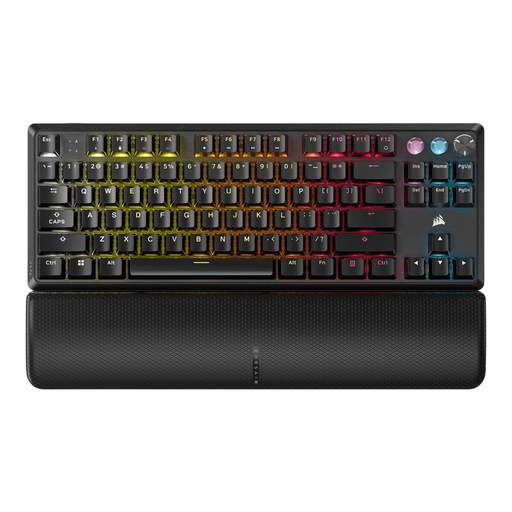
Corsair K70 PRO TKL Magnetic-Mechanical, US QWERTY, MGX v2, black
A TKL option if you’re looking for a compact size and programmable features.
The product information lists linear magnetic switches, programmable keys and macros. This version has a US QWERTY layout; check the position of the coding symbols you use.
Joybuy
 No image available
Corsair K55 CORE TKL, US QWERTY
A wired TKL option if you’re looking for a softer keystroke and key customisation.
The product information lists quiet membrane switches, key remapping via iCUE and a USB connection. This version has a US QWERTY layout; check that it suits the coding symbols you use.
Joybuy
 No image available
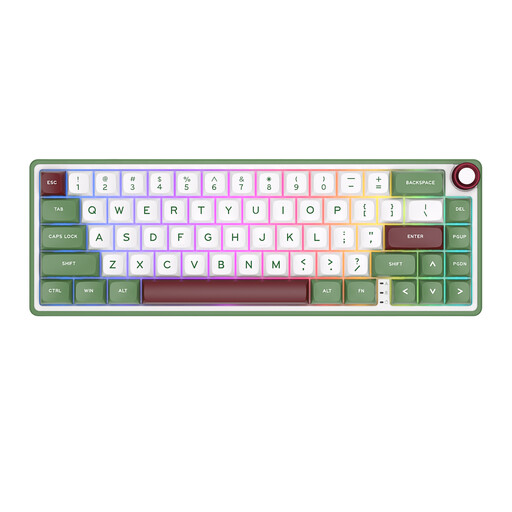
RK ROYAL KLUDGE R65, 66 keys, Chartreuse Switch, Green sand
A compact wired option if you want to customise keys and macros for recurring tasks.
The product information lists 66 keys, QMK/VIA support and hot-swappable switches. Check which keys you use often and how easy they are to access on this compact layout.
Joybuy
 No image available
Redragon M68, magnetic switches, 68 keys, US layout
A compact model to consider if you want to save desk space and are looking for magnetic switches.
The product title lists 68 keys and a US layout. Check that it suits the coding symbols and dedicated keys you use while coding.
Joybuy
 No image available
HP 725 Multi-Device Rechargeable Wireless Keyboard
A wireless option if you want to programme keys and switch between several devices.
The product information lists Bluetooth, a 2.4 GHz receiver and switching between up to three devices. Programmable keys are also mentioned; check which features work with your system.
Joybuy
Frequently asked questions
Do I need a programmable keyboard for a flashcard trainer with automated tests?
No, it isn’t essential. A programmable key can give you access to an editor or testing task if your development environment and testing software support it; the keyboard won’t write or check tests on its own.
How can I check that the keys for coding symbols are correct?
Compare the physical ANSI or ISO version and the language variant being sold with the keyboard layout on your computer. Then test the symbols and shortcuts you use often in your own editor; QWERTY alone doesn’t fully describe the layout.
Does a split keyboard prevent problems caused by long hours at a computer?
A split set-up can’t guarantee that. Arboportaal also highlights repetitive movements, static strain and the set-up of the whole workspace.
What are my rights if a keyboard I bought online isn’t right for me or is faulty?
For a distance purchase by a consumer in the Netherlands, there is generally a statutory cooling-off period of up to 14 days after delivery, subject to legal exceptions, according to ACM ConsuWijzer. If a product is faulty, the retailer is responsible for the statutory guarantee, according to the Authority for Consumers and Markets; this responsibility is separate from any manufacturer’s warranty.
Does Dutch law specify which keyboard I must buy as a programmer?
There is no single keyboard specification for every buyer. However, for employees who spend more than 2 hours a day working with a screen, Arboportaal states that the screen and keyboard must not be attached to each other. This workplace requirement applies under the stated condition and doesn’t mean there is a general obligation to buy a particular separate keyboard model.


