
Programmer and test writer
You mainly write code and tests, and want to use coding characters, arrow keys and keyboard shortcuts reliably. A compact, reprogrammable keyboard could suit you if you don't need a separate number pad.


Start with a layout that lets you check the coding characters and keyboard shortcuts on your own operating system. Choose a compact model if mouse space and navigating code are your priorities, a full-size keyboard if you often enter tournament data, or an ergonomic model if you want to factor in the position of your hands and arms. Programmable keys can make repetitive tasks easier, but they won't make your tests run any faster.
You mainly write code and tests, and want to use coding characters, arrow keys and keyboard shortcuts reliably. A compact, reprogrammable keyboard could suit you if you don't need a separate number pad.
You spend long periods working at a screen and want to consider your workstation setup and the position of your hands and arms. A keyboard isn't a solution or a guarantee against discomfort; Arboportaal highlights repetitive actions and static strain as factors to consider when working with screens.
As well as writing code, you regularly enter tournament data and weigh up whether having direct access to a separate number pad is worth the extra desk space.
A good fit if: you mainly write code and tests and don't need a separate number pad.
Consider: Keychron says the Q1 Max has a 75% layout and programmable keys. Check the exact ANSI or ISO version and the switch type you want.
A good fit if: you regularly enter scores, times or other tournament data by hand.
Consider: a full-size model takes up more desk space. Keychron describes the V6 Max as full-size, while CHERRY says the KC 6000 SLIM is wired and uses scissor keys.
A good fit if: the position of your hands and arms is a major factor in your choice.
Consider: Kinesis says the mWave has an integrated number layer rather than a separate number pad. Its different shape and layout may take some getting used to, and do not prove that it treats discomfort.
Arboportaal highlights repetitive hand movements and static strain when working with screens. So assess a keyboard alongside your workstation setup and the way you type.
| Factor to consider | What should you check? | Who should consider this? |
|---|---|---|
| Layout and coding characters | Check the exact physical version and test frequently used characters, arrow keys and keyboard shortcuts on your own operating system. | If you want the keys and typed characters to match your configured layout while coding, this is important if layout is your top priority. That applies to around 36% of consumers in this breakdown. |
| Posture | Compare the width, height and hand position. Also consider your desk setup and how long it may take to get used to a different shape. | If you type for long periods and want to factor in the position of your hands and arms, how well the keyboard fits your workstation matters if posture is your top priority. That applies to around 29% of consumers in this breakdown. |
| Number entry | Consider how often you enter numbers and whether you need direct access to a separate number pad. | If you regularly enter results or sequences of numbers, a separate number pad may be more convenient than a number layer. Around 21% of consumers in this breakdown put number entry first. |
| Sound and connectivity | Check the exact switch type, the sound and the connection that suits the ports and devices you have available. | If you share a keyboard or switch between devices, you'll want to know in advance how loud the chosen version is and what connection it uses. Around 14% of consumers in this breakdown put sound and connectivity first. |
The Keychron Q1 Max is available in several regional ISO versions. So the ISO label alone doesn't tell you which characters are on which keys.
Check the full version and test the coding characters you use often with your operating system's configured keyboard layout.
A different layout may take some getting used to or require you to adjust your software settings.
Kinesis says the mWave uses an integrated number layer, while the Keychron V6 Max and CHERRY KC 6000 SLIM are full-size keyboards. They offer different ways to enter numbers.
Estimate how often you enter tournament data by hand, then compare a number layer with direct access to a separate number pad.
As well as repetitive actions, Arboportaal highlights static strain when working with screens. The shape of a keyboard alone doesn't determine your entire workstation setup.
Assess the keyboard alongside your workstation and breaks from repetitive tasks. If discomfort persists, seek an appropriate assessment.
Logitech lists several switch types for the MX Mechanical Mini: Tactile Quiet, Clicky and Linear. The version you choose matters.
Check which switch type you're ordering and consider how it sounds in your workspace.
The Q1 Max and V6 Max models mentioned offer different layouts for programmable typing.
The mWave is a compact, ergonomic keyboard for those who want to factor in hand position and mouse space.
The KC 6000 SLIM is a wired, full-size alternative with scissor keys.
The MX Mechanical Mini is a compact mechanical range; Wave Keys is a separate ergonomic range.
This selection includes compact keyboards and models with a number pad, with both wired and wireless connection options. Compare the layout with your number-entry needs and check that the version you choose suits your operating system.
 No image available
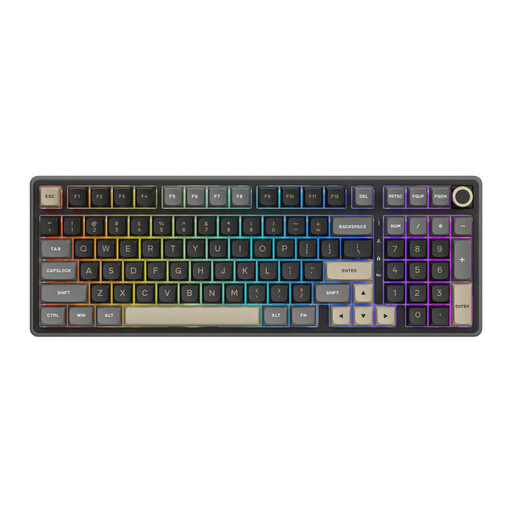
The full-size layout with number pad suits anyone entering tournament data alongside code.
QWERTY layout, arrow keys and function row; wired plug-and-play connection.
 No image available
The product name mentions a number pad, which may be useful if you often enter tournament scores.
Wired; the product description lists QMK/VIA, key remapping, macro support and hot-swappable switches.
 No image available
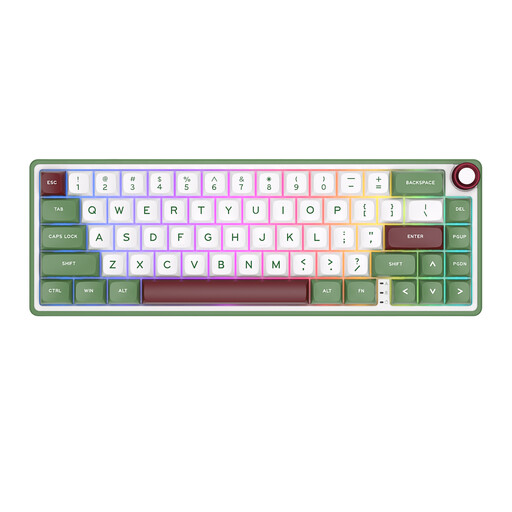
This wired model may suit you if you're looking for a compact keyboard layout.
The product name lists 66 keys, QMK/VIA, hot-swappable switches and Chartreuse switches.
 No image available
The 75% layout may suit you if you're looking for a more compact keyboard with navigation keys.
US layout; wired USB-C, Bluetooth and 2.4GHz modes.
 No image available
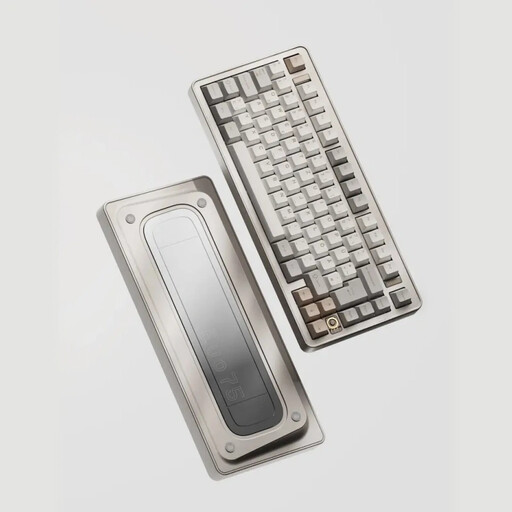
The 75% layout may suit you if you're looking for a compact keyboard with customisable keys.
US layout; wired, Bluetooth and 2.4GHz connections. The product description lists VIA compatibility and key remapping.
Check that your operating system's configured keyboard layout matches the physical version you're ordering. Then test the coding characters and navigation shortcuts you use often; set up any macros afterwards.
No. Start with the layout and keys you actually use. CHERRY says the KC 6000 SLIM has scissor keys, while the Keychron models mentioned are mechanical and programmable. This information doesn't prove that one type of key mechanism is better for every programmer.
A separate number pad can be useful if you regularly enter results, times or other sequences of numbers by hand. If you enter few numbers or want to save desk space, also compare a compact keyboard and check how its number layer works.
You can't tell from the shape alone. Kinesis describes the mWave as ergonomic, with split key groups. Assess the layout alongside your workstation, and seek an appropriate assessment if discomfort persists.
Check the connection, supported devices and whether the version you choose suits your operating system. The Dutch Authority for Digital Infrastructure describes requirements and CE marking for radio equipment placed on the market in the EU; a product listing alone doesn't prove that a specific version is compliant.