
Tracker developer
You write code and tests, and want symbols, navigation keys and shortcuts to be easy to use. RTINGS highlights layout and key accessibility as important factors when choosing a keyboard for programming.


Start with the layout: check that the symbols, arrow keys and function keys you use for coding and testing are easy to reach with your operating system. Then choose between a compact model, an adjustable split keyboard or a quieter switch option, based on your workspace and preferences. None of these types is automatically the best choice for everyone.
You write code and tests, and want symbols, navigation keys and shortcuts to be easy to use. RTINGS highlights layout and key accessibility as important factors when choosing a keyboard for programming.
You spend long periods at a screen and want to position your keyboard, mouse and hands to suit your workspace. TNO/CBS, via Arboportaal, provides guidance on screen-based work; Kinesis stresses that an ergonomic keyboard cannot guarantee the prevention or relief of discomfort.
You want to take typing noise into account or switch between devices. Logitech describes different switch options for the MX Mechanical Mini, and Bluetooth and Logi Bolt connections for Wave Keys.
A good fit if: you want physical arrow keys and a function row, but don't need a numeric keypad.
Bear in mind: fewer keys may mean using shortcuts for some input; mechanical switches vary in feel and noise.
A good fit if: you want to adjust the position of your hands or keyboard halves during long sessions.
Bear in mind: a split layout may take some getting used to, and an alternatively shaped keyboard does not automatically offer the same adjustability. No keyboard can guarantee that discomfort will be prevented or go away.
A good fit if: you value a familiar layout and low profile more than mechanical switches or a split design.
Bear in mind: check that the size, connection and layout suit your workspace.
| What to consider | What should you check? | Who should pay particular attention? |
|---|---|---|
| Code symbols and navigation | Test symbols used in your programming language, the arrow keys and function row with your keyboard and OS layout. | When I write code and run tests, I want to find the characters and navigation keys I need quickly. Around 40% of consumers put code symbols and navigation first. |
| Posture during long typing sessions | Assess the space for your keyboard and mouse, the distance between keyboard halves and the height of your desk. | When I work at a screen for long periods, I want to position my keyboard, mouse and hands to suit my workspace. Around 30% of consumers give posture the highest priority. |
| Typing noise | Check the switch option for the specific model and assess its noise during normal use. | When I share a workspace, I want to consider typing noise rather than relying on the name of a keyboard range alone. Around 20% of consumers prioritise a suitable switch option for a shared space. |
| Switching between devices | Check the supported operating systems, available USB connections and key functions on each device. | When I develop or test the tracker on multiple devices, I want to know which connection options and key functions work with them. Around 10% of consumers give switching between devices the highest priority. |
Code symbols and navigation keys are positioned differently across layouts, which can affect how you use editor and testing shortcuts.
Before buying, test the characters and shortcuts you use regularly with your chosen keyboard layout and OS settings.
An adjustable keyboard may give you more ways to position it, but it is no substitute for a suitable workspace setup or taking breaks from screen work. Kinesis warns that no ergonomic keyboard can guarantee to cure or prevent discomfort.
Assess your keyboard, mouse and desk together, and don't treat an ergonomic design as a medical outcome.
A stated manufacturer's warranty period does not automatically determine when your statutory rights end. ACM ConsuWijzer explains that statutory guarantees in the Netherlands do not automatically have a fixed two-year limit.
Keep your proof of purchase and contact the seller about a fault that occurs during normal use.
The MX Mechanical Mini offers mechanical switch options, while Wave Keys is a wireless model with an alternative shape.
The Freestyle2 International is worth considering if you're looking for adjustable split keyboard halves and a European ISO version.
The KC 6000 SLIM is a full-size, low-profile keyboard with scissor switches, designed for a conventional Windows setup.
The F75 is a compact mechanical option to explore if you're looking for arrow keys, multiple connection options and replaceable switches.
The Q6 Ultra 8K is a full-size mechanical keyboard worth considering for a permanent desk setup and extensive key customisation.
Explore mechanical keyboards with a range of layouts and connection options for coding and testing. Check that each version's layout suits the way you plan to use it.
 No image available
The compact layout may suit you if you want to save desk space; check that the US QWERTY layout works with your code and OS settings.
75% layout; tri-mode connection via cable, Bluetooth or 2.4 GHz; Reaper switches; US QWERTY layout.
 No image available
The 75% layout may suit you if you're looking for a compact mechanical model; check the US QWERTY layout before deciding.
75% layout; three connection modes; RGB lighting; PBT keycaps; US QWERTY layout.
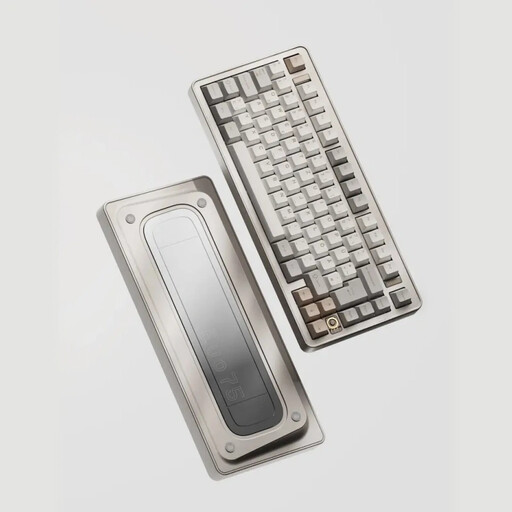 No image available
This model may suit you if you're looking for a compact layout and replaceable switches; check that the US layout works for the way you code.
75% layout; hot-swappable; three connection modes; USB-C; US layout; VIA-compatible.
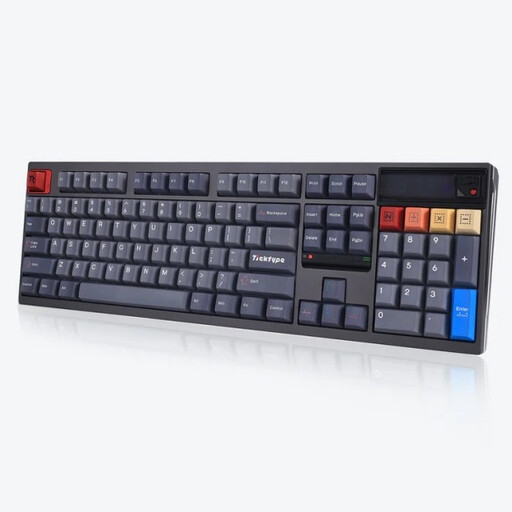 No image available
A full-size model may suit you if you want a numeric keypad; bear in mind the desk space it needs and check the US layout.
Full-size, 108-key layout; hot-swappable; 2.4 GHz, Bluetooth and USB-C; US layout.
 No image available
The 98% layout may suit you if you want a numeric keypad without opting for a full-size model; check the US QWERTY layout.
98% layout; hot-swappable; wired, Bluetooth and 2.4 GHz; volume knob; TFT display; US QWERTY layout.
No, a mechanical keyboard isn't essential for programming. First check that you can use code symbols, arrow keys and shortcuts easily with the layout; then choose the size and key feel that suit your workspace. RTINGS presents these as factors to weigh up, not essential specifications.
According to Logitech, you can connect Wave Keys via Bluetooth or the included Logi Bolt receiver. Logitech's support page describes separate key combinations for activating the Mac, Chrome or Windows layout; check which setting is right for your device.
For employees who work at a screen for more than two hours a day, Arboportaal says the screen and keyboard must not be attached to each other. A separate screen or keyboard must therefore be available when using a laptop. This workplace requirement is not a general legal purchase requirement for every private buyer.
ACM ConsuWijzer states that online purchases generally come with a statutory cooling-off period of up to 14 days after delivery, subject to exceptions. You also have statutory guarantee rights: in the Netherlands, these do not automatically have a fixed two-year expiry date, but depend on what you can reasonably expect from the product.