Start by choosing a layout that gives you easy access to the characters you need for in-game text and code, as well as your own debugging shortcuts. A TKL model with a function row and arrow keys is a sensible starting point if you use these keys frequently. A more compact model frees up desk space, while a split model takes more getting used to.
Which keyboard is right for you?
Programmer who debugs frequently
Switches between source code, in-game text and the debugger, and wants symbols, arrow keys and custom shortcuts close at hand. Microsoft Learn notes that Visual Studio keyboard shortcuts can vary depending on the keyboard layout and language settings.
Creator with limited desk space
Wants to leave room for a mouse and other work, and needs to decide which keys must remain within easy reach. A smaller model can save space, but check how to access the functions and symbols you need.
Frequent typist looking for comfort
Types for long periods and wants to consider key feel, sound and hand position. Look at the shape and adjustment options as part of your overall workspace; a design claim is no guarantee of a particular personal outcome.
What should you look for when choosing?
Start with the physical layout and the shortcuts you use while writing and debugging. Then decide how much space you have and which connection you need.
| What to consider |
What should you check? |
Who is this important for? |
| Characters for text and code |
Check the exact physical version, the software layout and the characters you need. |
If I want to type in-game text and code without hunting for symbols, I choose a layout I recognise. Around 33% of consumers put layout first. |
| Direct debugger access |
Compare the function keys, arrow keys and navigation keys with the shortcuts in your editor or IDE. |
If I use the same commands frequently while debugging, I want to know whether they are within easy reach. Around 25% of consumers prioritise debugger access. |
| Space and hand position |
Check the dimensions, number pad and adjustment options; consider how the keyboard will sit alongside your mouse and screen. |
If I need space around my mouse or want to adjust my hand position, I consider the shape and desk layout together. Around 17% of consumers prioritise workspace comfort. |
| Typing feel and sound |
Check the mechanism and, for a mechanical model, the switch type. |
If I type a lot or work in a shared space, I want to consider the feel and sound of the keys. Around 17% of consumers prioritise these features. |
| Connectivity |
For each version, check the connection type, connector and compatibility with your computer. |
If I need to choose between a wired workstation and using multiple devices, I consider the connector and connection type. Around 8% of consumers put connectivity first. |
Avoiding common purchasing mistakes
-
Assuming all QWERTY or ISO references mean the same layout
The physical key shape, the key legends and the software layout are different things. You’ll notice this most with symbols and punctuation.
Check the exact regional version and test the characters you need with the software layout you use.
-
Choosing a small keyboard without checking your shortcuts
On a model with fewer keys, functions may be accessed using a key combination or custom layer rather than a dedicated key.
Compare your most important debugger commands with the physical layout and check that the combinations you need will work for you.
-
Assuming a split model will prevent physical discomfort
A manufacturer may describe a particular hand position as a design goal, but this does not guarantee a personal health benefit. The rest of your workspace and the amount of time you spend working at a screen also matter.
Consider the shape and adjustment options alongside your workspace, and don’t treat product claims as a personal health promise.
Brands worth considering
Keychron
The K8 Pro ISO is a mechanical TKL option with a physical function row and customisable keys.
- Keychron describes QMK customisation and several ISO variants for this product line.
- Check the exact version and key layout; variants may differ.
Logitech
The MX Keys Mini is a compact wireless option for anyone looking to use less desk space.
- Logitech lists programmable keys and smart illumination.
- Check the layout and whether you can enter the characters and access the debugger functions you need.
Kinesis
The mWave is a fixed-split TKL model with a physical function row and customisable keys.
- Kinesis describes an embedded number pad and browser-based programming.
- Check which key layouts are available for the version you’re considering.
BakkerElkhuizen
The wired S-board 840 is a compact model with a scissor mechanism and no separate number pad.
- BakkerElkhuizen lists several layout options, including US Qwerty and UK Qwerty.
- A claim about reducing discomfort is no guarantee for an individual user.
CHERRY
The KC 6000 SLIM is a slim, wired full-size option with a number pad.
- The official specifications list a scissor mechanism, Windows and USB-A.
- The full-size layout needs space for the number pad; check you have the right regional version.
ZSA
The Voyager is a split option for anyone looking to customise their key layout extensively.
- ZSA lists 52 keys and an editor for custom layers.
- Functions without a dedicated key require a different way of working, so this layout won’t automatically suit everyone.
Keyboards at Joybuy
The models below suit different ways of entering code and in-game text, from compact layouts to a full-size model with a number pad.
 No image available
Corsair K55 CORE TKL, US QWERTY
The TKL layout without a number pad suits anyone who wants to keep space clear beside the keyboard.
US QWERTY; wired via USB-A; membrane keys. The product description mentions key customisation through iCUE.
View at Joybuy
 No image available
Wired QWERTY keyboard with number pad
The full-size layout may suit you if you want to use a number pad alongside code and text while you work.
QWERTY; wired and plug-and-play. The description lists arrow, navigation and function keys.
View at Joybuy
 No image available
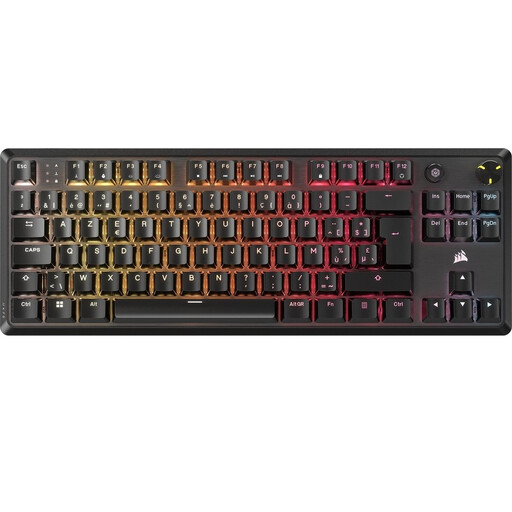
Corsair K70 CORE TKL, BE AZERTY, MLX Red
The TKL shape without a number pad is an option if you want to keep desk space clear and need a wired connection.
BE AZERTY; USB-C; linear mechanical keys. The product description mentions customisable profiles and macros through iCUE.
View at Joybuy
 No image available
Ajazz AK820 Pro, 75%, US QWERTY, Purple Flying Fish
The compact layout may suit you if you want a smaller keyboard with arrow and function keys.
US QWERTY; tri-mode. The product description lists an 82-key layout and Bluetooth, 2.4G and USB-C connectivity.
View at Joybuy
 No image available
Razer DeathStalker V2 Pro Tenkeyless, US layout
The tenkeyless shape is an option if you want to keep space clear beside the keyboard.
US layout; optical keys; Bluetooth or USB-C. The product description mentions programmable keys and macro recording.
View at Joybuy
Frequently asked questions
Do I need physical F keys for my debugger?
Not always: first check your editor’s commands and shortcut settings. Microsoft Learn notes that Visual Studio shortcuts can vary depending on the layout and language settings. If you use function keys frequently, a model with a function row gives you direct access.
Why don’t the symbols I type match the keys?
Check both the physical layout and your computer’s software layout. ZSA explains that the physical key shape is different from the regional setting that determines which character you enter.
How do you keep a programmable keyboard practical after setting it up?
Make a note of your chosen layout and test your code and debugger commands after making changes. Kinesis says that changes to the mWave are saved to the keyboard through Clique; the process varies by model.
What are the Dutch rules for working at a screen for long periods?
For employees who work at a screen for more than 2 hours a day, Arboportaal says that the screen and keyboard must not be attached to one another. When using a laptop, it must be possible to use a separate screen or keyboard. This is a conditional workplace rule, not a requirement to choose a particular type of keyboard.
Can you return a keyboard bought online, and who deals with a fault?
According to ACM ConsuWijzer, online consumer purchases generally come with a cooling-off period of up to 14 days after delivery; check the relevant exceptions and returns policy. If a product is faulty, the seller is responsible for the statutory guarantee. Rijksoverheid states that the Netherlands has no fixed statutory guarantee period for this.


