
Coder who relies on shortcuts
You write code and run tests from an editor or terminal. The position of symbols and the option to customise keys are important factors in your choice.


Start with a layout that gives you easy access to the programming characters and test shortcuts you use most. Then decide whether configurable keys, an adjustable hand position or a familiar layout matters most to you. Manufacturers offer programmable compact keyboards, split models and flat keyboards as different options. Check the layout, connection and software requirements for the exact model you’re considering.
You write code and run tests from an editor or terminal. The position of symbols and the option to customise keys are important factors in your choice.
You switch between typing, reviewing and testing, and want to position your hands and workstation to suit you. Arboportaal describes screen-based work as involving repeated movements of the fingers and hands, as well as static strain on the neck, shoulders and arms. A keyboard is just one part of the workstation.
You’re looking for a typing experience that suits your workspace, and considering factors such as noise, connection type and switching between devices. Check these features for the specific model.
A good fit if: you want to tailor keys or macros to tasks you repeat in your editor and testing workflow.
Consider: a compact layout may change the position of navigation and other frequently used keys, so check the exact model.
A good fit if: you want to choose the position of each hand on your workstation.
Consider: it may take time to get used to the setup, and layouts vary between models. An ergonomic shape does not guarantee that it will prevent or treat discomfort.
A good fit if: you don’t want to change your typing habits much and are considering a flat model with a wired or wireless connection.
Consider: check the layout, connection and any software requirements, as these can vary between models.
| What to consider | What to look for | Who might find this especially important? |
|---|---|---|
| Layout for coding | Check the key legends and how easy it is to reach symbols, navigation keys and function keys on the exact model. | If I use symbols and navigation keys often while coding, I want to know where they are on the layout I choose. Around 31% of consumers put layout at the top of their buying priorities. |
| Hand position | Consider the distance and angle between the keyboard sections, the space available for your mouse and your workstation setup. | During long coding sessions, I want to be able to position my hands to suit my workstation. Around 25% of consumers prioritise posture. |
| Configurable keys | Check which keys can be configured and what software or setup is required. | For tasks I repeat, I want to know whether I can configure keys to suit me and use those settings on my systems. Around 19% of consumers give key customisation top priority. |
| Typing noise | If possible, compare the exact model in a similar environment. Don’t assume how loud it is based on the type of keys alone. | In a shared workspace, I want to consider how much noise I’ll make while typing. Around 13% of consumers see typing noise as their main reason for buying. |
| Connection and devices | Check the operating system, the port or receiver required, and whether the model can switch between devices. | If I work across multiple devices, I want to know whether the keyboard is compatible with my setup and easy to switch between. Around 12% of consumers put connection and device switching first. |
Physical and country-specific layouts can vary, even within the same product range. As a result, symbols or keys you use often may be in a different place from where you expect.
Before buying, check the full model name and key legends, not just the product range.
Allow time to get used to a different key position.
An adjustable setup lets you change the position of the keyboard sections, but Kinesis warns that an ergonomic keyboard is not a medical treatment and is not guaranteed to prevent or cure discomfort. Screen-based work involves more than just the keyboard, too.
Consider your whole workstation and seek appropriate professional advice if discomfort persists.
Manufacturers describe key customisation and macros as ways to configure input tasks. This does not show that they improve the quality or outcome of your tests.
Choose these features only if you have specific tasks you want to assign to keys and can use the configuration on your system.
Setting up and checking the keys can take extra time.
The V1 Max is an example of a compact mechanical keyboard that you can customise for coding.
The Split Break v2 is a flat, split model with two sections that you can position separately.
The MX Keys S is a flat wireless model with features for multiple devices and configurable actions.
The KC 6000 SLIM is a flat, full-size keyboard for anyone looking for a familiar layout and a wired connection.
The Freestyle2 International is a split alternative with separately adjustable sections and country-specific ISO layouts.
These keyboards are for shoppers looking for programmable keys, a compact layout, device switching or a full-size model.
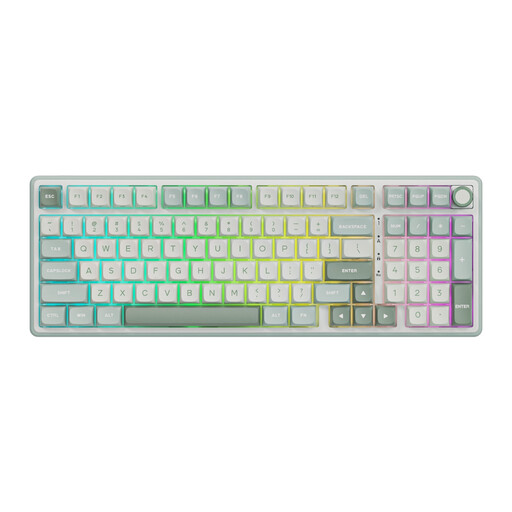 No image available
A good choice if you want to customise recurring input tasks and need a number pad.
Wired mechanical keyboard with a number pad and hot-swappable switches. The product description mentions key remapping and macros through an online driver.
 No image available
A good choice if you’re after a compact layout and want to compare different connection options.
The product title specifies a 75% layout, US QWERTY and wired, Bluetooth and 2.4GHz connections. Check that the US key legends suit the way you use your keyboard.
 No image available
A good choice if programmable keys and switching between multiple devices are important to you.
The product information lists a full-size layout, low profile and programmable keys. It can connect via Bluetooth or a 2.4GHz receiver, and the model described can switch between up to three devices.
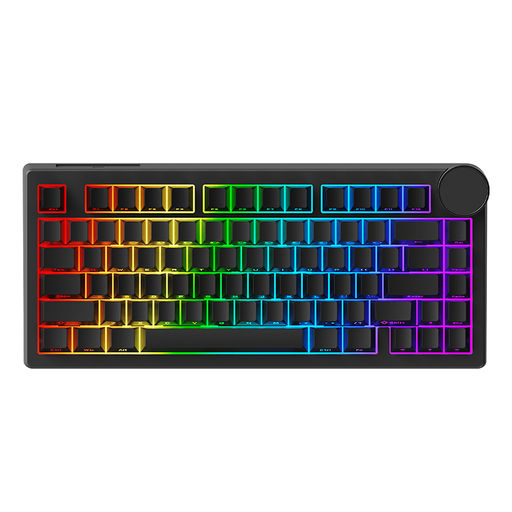 No image available
A good choice if you’re looking for a compact mechanical layout and want to customise keys or macros.
The product information mentions remapping, macro recording and saving settings to onboard memory. A Windows web driver is listed for configuration, so check it’s compatible with your system.
 No image available
A good choice if you want a full-size keyboard with a number pad and the option to switch between multiple devices.
The product information lists scissor keys and connections to up to four devices via a USB receiver and Bluetooth. The US QWERTY model does not have programmable keys.
No special keyboard hardware is specified as a requirement for the app and testing task described. Choose based on the characters and shortcuts you use, connection type and working posture, and check the software features for the exact model.
You could start with the two halves close together, then gradually adjust the distance or angle to suit your workstation. Kinesis describes this as manufacturer guidance; it is not a treatment for physical discomfort.
According to ACM ConsuWijzer, if a product develops a fault that falls short of what you could reasonably expect with normal use, the seller must offer an appropriate remedy free of charge, such as a repair, replacement or refund. There is no single fixed statutory warranty period for every keyboard.
ACM ConsuWijzer says that, as a rule, online purchases come with a statutory cooling-off period that ends 14 days after delivery. Check the relevant terms and any exceptions before using or returning the keyboard.
For employees who work at a screen for more than 2 hours a day, Arboportaal states that the screen and keyboard must not be attached to each other. Laptop users must therefore be able to use a separate screen or keyboard. This is not a general requirement for every shopper to choose a specific keyboard model.