
Rota organiser who enters lots of figures
You often enter start and finish times or figures, and want to weigh up whether a separate number pad is worth the extra desk space.


If you often enter times and figures, consider a keyboard with a number pad. If you also need room for paper and a mouse, start with a more compact model without one. Typing noise may be a factor in a shared room, but a manufacturer’s description of a model as quiet is not a comparative measurement. Check the layout and connection of the exact version too.
You often enter start and finish times or figures, and want to weigh up whether a separate number pad is worth the extra desk space.
You want to leave room for paper and a mouse. If you share the room, typing noise may also be a factor; size and noise are separate considerations.
You switch between devices, so you want to check the connection, supported systems and physical keyboard layout of the exact version.
A good fit if: you regularly enter times, figures or amounts and have room for the keyboard on your desk.
Bear in mind: a full-size keyboard takes up more desk space.
A good fit if: having room for your mouse and rota notes matters more than a separate number pad.
Bear in mind: you may miss having a separate number pad if you enter lots of figures.
A good fit if: you edit the rota on different devices, such as a laptop and tablet.
Bear in mind: check Bluetooth support and the layout. If you’re choosing a keyboard and mouse set, make sure you want to use the included mouse too.
| What to consider | What should you check? | Who is this important for? |
|---|---|---|
| Figures and times | Consider how many number sequences you enter and check whether the version has a number pad. | If you often enter times and figures one after another, a separate number pad can be useful; around 31% of consumers prioritise number entry. |
| Typing noise | Check the key mechanism and keyboard layout. Don’t treat descriptions such as “quiet” as directly comparable measurements. | If you work in a shared room, quiet typing may matter more than size or number entry; around 25% of consumers prioritise this need. |
| Desk space | Measure the available space with your laptop, mouse and paper on the desk; also check whether the version has a number pad. | If you want to leave room for your mouse and rota notes, a more compact model may be a better fit; around 25% of consumers prioritise desk space. |
| Connections and devices | For each device, check which USB port or Bluetooth connection is available, the supported systems and the physical keyboard layout. | If you use both a laptop and a tablet, the right connection and layout matter; around 19% of consumers prioritise device compatibility. |
A number pad can be useful if you enter a lot of figures, but it takes up space you may need for a mouse or paper.
Put your laptop, paper and mouse in their usual places, then compare a full-size model with a TKL model.
Logitech, CHERRY and Trust describe certain models as quiet or low-noise, but these descriptions don’t provide a comparative measurement of their noise levels.
Check the key mechanism and think about how you’ll use the keyboard in your room. Without comparable measurements, don’t assume one model is quieter than another.
The connection, physical keyboard version and included components also affect whether a particular version suits your devices and workspace.
Check the connection and supported systems for the exact version, and see what’s included in the box.
The K120 is a full-size wired keyboard with a number pad; the Pebble Keys 2 K380s is a compact Bluetooth model for multiple devices.
The STREAM KEYBOARD TKL is a wired, more compact version without a separate number pad.
The Ody II is a wireless keyboard with a USB receiver; the Lyra is a compact keyboard and mouse set for multiple devices.
This selection includes keyboards with a number pad for entering figures, as well as more compact versions for anyone looking to save space or use different devices.
 No image available
An option to consider if you’re looking for a full-size keyboard with a number pad for entering times and figures.
Wired and plug-and-play; QWERTY layout; black.
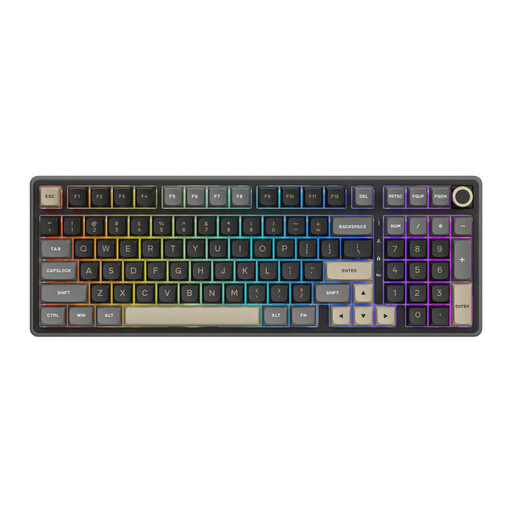 No image available
The numeric keypad is useful for entering number sequences; check that the other features suit the way you use your keyboard.
Wired mechanical keyboard with numeric keypad and volume knob; RGB lighting; hot-swappable.
 No image available
A compact layout may suit you if you want to save desk space and need different connection options.
75% layout; wired, Bluetooth and 2.4G. The listed keyboard layout is US.
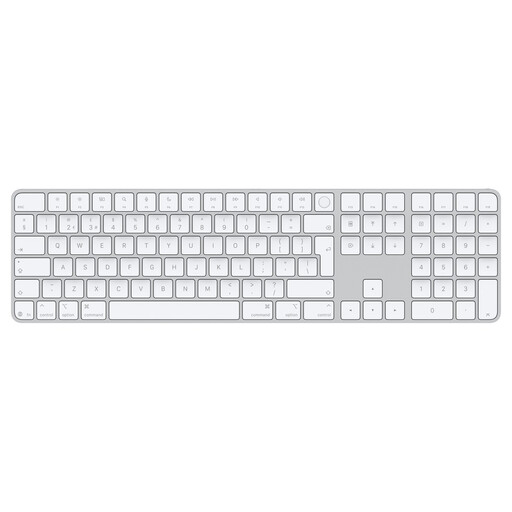 No image available
A keyboard with a number pad and Dutch layout for anyone who needs the stated Mac compatibility.
With Touch ID and numeric keypad; the product title says it’s designed for Mac models with Apple Silicon. White keys.
 No image available
The compact, foldable design may suit you if you want to put your keyboard away and use it with different types of device.
Bluetooth; foldable design with touchpad; designed for tablets, smartphones and computers.
If you enter lots of times and figures one after another, a full-size model with a separate number pad is worth considering. If you mainly type names and short notes and have a small workspace, a TKL model without one may be a better fit. Weigh up how much number entry you do against the space available.
Check the connection on the exact version and what your device supports. The Logitech K120 uses a wired USB connection, the Pebble Keys 2 K380s uses Bluetooth, and according to Trust the Trust Lyra set uses a USB receiver and two Bluetooth connections. Also check the supported systems and physical keyboard layout.
Make sure you have enough room for your screen, keyboard and mouse, and vary your screen-based tasks and posture. The Dutch Arboportaal recommends, among other things, regularly looking away from your screen and taking short breaks. A particular keyboard is no substitute for a suitable workspace setup.
According to ACM ConsuWijzer, for a standard online product purchase you generally have a statutory cooling-off period of up to 14 days after delivery, subject to legal exceptions. A product must also do what you could reasonably expect it to do. If it’s faulty, the seller is responsible for providing an appropriate solution. A manufacturer’s warranty doesn’t replace these statutory rights.
Yes. Radio equipment covered by the relevant EU rules must meet requirements relating to safety, electromagnetic compatibility and the use of radio spectrum, among other things. According to the European Commission, a CE mark is the manufacturer’s declaration that the product meets the applicable rules; it isn’t an independent assessment of sound or quality.