
Checkout tester who mainly uses a keyboard
Works through form fields and controls without a mouse and wants to see which element has focus.


Choose a keyboard with a layout and connection that suit your regular test setup, and that lets you work through the checkout repeatedly using Tab, Shift+Tab and Enter. Backlighting can make key legends easier to see, but it won’t prevent reflections on your screen, so assess screen positioning and any window blinds separately. W3C describes keyboard operation and visible focus as features of the web page, not the keyboard.
Works through form fields and controls without a mouse and wants to see which element has focus.
Works in bright daylight and wants to read the key legends without confusing reflections on the screen with a keyboard issue.
Switches between test devices or has limited desk space, so connection and layout are important considerations.
| What to consider | What to look for | Who is this important to? |
|---|---|---|
| Checkout navigation | Check the layout and how easy it is to reach Tab, Shift, Enter and the arrow keys. Also check whether the checkout itself clearly shows where focus is. | If you repeatedly navigate forms and buttons using the keyboard, you’ll want to find the keys you use most easily. Around 36% of consumers prioritise reliable checkout navigation. |
| Readability in daylight | Check whether the legends on your chosen version are actually backlit. Assess screen reflections separately, for example by adjusting the screen position or using window blinds. | If you work next to a bright window, you’ll want to see both the key legends and the checkout on screen clearly. Around 29% of consumers give visibility by the window top priority. |
| Typing posture | Consider how much space the keyboard and mouse take up. With a split model, check that both halves fit comfortably at your workstation. | If you test for long periods, the positioning of your hands and keyboard may influence your choice. Around 21% of consumers prioritise typing posture. |
| Switching between setups | Check the connection options and compatibility with your devices. With a compact model, also check that the keys you need are readily available. | If you switch between test devices or workstations, you’ll want a connection and layout that suit those setups. Around 14% of consumers give switching between setups top priority. |
Backlighting makes key legends easier to see, but it won’t prevent reflections on your screen. These are separate things to consider.
Assess the screen and keys separately in the lighting conditions you’ll be testing in. To manage reflections, consider the position of your screen and workstation.
For the Keychron K3 Max SE, the manufacturer specifies opaque keycaps. RGB backlighting therefore doesn’t automatically mean the letters light up.
Check the exact version to make sure the legends are visible in the way you need.
A compact keyboard may place keys differently, and an adjustable layout may take time to get used to. This means the keys you use for regular test tasks might not feel familiar straight away.
Check the layout and run through your usual key sequence before testing a checkout.
The MX Keys S is a well-documented option with a full-size layout, wireless connectivity and adjustable backlighting. Check which layout comes with the version on offer.
The STREAM range includes a wired, low-profile keyboard. According to CHERRY, the STREAM KEYBOARD ULTIMATE also offers multiple connection channels and adjustable backlighting.
According to Keychron, the K3 Max SE is a compact 75% option with Bluetooth, 2.4 GHz and wired connectivity.
The manufacturer describes a keyboard with two separately positioned halves and configurable keys.
This selection includes wired keyboards for a fixed test setup, as well as models with a more compact layout or connectivity for multiple devices.
 No image available
A wired option for a fixed test computer. The full-size layout may suit you if you want a numeric keypad.
Full-size layout with numeric keypad and QWERTY layout.
 No image available
A wired mechanical model to compare if you work at one fixed test computer.
The product name specifies 94 keys and an included wrist rest.
 No image available
A more compact wired layout to consider if desk space is limited. Check that the key positions suit your checkout shortcuts.
83 keys and a US QWERTY layout. The product name specifies interchangeable linear switches.
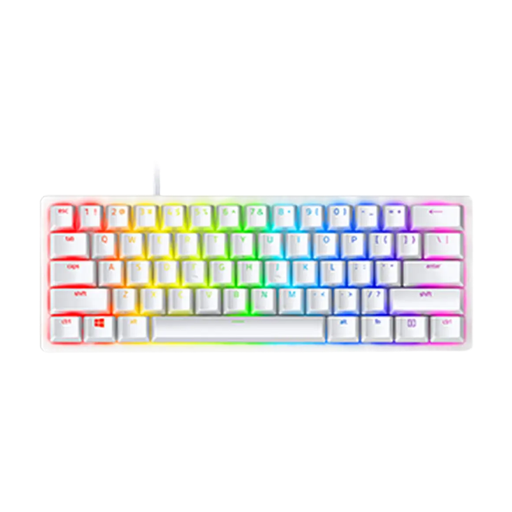 No image available
A compact model to consider if space is limited. Check that the US layout suits your test tasks.
The product name specifies linear optical switches and a US version.
 No image available
An option to compare if you switch between devices. Check that the US layout suits the keys you regularly use for testing.
The product information states that the keys are not backlit.
Not if the reflection is on the screen. Backlighting helps you see the key legends; assess screen reflections separately by looking at the screen position and workstation.
Use the keyboard to move through the interactive elements and check that you can always see which element has focus. W3C describes keyboard operation and visible focus as features of the web page; changing the keyboard won’t make a checkout accessible by itself.
For the situation described by Arboportaal, an employee who works with a screen for more than 2 hours a day must use a setup where the screen and keyboard are not attached to each other. With a laptop, it must therefore be possible to use a separate screen or keyboard. This is a workplace rule that applies in specific circumstances, not a general buying requirement for every user.
For a typical online consumer purchase, you generally have a statutory 14-day cooling-off period after delivery, although exceptions may apply. ACM ConsuWijzer and EU consumer information explain that you may have to pay return costs if the seller doesn’t offer to cover them and tells you this before you buy. Check the seller’s terms and conditions.