What should you look for in a keyboard for app testing?
First, check which inputs your app tests need to cover. Then compare the keyboard’s size, connection and key feel with your room and computer.
| What to consider |
What to look for |
Who should pay particular attention? |
| Keys and layout |
Make a note of the F keys, arrow keys, Home/End, Delete and numeric input you need; also check your operating system’s input layout. |
If you need to test navigation, shortcuts or numbers, you’ll want to know which keys are physically present; around 31% of consumers prioritise the input they need for testing. |
| Typing noise |
Check the exact model and its key mechanism. Treat ‘quiet’ as a manufacturer’s description unless comparable noise measurements are available. |
If someone else is studying in the same room, you’ll want to consider the noise from repeated typing; around 25% of consumers prioritise quiet typing. |
| Desk space |
Measure the available space and compare it with the dimensions of the model you’re considering; at the same time, check that it has the keys you need. |
If you have a small desk, you’ll want to leave room for your screen and mouse without missing any keys needed for testing; around 19% of consumers prioritise saving space. |
| Connection and settings |
Check which port, receiver or Bluetooth support you need, and decide whether you want to test standard input or customised key functions. |
If you need a straightforward connection or configurable keys, you’ll want to know what your test computer supports; around 13% of consumers prioritise connectivity or configurability. |
| Longer testing sessions |
Consider the position of your keyboard, mouse and screen together, and change your posture or tasks when needed. |
For longer testing sessions, you’ll want a workstation you can set up comfortably; around 12% of consumers prioritise how well it fits into their workspace. |
Keyboards at Joybuy
This selection includes wired full-size models and keyboards with different layouts and connection options for app testing.
 Image unavailable
Wired QWERTY keyboard with numeric keypad
A wired model for tests that require a numeric keypad and navigation keys.
The product description lists a numeric keypad, arrow keys, navigation keys and function keys. The title specifies QWERTY, plug-and-play and a full-size layout.
View at Joybuy
 Image unavailable
Ticktype DP104, Powder White, linear switches, US layout
The full-size layout may suit tests that require plenty of physical keys; check whether the US layout matches your test cases.
The title specifies 108 keys and linear switches. The description lists USB-C wired, Bluetooth and 2.4 GHz connections.
View at Joybuy
Image unavailable
Ticktype DP104, Powder White, silent tactile switches, US layout
The product title specifies a full-size layout with 108 keys; check whether the US layout suits the physical keys you want to test.
The title lists silent tactile switches. Treat ‘silent’ as a product claim, not a comparative noise measurement.
View at Joybuy
 Image unavailable
REDRAGON wired mechanical keyboard with 94 keys
A wired 94-key layout to consider if your test setup can use a permanently connected keyboard.
The product name lists a metal keyboard, phone stand and wrist rest. The description specifies a wired connection and hot-swappable switches.
View at Joybuy
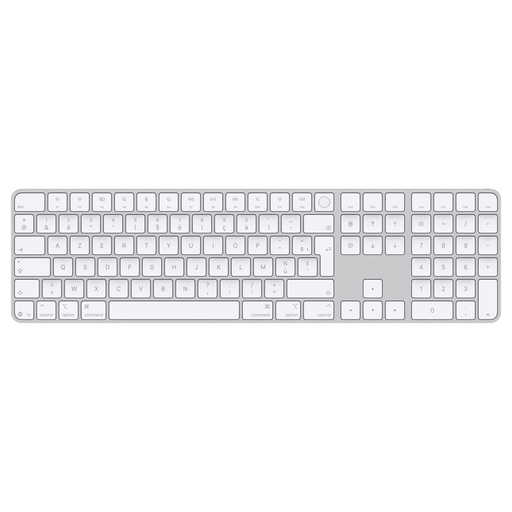 Image unavailable
Apple Magic Keyboard with Touch ID and numeric keypad
This model may be relevant if your tests require a numeric keypad and document navigation; the description focuses on use with a Mac.
The description lists Bluetooth, a rechargeable battery, document navigation keys and full-size arrow keys. Check that the connection and features suit your test computer.
View at Joybuy
Frequently asked questions
Do I need to buy a full-size keyboard for app testing?
Only if your test cases require dedicated keys that are missing or combined on a compact layout, such as a numeric keypad. Compare the required key actions with the physical layout of the exact model; Microsoft notes that shortcut behaviour can vary between applications.
Why do different characters appear from the ones printed on the keys?
Check both the physical key layout and the keyboard and input layout selected in Windows. Microsoft explains how to add, remove and change input layouts in Windows; this advice applies to a Windows test computer.
How should I set up my keyboard for longer testing sessions?
Look at your whole workstation and position your screen and input devices so that your shoulders, wrists and forearms can stay relaxed. Arboportaal recommends paying attention to a relaxed posture; this isn’t proof that one keyboard can prevent health problems.
What if a keyboard I bought online isn’t right for me or develops a fault?
In many cases, online purchases from a business come with a 14-day cooling-off period, subject to possible conditions and exceptions. If a product is faulty, you’re entitled to a product that works properly in the Netherlands, and the seller must offer a solution; the Dutch government says there’s no fixed statutory warranty period for all products.
Does the Working Conditions Act require me to use a separate keyboard for app testing in my student room?
That doesn’t necessarily follow from the rules described by Arboportaal. Its information on screen work concerns employers’ obligations; for students, Arboportaal separately describes work carried out within the framework and facilities of an educational institution that reflects professional practice. Those conditions don’t automatically apply to private app testing in a student room.


