
People who spend long hours building an app
If you type code for long periods, you’ll want to be able to adjust your hand position and workspace setup to suit you. A conventional and a split keyboard each take a different amount of getting used to.


Start by choosing a keyboard layout that gives you easy access to the coding, navigation and tagging keys you use most. Then consider customisable shortcuts, typing noise and your workspace setup. A conventional, mechanical or split keyboard may suit different preferences, but no keyboard determines where your app stores photos and tags.
If you type code for long periods, you’ll want to be able to adjust your hand position and workspace setup to suit you. A conventional and a split keyboard each take a different amount of getting used to.
If you want to speed up recurring coding or tagging tasks, check which keys you can customise and how those changes work on your device.
If other people work nearby, quieter typing may be important. Also check whether the keys you need for coding and tagging are easy to find.
Best for: people who value familiar keys and quieter typing.
Consider: check that the layout and any key customisation software are compatible with your system.
Best for: people who want to customise keys or macros for recurring tasks.
Consider: some keys may be less accessible on a compact layout, so check the exact version.
Best for: people who want to position the two keyboard halves separately and learn a different layout.
Consider: a different layout takes time to get used to, and is no substitute for a suitable workspace setup or varying your activities while you work.
Start with the keys you use often for coding, navigation and tagging. For programming keyboards, RTINGS recommends considering features such as arrow keys, a function row and a number pad, as well as whether you want to access certain inputs using key combinations.
| What to consider | What should you check? | Who is this important for? |
|---|---|---|
| Hand position and extended typing | Consider the space on your desk, where your mouse sits and whether you want to learn a conventional or split layout. | If I type code for long periods, I want to be able to choose how I position my hands and set up my workspace. Around 36% of consumers make hand position and extended typing their top priority. |
| Shortcuts and remapping | Check whether you can customise the keys you want on your system and how the configuration is saved. | If I carry out the same coding or tagging tasks often, I want those keys to be easy to access. Around 29% of consumers make shortcuts and remapping their top priority. |
| Layout and accessibility | Compare the exact ANSI, ISO or other specified version with the layout you use; don’t assume it based on the product range alone. | If I want to find my usual keys and symbols quickly, I check the layout of the specific version. Around 21% of consumers make keyboard layout and accessibility their top priority. |
| Typing noise | Check the mechanism and, for a mechanical model, the switches on the version you’ve chosen. | If other people work nearby, I want to consider how much noise typing makes. Around 14% of consumers make quieter typing their top priority. |
A TKL or 75% layout differs from a full-size keyboard. This can matter if you need direct access to certain navigation, function or number keys for programming.
Compare the layout of the exact version with the keys and symbols you use often.
Allow time to get used to key combinations or a different layout.
Keyboard settings and photo and tag storage are separate matters. A customisable key doesn’t determine where the app stores your data.
Check the keyboard’s key settings separately from the storage options in your app’s design and settings.
The positioning of your keyboard, screen and mouse, and varying your activities also play a part. A keyboard alone doesn’t determine how your entire workspace is set up.
Look at your setup as a whole, and vary your posture and activities while working at a screen.
A different layout may take time to get used to; allow time to adjust your workspace too.
The MX Keys S is a flat, wireless model, while the K120 is a conventional wired USB keyboard. These product ranges offer different key customisation options.
The V1 Max is a compact mechanical model for people who want to remap keys. Before buying, check which layout is available with your chosen version.
The STREAM KEYBOARD TKL is a wired model without a number pad, featuring the standard main keys.
The ErgoDox EZ is a split keyboard for people who want to position the two halves separately and choose a programmable layout.
This selection features mechanical keyboards with different layouts, connections and key functions. Check whether each model’s layout and features suit your coding and tagging tasks.
 No image available
The title lists 94 keys, a wired connection and a wrist rest for anyone looking for this type of setup.
Mechanical keyboard with 94 keys; the title also mentions a phone stand and wrist rest.
 No image available
The 68-key layout is a compact option; check that the US layout suits the keys you use.
The product title mentions magnetic switches and a US layout.
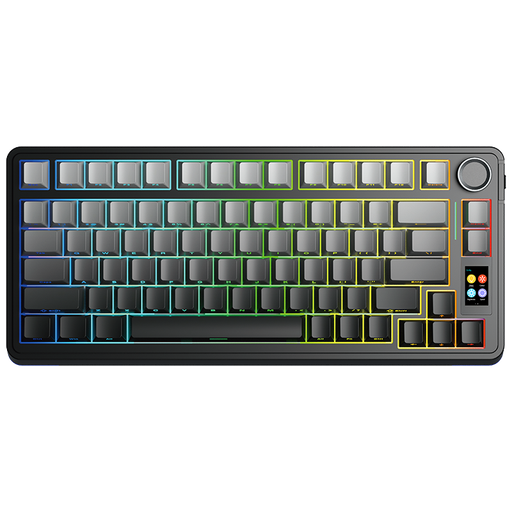 No image available
The 75% layout may suit you if you’re looking for a more compact option; check which keys are directly accessible before you buy.
The product title lists a wireless mechanical keyboard with hot-swappable switches.
 No image available
The product description mentions customisable macros and onboard memory for functions you use repeatedly.
75% layout with arrow and function keys; the title lists a US QWERTY layout.
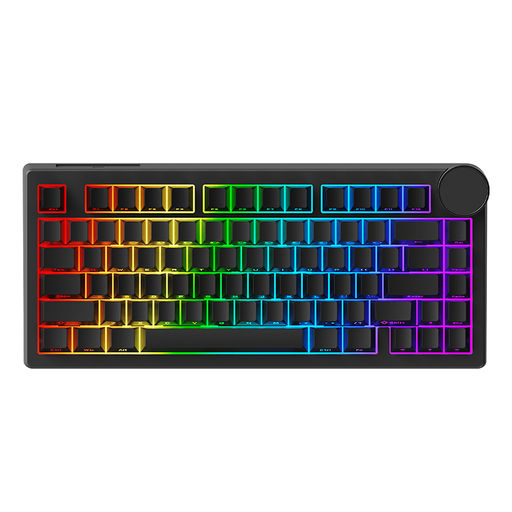 No image available
The product description mentions remapping, macros and profiles for anyone who wants to customise key functions.
75% layout with a function row and arrow keys; the title lists a wired connection.
No. A keyboard handles input and some models may offer key customisation. You set where photos and tags are stored separately, in your app’s design and settings.
Check whether the arrow keys, function keys, symbols and any number keys you use are directly accessible. Compare the exact layout of the version you’ve chosen with the one you’re used to.
For employees in the Netherlands, Arboportaal outlines a requirement for people who work at a screen for more than two hours a day: the screen and keyboard must not be attached to each other. When using a laptop, it must be possible to use a separate screen or keyboard; employers may be able to make exceptions subject to certain conditions. This isn’t a general purchase requirement for everyone building an app in their own time.
Arboportaal recommends varying your screen-based tasks, changing your working posture and taking short breaks. This advice is separate from the choice of a particular keyboard.
No, storage location alone doesn’t determine this. The Dutch Data Protection Authority says that identifiable people in photos count as personal data. An exception may apply to strictly personal or household use that remains private or within a very limited circle. You shouldn’t assume that this exception applies if the photos are shared more widely or used for business.