
Vandaag of morgen in huis

Kwaliteit gegarandeerd

Welkomstaanbiedingen ontgrendelen: GRATIS bezorging | Tot 80% korting | Gratis 30 dagen JoyPlus-proefperiode
Download de app
A kettle may seem like a straightforward purchase, but you’ll notice the differences between models after just a few months of use. A low price can be tempting, while an unclear water-level indicator, a lid that’s difficult to clean or a missing limescale filter can cause daily frustration. A higher wattage also doesn’t automatically mean the kettle will always boil faster: the amount of water and the heating element both play a part.
Joybuy Product Recommendation Officer selects products based on verifiable specifications. So don’t just focus on colour or design; pay particular attention to capacity, safety, maintenance and the features you’ll actually use.
A 1.7-litre kettle is useful for a family or office, but it isn’t always economical if you usually make just one cup of tea. You may end up heating more water than you need. A 1 or 1.25-litre model may be more practical for one-person households.
Check whether the kettle has clear MIN and MAX markings. On some models, the indicator is harder to read from one side, particularly when the kettle is positioned beneath a kitchen cupboard.
A fast-boiling kettle with 3,000 watts can heat water quickly, but the actual boiling time depends on the amount of water, its starting temperature and the heating element. For one cup, a 1-cup indicator is often more useful than a high wattage alone.
A power rating of 1,800 to 2,400 watts is common for many household models. Also check that the appliance is suitable for 220-240 V and 50-60 Hz, as with most models in this selection.
A kettle with temperature control is useful for different types of tea or coffee. If you only use boiling water, you may be paying for features that offer little benefit. The same applies to a kettle with a keep-warm function: it can be practical when several people make drinks at different times, but it uses electricity for longer than switching the kettle off straight away.
Also look out for conflicting product information. A title may describe a “glass kettle”, for example, while the specifications state that the housing is made of plastic. Always check the section containing the technical details and safety information.
Use this guide:
Never fill the kettle above the MAX marking. Too much water may spill through the spout or lid while boiling.
A glass kettle makes the water level and boiling process easy to see. However, glass can become hot and requires regular maintenance to keep limescale build-up visible.
A stainless-steel kettle often has a robust housing. Check whether the exterior becomes hot, though. A double-walled model may keep the outer wall cooler, but always use the handle and safety instructions as your guide.
Plastic models are often lightweight and affordable. When reading a product description, check that it explicitly states that the material is BPA-free; don’t assume this automatically.
A kettle with automatic shut-off switches off, according to the product description, when the water boils. Useful additional features include:
Descale the kettle regularly according to the instructions, and never clean the base, plug or cord under running water.
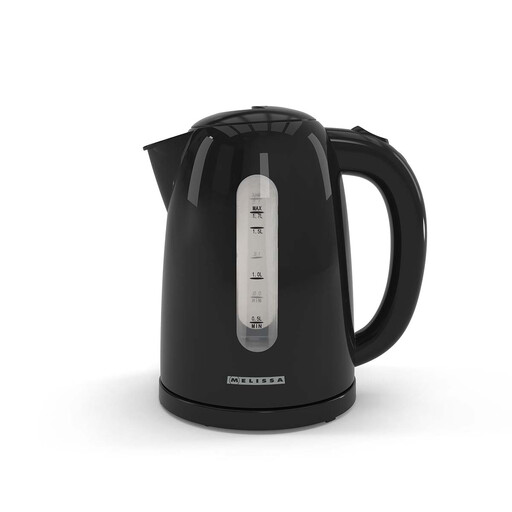
Why it suits this profile: A simple black kettle with a 1.7-litre capacity for everyday family use.
The specifications list a water-level indicator, limescale filter, boil-dry protection and automatic shut-off.
1.7-litre capacity, 2,200 watts, 360° swivel base and cord storage in the base.
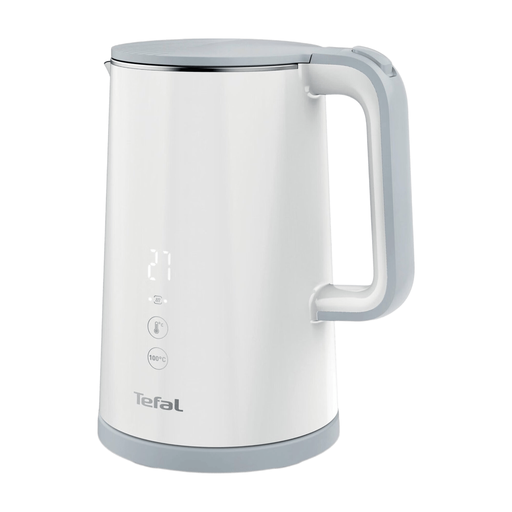
Why it suits this profile: For tea and coffee lovers who value temperature selection, clear readings and ease of use.
The five temperature settings from 40 to 100 °C make it clear which option you’re using; a display shows the measured temperature according to the product description.
1.5-litre capacity, 30-minute keep-warm function, double-walled housing and removable limescale filter.
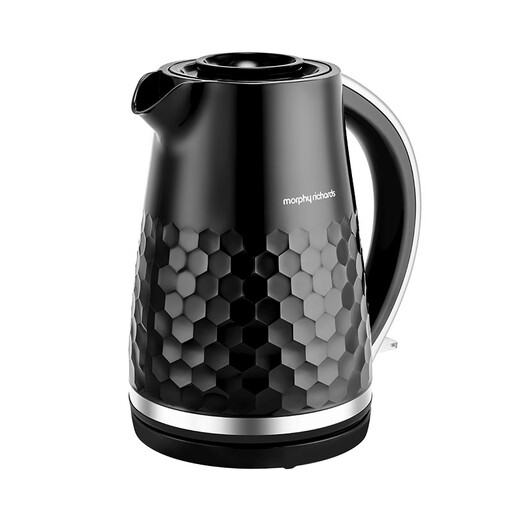
Why it suits this profile: For families and offices where larger amounts of water are boiled several times a day.
The product details list MIN and MAX markings, an easy-fill system, boil-dry protection and automatic shut-off.
3,000 watts, 1.5-litre capacity, 360° swivel base and removable limescale filter.
We’ve put together a complete, up-to-date list of products that fully meet these strict selection criteria and the applicable European safety regulations.
For home use, the power rating is often between 1,800 and 3,000 watts. A higher power rating can provide a shorter heating time for the same amount of water, but the electricity used per boil also depends on the amount of water and how long the kettle is running. So only boil as much as you need.
This depends on the hardness of your water and how often you use the appliance. If you notice flakes, a dull layer on the heating element or slower performance, it’s time for maintenance. A kettle with a limescale filter won’t keep all limescale out of the kettle: the filter mainly catches particles as you pour. Descale the inside according to the instructions.
The lifespan varies depending on the model, frequency of use and maintenance. Regular descaling, not allowing the kettle to boil dry and handling the lid and base carefully can help reduce wear and tear. Before buying, also check the warranty, availability of replacement parts and repair information. In the European Union, consumers are also covered by the statutory guarantee; the exact rights depend on the circumstances and the seller.
