
Everyday flask filler
If you usually fill one thermos flask, check the capacity and fill markings so you don’t boil more water than you need. Milieu Centraal advises boiling only the amount of water required.


Choose a kettle with a usable capacity that suits your thermos flask, and a jug, base and open lid that will fit on your worktop. Then compare the spout, handle and fill markings: a compact kettle may be enough for one flask, but you might need to boil water again for several large flasks. Before you buy, also check the markings and documentation for the model on offer to ensure it can be used safely.
If you usually fill one thermos flask, check the capacity and fill markings so you don’t boil more water than you need. Milieu Centraal advises boiling only the amount of water required.
You’ll need room for the jug and base, as well as space to open the lid. The dimensions listed by Princess for model 236023 give you a useful point of comparison for the space you have available.
When pouring hot water into a narrow flask opening, the spout, handle and ease of handling the kettle are all important. The Consumentenbond includes filling, pouring and carrying in its test criteria.
First, compare the amount of water you need with the minimum and maximum fill markings. Then measure your available worktop space and consider how you’ll handle the jug above your flask opening.
| What to consider | What to look for when buying | Who should pay particular attention? |
|---|---|---|
| Enough water for your flask | Compare your flask’s capacity with the kettle’s minimum and maximum fill markings. | If I usually fill one flask, I want to know whether I can do so in one permitted fill. Around 31% of consumers prioritise having enough capacity for their flask. |
| Controlled pouring | Check the shape of the spout and handle, and how much space you’ll need above the flask. | With a narrow opening, I want to pour hot water carefully and hold the kettle securely. Around 25% of consumers put pouring first. |
| Fits on your worktop | Measure the width, depth and height, and allow for the base and room to open the lid. | In a small kitchen, I need to be able to put the kettle down, fill it safely and lift it. Around 25% of consumers prioritise the space it takes up. |
| Smaller boils and maintenance | Check the minimum fill level, how easy it is to see the water level, and access to the filter and inside of the kettle. | If I sometimes need less than a full flask, I want to be able to measure the amount and clean the kettle. Around 19% of consumers prioritise smaller amounts and maintenance. |
The jug’s capacity alone won’t tell you whether you can fill your thermos flask in one go. The fill markings and the space available also determine whether the size is practical.
Measure the space and compare the dimensions of the jug, base and lid. Check both the minimum and maximum fill markings.
A stated wattage doesn’t tell you how long a particular model will take to boil your amount of water. The Consumentenbond measures boiling times for the kettles it tests.
Use boiling-time measurements only if they apply to the exact model and a comparable amount of water.
The Joybuy listing for the Tefal Subito Mini uses the title ‘Subuto 5’. The title alone doesn’t confirm that the item on offer is identical to a model with a different spelling.
Compare the full model number and the product specifications for the item on offer. Also check the markings and documentation to ensure it can be used safely.
Tefal offers both a 1-litre kettle and the 1.7-litre Smart'N Light KO8508. The right capacity depends on your flask and what else you’ll be boiling water for.
The Princess 236023 is a 1-litre kettle. The dimensions provided by Princess can help you compare it with the worktop space you have available.
Philips lists a 1.7-litre capacity for the 3000 Series HD9318/20. This may be a better option if you regularly boil water for other people as well as filling a thermos flask.
This selection includes kettles with stated capacities from 1,0 to 1,5 litres, suited to smaller boils and limited worktop space. Compare the fill markings and dimensions with your own flask and kitchen.
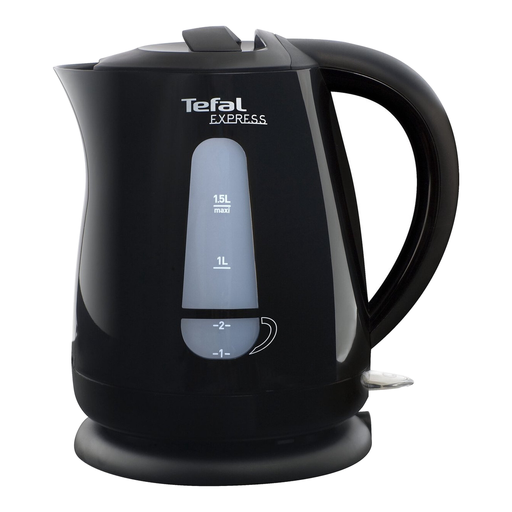 Image unavailable
The one-cup indicator is designed to help you measure smaller amounts in this 1,5-litre kettle.
The product description lists an automatically opening lid, a removable limescale filter and a 360° swivel base.
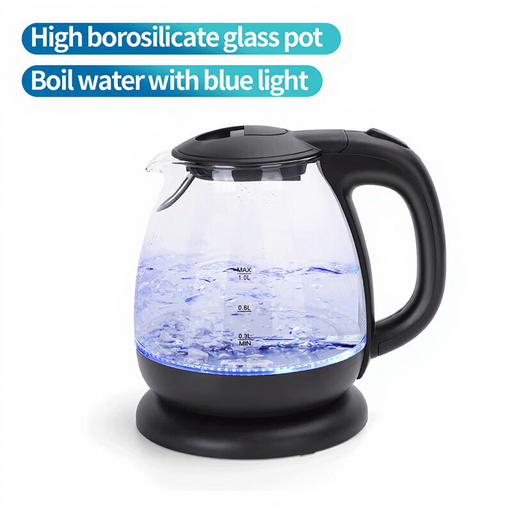 Image unavailable
The stated 1,0-litre capacity and water level indicator are useful if you want to measure a smaller amount for a flask.
The product description lists a spout and fine filter; the instructions specify that the appliance is for boiling water only.
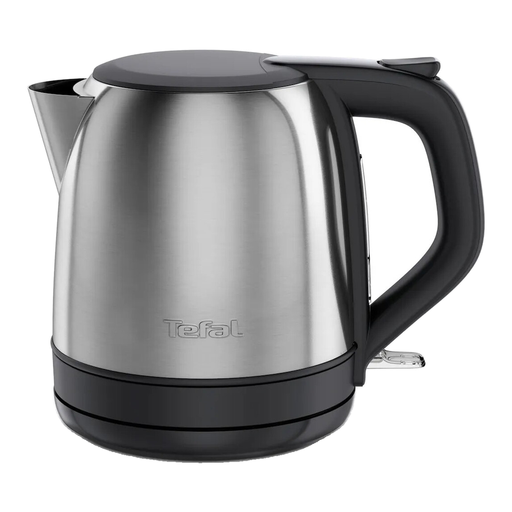 Image unavailable
The stated capacity is 1 litre; the description mentions a single-cup indicator for smaller amounts.
The product description lists a lid that can be operated with one hand, automatic shut-off and boil-dry protection.
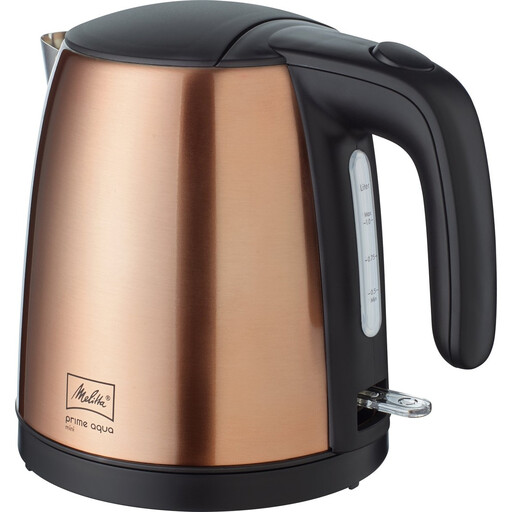 Image unavailable
The product description lists a 1-litre capacity and a water level indicator to help you measure a smaller amount to boil.
It also mentions an anti-drip feature, automatic shut-off and boil-dry protection.
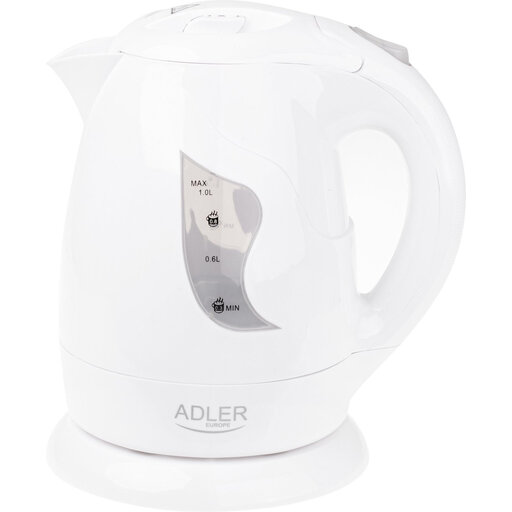 Image unavailable
The stated 1,0-litre capacity and water level indicator are useful for a smaller fill.
The product description lists dimensions of 18 × 15 × 19 cm, a filter and automatic shut-off.
That depends on your flask’s capacity and the kettle’s permitted fill levels. Compare them before buying: the jug’s total capacity doesn’t tell you how much water you can boil in one go for your needs.
Measure out only the amount of water you need rather than filling the whole kettle by default. Milieu Centraal also recommends descaling regularly; follow your model’s instructions for how to do this.
In the Netherlands, the seller is responsible for providing a solution if a product is faulty, according to the Dutch government. There isn’t a fixed two-year statutory warranty period for every product; a manufacturer’s warranty is separate from your statutory rights.
CE marking is compulsory for electrical consumer products. The Netherlands Food and Consumer Product Safety Authority classifies kitchen appliances as electrical equipment. Check the marking and model documentation for the item on offer; a product listing alone doesn’t prove that it meets the requirements.