
Vandaag of morgen in huis

Kwaliteit gegarandeerd

Welkomstaanbiedingen ontgrendelen: GRATIS bezorging | Tot 80% korting | Gratis 30 dagen JoyPlus-proefperiode
Download de app
A kettle with temperature control can be useful if you do not always need boiling water. Green tea, coffee, baby food and some instant drinks often require a lower temperature. However, a digital display or a long list of programmes does not tell you everything about day-to-day use.
The main pitfalls usually come down to three points:
Also consider the difference between a standard electric kettle and a hot water dispenser. A dispenser can heat water instantly, one portion at a time, but it often takes up more space and uses a separate reservoir. A kettle is usually easier to fill, store and clean.
Do not just look at the number of settings. Check the range and increments in particular. A kettle with adjustable temperature might, for example, offer settings of 40, 60, 70, 80, 90 and 100 °C. Other models work with temperatures from 45 to 100 °C or with five fixed programmes.
A digital kettle with a temperature display makes it easier to read the set or measured temperature. An LED indicator with colour codes can also work, but is less clear when several people use the appliance. For tea and coffee, having several useful settings is more important than a large number of barely different programmes.
Use the temperature settings as a practical guide. The ideal temperature may vary depending on the drink, recipe and personal preference. For baby food, always follow the preparation instructions on the packaging; the kettle does not replace those instructions.
A 1.7-litre kettle is suitable for several cups. At a capacity of 250 ml per cup, that works out at around seven cups, according to product information from various models. For one or two people, 1.5 litres may be sufficient and the kettle will take up slightly less space.
Many models have a power rating of between 1,800 and 2,200 watts. A higher wattage can speed up heating, but also check that your socket and circuit are suitable for use at the same time as other appliances. It is best not to share a socket with several high-powered kitchen appliances.
A water-level indicator helps you avoid heating more water than necessary. This saves time and prevents unnecessary energy use. Never fill above the maximum mark and do not use the kettle below the minimum mark.
A stainless steel kettle often has a metal interior and can feel sturdy. With double-walled models, the exterior remains relatively cool according to the product description, but the handle, lid and steam outlet can still become hot. A glass kettle makes the water level easy to see, but requires extra care when handling and cleaning.
At a minimum, check for:
Descale the kettle regularly according to the instructions. Limescale can build up on the heating element and filter. Use the kettle only for clean water unless the manufacturer explicitly states otherwise.
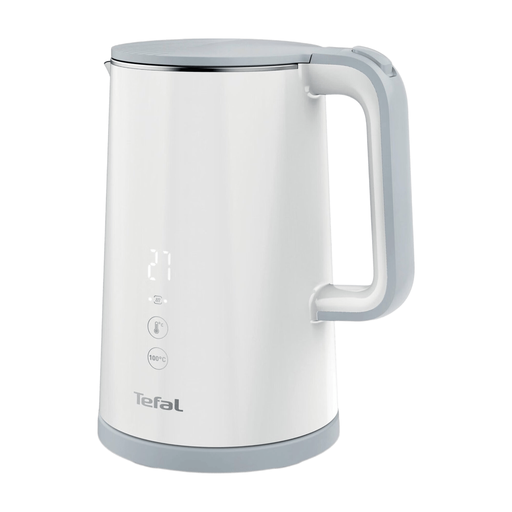
Why it suits this profile: The 1.5-litre capacity and five temperature settings provide a straightforward starting point without a large number of complicated programmes.
The product information mentions a digital display with temperature readout, five settings from 40 to 100 °C and automatic shut-off.
Double-walled housing, keeps water warm for up to 30 minutes, water-level indicator and 360° swivel base.
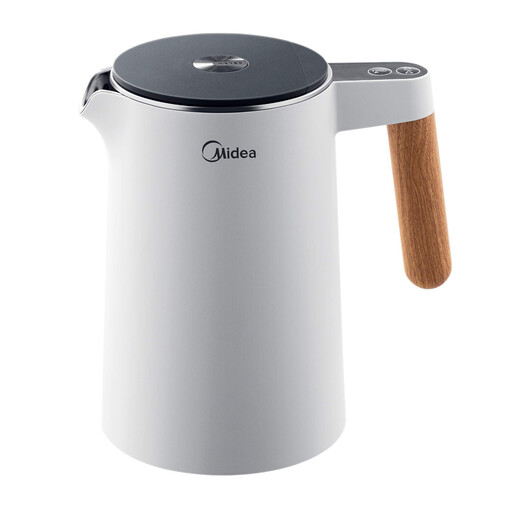
Why it suits this profile: For everyday use, the combination of temperature selection, display, double-walled construction and keep-warm function are useful features to assess.
The listed specifications include seven settings from 45 to 100 °C, a visible display and automatic shut-off when the set temperature is reached.
2,200 watts, keeps water warm for up to one hour, 1.5-litre capacity and BPA-free parts which, according to the product description, do not come into contact with water.
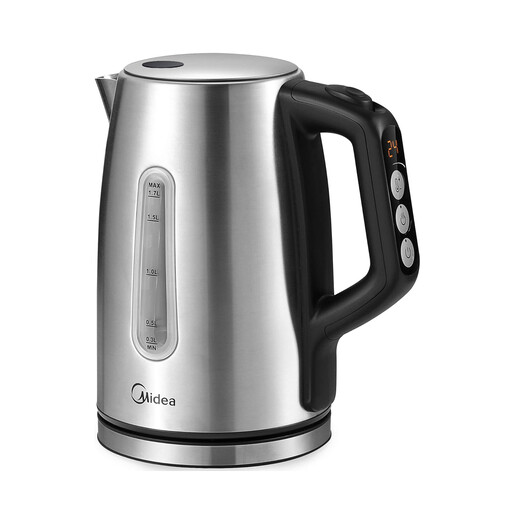
Why it suits this profile: The larger capacity is practical for families or when you are preparing several cups of tea and coffee in succession.
The product information lists six temperature settings, a large water-level indicator, limescale filter, boil-dry protection and automatic shut-off.
1.7-litre capacity, 2,200 watts and a keep-warm function for up to 60 minutes according to the product description.
We have put together a complete, up-to-date list of products that fully meet these strict selection criteria and the applicable European safety regulations.
This mainly depends on the amount of water you heat and the temperature selected. For one cup, it is generally more efficient to fill the kettle with just that amount rather than heat a full kettle. A lower temperature also requires less energy than boiling water. A keep-warm function can be useful, but it also uses electricity for as long as it remains active.
Its lifespan depends on usage, maintenance, limescale build-up and the quality of its components. Descale the kettle according to the instructions, do not leave water standing in it for long periods and avoid boiling it dry. When buying, also check whether replacement filters are available and what warranty or servicing terms apply.
There is no universal setting for every drink. Many kettles offer settings between 40 and 100 °C, allowing you to adjust the temperature to the recipe or the producer’s instructions. For coffee and tea, always check the recommended preparation method. For baby food, follow the instructions on the packaging and allow the water to cool sufficiently before using it.
