
Holidaying alone or as a couple
You usually make one or two bowls and want a kettle that takes up little space and suits the amount of water specified on the soup packet.


If you usually make one bowl at a time, choose a compact kettle that can also boil the small amount of water you need. For several bowls, a larger capacity is more practical. Check the minimum and maximum fill levels, and prepare the soup in a bowl rather than in the kettle, unless the instructions for that specific model explicitly say otherwise.
You usually make one or two bowls and want a kettle that takes up little space and suits the amount of water specified on the soup packet.
You want to boil enough water for several bowls at once, so you’re looking at usable capacity and how easily you can pour with control.
You want to check how to connect and use the kettle safely, especially if you don’t yet know the sockets or how much worktop space is available.
First, work out how much water you usually need and how much space you have. Then check the fill markings, controls and socket in the holiday cottage.
| What to consider | What to look for | Who is this important for? |
|---|---|---|
| Limited space and small portions | Compare the minimum fill level and the kettle’s dimensions with the amount stated on your soup packet and the available storage space. | If I usually make soup for myself or two people, I want a kettle that takes up little space and suits one or two portions. Around 36% of consumers put small portions and space first. |
| Several bowls at once | Add together the amounts of water stated on the soup packets and compare the total with the maximum fill level. | If I’m boiling water for several people, I want to know whether one boil will be enough. Around 29% of consumers put having enough water for several portions first. |
| Safe connection and pouring | Check the model information on automatic shut-off and boil-dry protection, and follow the instructions for connecting the kettle. | In an unfamiliar kitchen, I want to know how to connect the appliance properly and pour boiling water safely. Around 21% of consumers put safe use first. |
| Measuring water and maintenance | Look for easy-to-read measurements, a suitable minimum fill level and a limescale filter that can be maintained as described in the instructions. | If I want to boil no more water than necessary and keep the appliance easy to maintain, I look at the measurements and filter. Around 14% of consumers put measuring and maintenance first. |
A large kettle doesn’t tell you how little water you can boil. If you heat more water than you need, you may be left with unnecessarily hot water after pouring.
Compare the amount stated on the soup packet with both the minimum and maximum fill levels.
‘For soup’ may mean boiling water to add to soup in a bowl. Philips explicitly says not to heat soup or other liquids in model HD9351/90.
Make the soup in a suitable bowl, and check the instructions for the exact kettle model before putting anything other than water in it.
In an unfamiliar kitchen, you may not know what type of socket is available. The Fire Service warns that a coiled extension cable can get hot and advises plugging high-power appliances directly into a socket wherever possible.
Check the instructions and the available socket; don’t use an extension cable while it’s coiled.
The Subito Mini KO5S2D is a 1-litre kettle for a small kitchen and a limited number of portions.
The 236023 is a compact 1-litre kettle with a visible water level.
The WK 3647 is a 0.5-litre travel kettle for small amounts and limited luggage space.
The HD9360/40 has a capacity of 1.7 litres; the HD9396/90 is a separate model with temperature control.
This selection includes kettles with capacities from 1.5 to 1.8 litres, which are particularly suitable for boiling water for several bowls at once. For a single portion, check the minimum fill level too.
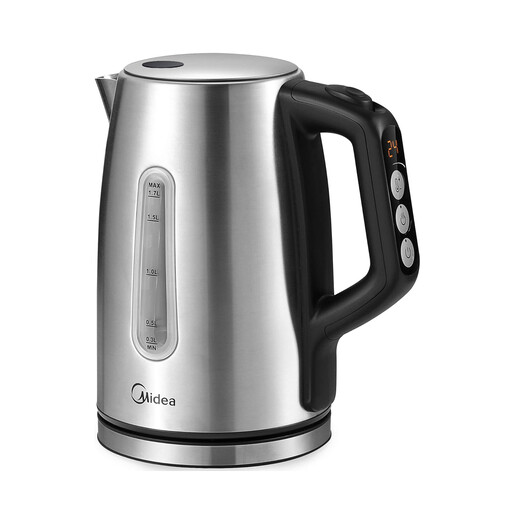 No image available
The 1.7 L capacity makes this an option if you want to boil water for several bowls at once.
According to the product name: 2200 W, 6 temperature settings (40-100°C), keep-warm function, water-level indicator, automatic shut-off, boil-dry protection and limescale filter.
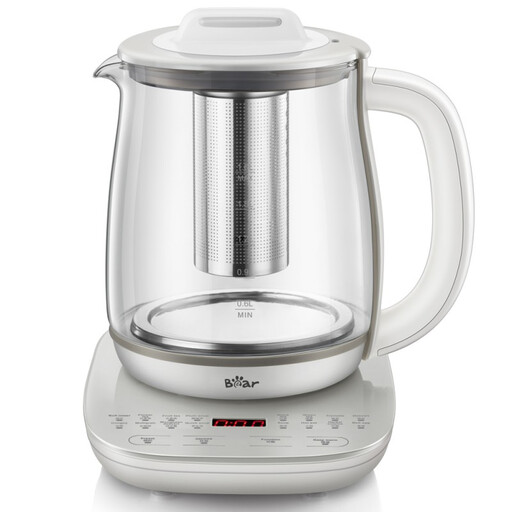 No image available
The 1.8 L capacity may suit you if you want to boil water for several portions at once.
According to the product name: 1000-1200 W and 16 preset programmes.
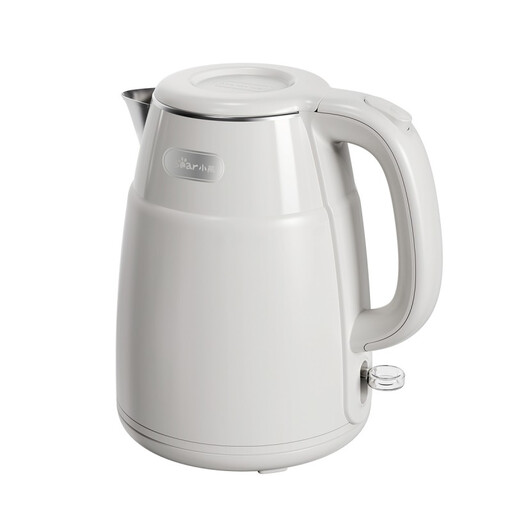 No image available
The 1.5 L capacity is designed for boiling water for several portions.
According to the product name: stainless steel, 1500W-1750W, automatic shut-off and boil-dry protection.
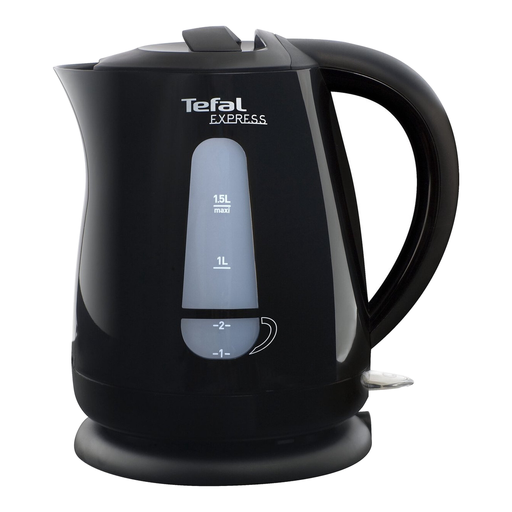 No image available
The 1.5 L capacity may suit you if you want to boil water for more than one portion.
According to the product name: stainless steel and a black finish.
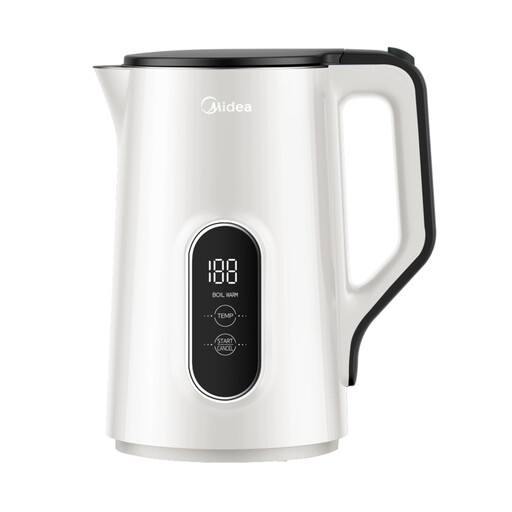 No image available
With a capacity of 1.5 L, this model may suit you if you want to boil water for several bowls.
According to the product name: 2200 W, adjustable temperature from 45-100°C, double-walled casing and digital temperature display.
Use the kettle to heat water, then mix it with the soup in a suitable bowl, following the instructions on the packet. Philips prohibits heating soup in model HD9351/90; check the instructions for every other model.
Check the socket and the instructions, and don’t use an extension cable while it’s coiled. The Fire Service advises plugging high-power appliances directly into a socket wherever possible. This is safety advice, not a separate legal requirement for every kettle.
Measure out only the amount of water you need, and descale the kettle according to the instructions. Milieu Centraal recommends considering a small kettle if you often make one or two cups, and notes that a visible water-level indicator is useful.
Yes, if the appliance falls within the scope of the relevant rules. The NVWA outlines requirements for electrical equipment within the specified voltage range. According to the European Commission, a CE mark is the manufacturer’s declaration for products covered by the applicable harmonised rules; it isn’t a quality certificate issued by the government.
If a product is faulty, contact the seller. According to the Dutch government, there is no fixed statutory guarantee period in the Netherlands: what you can expect from a product depends, among other things, on the product itself and the information provided. A manufacturer’s guarantee does not replace this statutory right.