
Making porridge for one
You usually heat water for one bowl and want to measure out the amount you need without boiling more than necessary. Milieu Centraal advises heating no more water than you need.


If you usually make one bowl of instant porridge, start with a compact kettle that lets you measure out the amount of water you need. A larger capacity may be more practical if you regularly make several portions. Temperature control is most useful when the packaging or another use calls for a specific setting. Heat the ingredients separately in a bowl, unless the instructions for your exact kettle model explicitly allow otherwise.
You usually heat water for one bowl and want to measure out the amount you need without boiling more than necessary. Milieu Centraal advises heating no more water than you need.
You want a kettle that’s easy to put away or store. Capacity and external dimensions are separate things to check; Tefal describes the Subito Mini KO5S2D as a 1-litre model.
You also use the same kettle for several bowls or drinks, and weigh up the extra capacity against the space the appliance takes up. Bosch lists the capacity of the MyMoment TWK1M123 as 1.7 litres.
If you’re heating water for instant porridge in a small kitchen, your choice will mainly depend on portion size, available space, how you’ll use the kettle and the water temperature you need.
| What to consider | What should you check? | Who is this important for? |
|---|---|---|
| Amount per portion | Check the minimum fill level and water-level markings for the exact model. Compare them with the amount of water stated on the packaging. | If I’m making one bowl, I want to measure out the amount I need and avoid heating more than necessary. Around 36% of this group prioritise measuring out portions. |
| Worktop and storage space | Compare the external dimensions with the space available, and leave room to fill and pour from the kettle. | If my worktop is short on space, I look at both the kettle’s size and where I can store it after use. Around 29% of this group prioritise space. |
| Pouring and maintenance | Check the opening, spout and handle of the exact model. Also check the automatic shut-off feature and care instructions. | If I use the kettle often, I want it to be easy to fill, pour from and clean. Around 21% of this group prioritise ease of use and maintenance. |
| Choosing the water temperature | First, read the preparation instructions on the packaging. Then compare the available settings and minimum fill level. | If the packaging or another use calls for a particular temperature, I want to be able to select it. Around 14% of this group prioritise temperature control. |
The maximum capacity doesn’t tell you how much water you need to put in the kettle at a minimum. This can make a difference when you’re heating water for one bowl.
Check the minimum fill level in the instructions and make sure the water-level markings are easy to read. Milieu Centraal advises heating only the amount of water you need.
The instructions for a specific model may rule out other uses. Philips states that the HD9351/90 is designed for water, not other liquids or food.
Heat water according to the instructions on the porridge packaging, then mix the ingredients in a bowl, unless the instructions for your exact model explicitly allow otherwise.
A kettle with temperature control won’t automatically tell you which setting is right for your instant porridge. Instructions may vary from product to product.
Read the preparation instructions first, then decide whether temperature control would be useful for your portions or other drinks.
The Subito Mini KO5S2D is worth comparing if you make small portions or have a compact kitchen; the Sense KO693110 offers temperature control.
The MyMoment TWK1M123 is a basic kettle worth comparing if you also regularly heat larger amounts of water.
The Daily Collection HD9350/90 is an option worth comparing if you’re looking for a metal kettle.
These kettles are suited to small portions and compact kitchens; one model also offers adjustable temperature settings.
 No image available
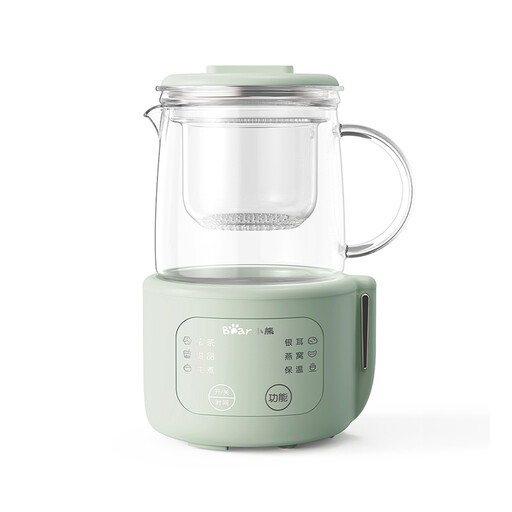
The 0.4-litre capacity is worth considering if you usually heat water for one small portion.
Capacity: 0.4 litres. Dimensions: 136 × 112 × 194 mm. The product information lists six functions, touch controls and a time display. Handle the glass components with care.
 No image available
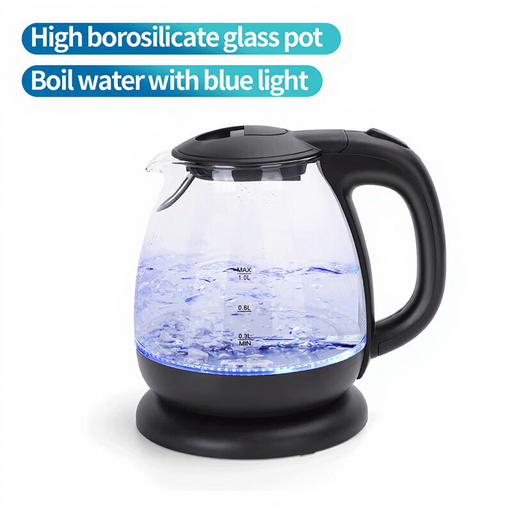
The 1-litre capacity and listed water-level indicator are useful if you want to measure out smaller amounts.
Capacity: 1 litre. Power: 2,200 W. Dimensions: 207 × 156 × 198 mm. The instructions for this model are for heating water, not other liquids or food.
 No image available
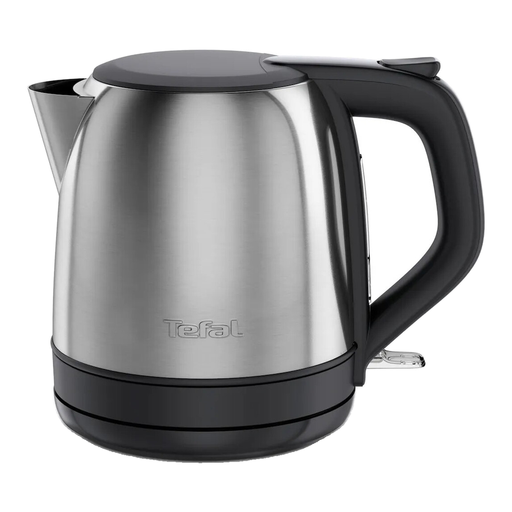
The one-cup indicator and 1-litre capacity make this model worth comparing for small portions.
Capacity: 1 litre. The product information lists automatic shut-off, boil-dry protection and a removable limescale filter. Check the minimum fill level in the instructions.
 No image available
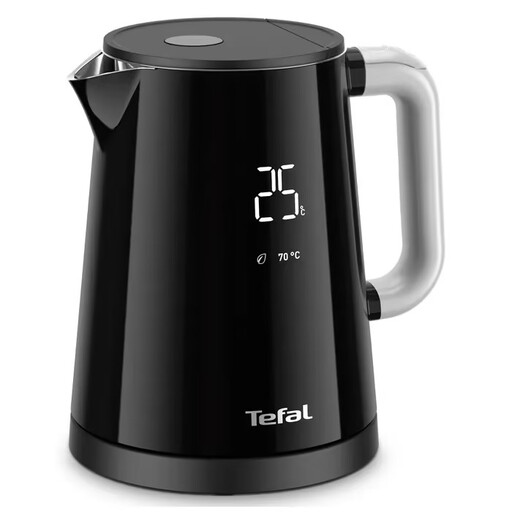
This model is worth considering if you want temperature settings as well as a 1-litre capacity.
Capacity: 1 litre. The product information lists five temperature settings from 40 to 100 °C, a keep-warm function and a removable limescale filter. Follow the instructions on the packaging when making instant porridge.
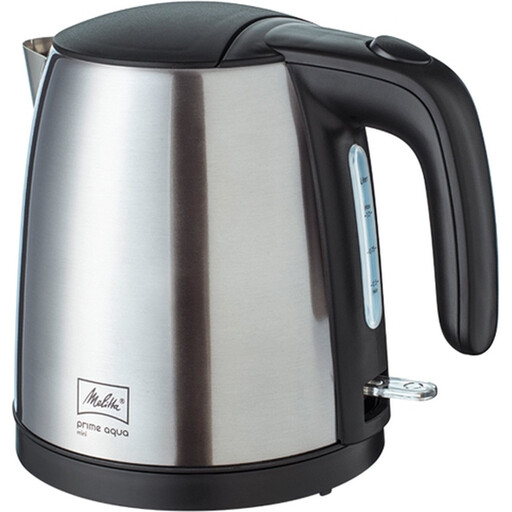 No image available
The listed fill range of 0.5 to 1.0 litres helps you work out whether the minimum amount suits your portions.
Fill range: 0.5–1.0 litres. The product information lists a water-level indicator, automatic shut-off and boil-dry protection.
Don’t assume that you can. Philips states that the HD9351/90 is intended only for heating water, not other liquids or food. Heat the water according to the instructions on the packaging and mix the porridge in a bowl. For another appliance, check its own instructions.
No, there isn’t one set temperature for all instant porridge. Follow the preparation instructions for the specific product, and only choose a kettle with temperature settings if you need them for those instructions or another use.
Descale the appliance according to the instructions for your model. Milieu Centraal notes that a limescale-covered heating element takes longer to heat water. Follow the model instructions for the recommended product and method.
No. According to the Rijksoverheid, there is no fixed statutory guarantee period in the Netherlands. If a product is faulty, the seller must provide a solution. Any manufacturer’s guarantee is separate from this statutory right.
The European Low Voltage Directive applies to household electrical equipment within the relevant voltage range. Equipment covered by the directive must have the CE marking affixed before it is placed on the market. The marking is not a recommendation, nor does it prove that a model is suitable for the way you prepare porridge.