
Vandaag of morgen in huis

Kwaliteit gegarandeerd

Welkomstaanbiedingen ontgrendelen: GRATIS bezorging | Tot 80% korting | Gratis 30 dagen JoyPlus-proefperiode
Download de app
A kettle may seem like a simple purchase, but small differences can determine how well it performs day to day. A model that looks fast on paper can be inconvenient if its minimum fill level is too high. A glass jug may look practical, but it usually needs cleaning more often. And a limescale filter only helps if you can remove and clean it.
For households, students, families and tea lovers, three pitfalls are particularly relevant:
A 1.5-litre kettle is a good fit for a smaller household or everyday tea and coffee use. A 1.7-litre kettle offers more room for a family, guests or instant meals. As well as the maximum capacity, check the minimum fill marking.
The Morphy Richards Signature Opulent has a capacity of 1.5 litres and a stated operating range of 0.25 to 1.5 litres. This is practical when you sometimes boil enough for one mug and at other times for several cups. The Tefal KI6058 and Braun PurEase WK 3100 have a capacity of 1.7 litres. With a larger model, it is especially important not to fill the whole jug automatically: measuring precisely saves water and energy.
A fast kettle often has a power rating of approximately 2,200 to 3,000 watts. This indicates its heating capacity, but it does not guarantee a set boiling time. It is therefore worth considering the combination of wattage, capacity, minimum volume and the information in the product description.
According to the product specifications, the Morphy Richards Signature Opulent and Morphy Richards Hive have 3,000 watts of power and a capacity of 1.5 litres. The Tefal KO2998 has 2,400 watts. Braun states in the PurEase WK 3100 product description that the model can boil 200 ml of water in 45 seconds. This is a brand claim made under specific conditions, so do not treat the stated time as a general expectation for every amount of water.
In Dutch households, limescale can become visibly noticeable over time. A kettle with a limescale filter is therefore worth considering if the filter is removable and dishwasher-safe. The filter catches particles when pouring, but regular descaling is still necessary. Follow the manufacturer’s instructions for this.
A plastic jug is generally lightweight and less vulnerable during everyday use. Stainless steel offers a different look and can feel sturdy, but the exterior may become hot. With a glass kettle, you can see the water level and boiling process immediately. At the same time, you need to be aware of hot surfaces, steam and possible damage from being dropped or knocked.
A cordless kettle is not literally free from electricity: the jug connects to a separate base. A kettle with a 360° swivel base can be placed on the base from different directions. This is convenient for left- and right-handed users, as well as kitchens where space is limited.
Also check whether the model has:
The choices below are linked to specific product specifications. Brand descriptions relating to speed, lifespan or water quality are not presented as independently proven results.
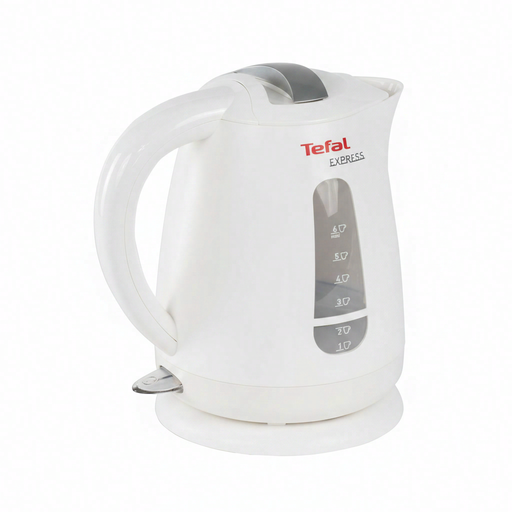
Why it suits this profile: A straightforward choice for students and smaller households looking for a 1.5-litre jug with practical basic features.
The visible water-level indicator helps you fill the jug accurately. The product specifications also list automatic switch-off, overheat protection and boil-dry protection.
1.5 litres, 2,200 watts, cordless use and a removable limescale filter.
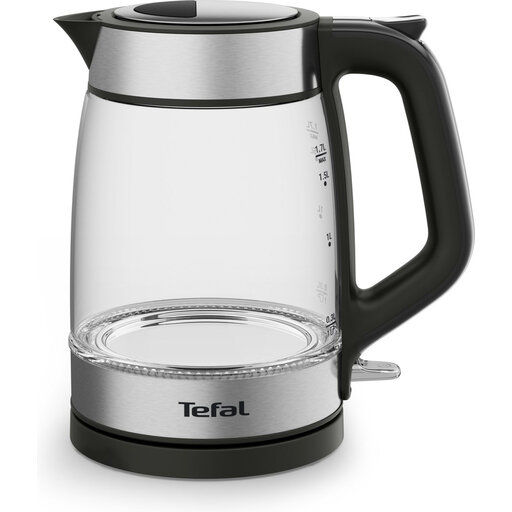
Why it suits this profile: Suitable for families and users who value capacity, visibility and a spacious jug.
The measurement markings and one-cup indicator make overfilling less likely. The glass makes the water level easy to see, but it does require careful handling and regular cleaning.
1.7 litres, glass body, 2,200 watts, 360° base, removable limescale filter and boil-dry protection.
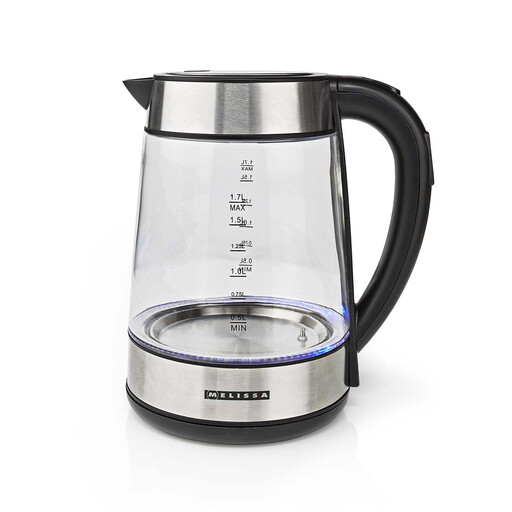
Why it suits this profile: Ideal for tea lovers and users who want to set different temperatures instead of simply bringing water to the boil.
The temperature control means you do not automatically heat water to boiling point for every drink. The temperature settings and keep-warm function are clearly listed in the product specifications.
Settable to 50, 70, 80, 90 and 100 °C, with up to 30 minutes of keep-warm time, a 1.7-litre capacity and a removable limescale filter.
We have put together a complete, up-to-date list of products that fully meet these strict selection criteria and the applicable European safety regulations.
For normal household use, many models have a power rating of between 2,200 and 3,000 watts. A higher wattage can speed up heating, but the actual time also depends on the amount of water and the temperature of the tap water. It is therefore best to boil only the amount you need.
This depends on the hardness of the water and how often you use the kettle. If you notice white deposits, hear more noise while the water is heating or find that boiling takes longer, it is probably time to descale it. You can rinse a removable filter between descaling treatments, but it does not replace descaling.
Temperature control can help you avoid heating water to 100 °C every time. The potential benefit is greatest when you choose the right setting and do not use more water than necessary. Energy consumption still depends on the amount of water, the temperature selected and the number of times you boil the kettle.
