
Vandaag of morgen in huis

Kwaliteit gegarandeerd

Welkomstaanbiedingen ontgrendelen: GRATIS bezorging | Tot 80% korting | Gratis 30 dagen JoyPlus-proefperiode
Download de app
A kettle may seem like a straightforward purchase, but the differences between models are noticeable in everyday use. For example, a cheap electric kettle may be too large for one person, while a model with lots of features can become unnecessarily complicated. Terms such as “rapid boiling”, “safe materials” and “temperature control” only mean something when the technical specifications are clear.
In this buying guide, you’ll learn what to look for, which features add value and which type of kettle is right for your household.
A higher wattage does not automatically mean you’ll always be ready faster. Boiling time also depends on the amount of water, its starting temperature, the heating element and the design of the jug. A 2,200-watt kettle can be useful for 1.5 to 1.7 litres, but when you’re making one cup of coffee, a clear water-level indicator is particularly important. This prevents you from heating more water than you need.
A 1.7-litre kettle is suitable for several cups of tea or coffee, but it takes up more space and can be heavier when pouring. For one person or a small office, a model with a capacity of 0.8 to 1 litre may make more sense. Also check the minimum fill level. A large jug that does not work well with a small amount of water is less flexible than its stated capacity might suggest.
A kettle with automatic switch-off should switch off when the selected temperature or boiling point has been reached. A kettle with boil-dry protection should also prevent the heating element from continuing to operate when there is too little water in the jug. Check that these features are actually included in the product information. Bear in mind that hot water and steam can cause burns, even with a model that has additional safety features.
For most UK households, these sizes are practical:
Many models have a power rating of between 1,500 and 2,400 watts. Don’t just look at the number; also check the stated heating time and the amount of water it refers to. According to the product description, the Midea Stainless Steel Kettle 1.7 litres, with 2,200 watts of power, heats its full capacity in under five minutes. This is a product specification; the actual time may vary.
A glass kettle lets you see the water level and the boiling process. Borosilicate glass is mentioned in several product descriptions because of its resistance to temperature changes, but the glass jug and metal parts become hot during use. A stainless steel kettle is generally less vulnerable to knocks than glass and is well suited to intensive everyday use. A plastic exterior can help keep the weight down, but check whether any plastic components come into contact with the water.
With a BPA-free kettle, you should check exactly which parts are BPA-free. According to the product descriptions for several Midea models, certain plastic components do not come into contact with the water. Treat this as manufacturer information and check the specifications for the model you choose.
A kettle with temperature control is useful for green tea, black tea, instant coffee or drinks for which you do not need boiling water. Pay attention to the number of settings and the temperature range. For example, the Midea models in this selection offer seven temperature settings from 45 to 100 °C or six settings from 40 to 100 °C, depending on the model.
A kettle with a keep-warm function can maintain the selected temperature for a set period. The product descriptions for the Midea models state that they can keep water warm for up to 60 minutes. This is practical when making several cups, but it uses electricity for longer than pouring the water straight away.
A kettle with a limescale filter catches limescale particles when you pour. A filter does not replace descaling. In areas with hard tap water, limescale can still build up on the base or heating element. If easy maintenance is important to you, choose a model with a removable, washable filter. Only use the cleaning method stated in the manual and allow the jug to cool down before cleaning.

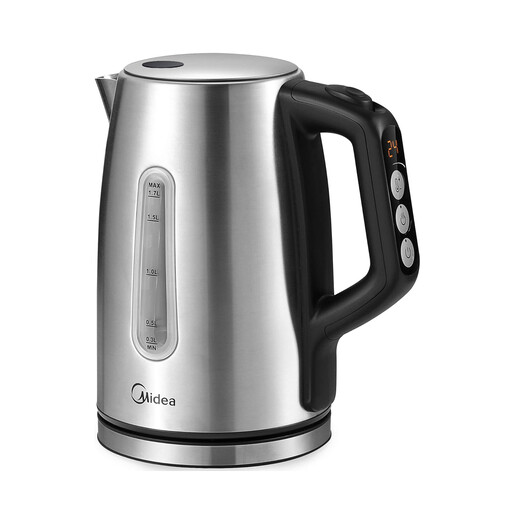
Why it suits this profile: A straightforward choice for anyone looking for a large kettle with simple controls for tea, coffee and everyday use.
The water-level indicator is visible through the transparent glass body. The product description states that it has automatic switch-off and boil-dry protection.
1.7-litre capacity, 2,200 watts of power, blue LED light and a glass body.
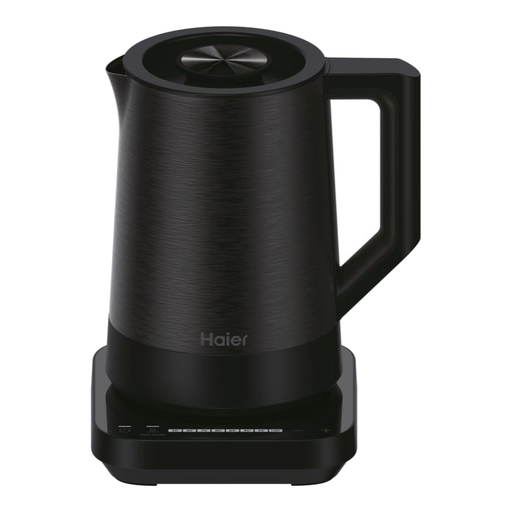
Why it suits this profile: Ideal for households that value temperature selection, keeping water warm and a generous capacity more than the lowest possible purchase price.
The product description lists six temperature settings, a limescale filter, automatic switch-off and boil-dry protection.
2,200 watts, 1.7 litres, six settings from 40 to 100 °C and a keep-warm function for up to 60 minutes.
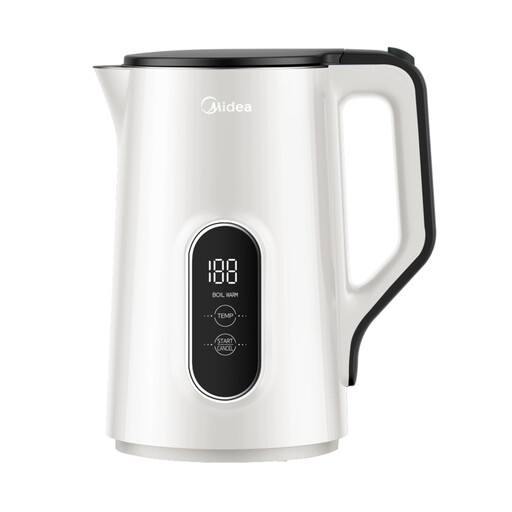
Why it suits this profile: Suitable for users who regularly prepare different drinks and want to use several temperature settings.
The specifications list seven temperature settings and safety features such as automatic switch-off and boil-dry protection.
1.7-litre capacity, seven temperature settings, a rapid-boil function according to the product description and a clear water-level indicator.
Why it suits this profile: A practical option for anyone who often makes tea or coffee and wants to set the water temperature for each drink.
The adjustable temperatures mean you do not need to boil water again for every drink. According to the product description, the model switches off automatically and has boil-dry protection.
1.5-litre capacity, seven settings from 45 to 100 °C, digital temperature display and keep-warm function for up to one hour.
We’ve put together a complete, up-to-date list of products that fully meet these strict selection criteria and the applicable European safety regulations.
For everyday use, models rated at around 1,850 to 2,400 watts are common. Higher power can reduce heating time when boiling larger quantities, but the electricity used per boiling cycle mainly depends on how much water you heat. So only fill the kettle with the amount you need.
This depends on the hardness of your tap water and how often you use the kettle. If you notice white deposits on the base or limescale filter, it’s time to clean it. A kettle with a concealed heating element and removable filter can make cleaning easier, but it will not prevent limescale entirely.
Not automatically. Glass gives you a clearer view of the water level, while stainless steel is less likely to show discolouration. With both materials, parts become hot and steam can cause burns. So look for automatic switch-off, boil-dry protection, a stable base and clear safety instructions.
