
Vandaag of morgen in huis

Kwaliteit gegarandeerd

Welkomstaanbiedingen ontgrendelen: GRATIS bezorging | Tot 80% korting | Gratis 30 dagen JoyPlus-proefperiode
Download de app
A kettle may seem like a simple kitchen appliance, but there are significant differences in ease of use, capacity and safety. A low purchase price can be appealing, while a small reservoir, difficult-to-clean filter or lack of boil-dry protection may cause frustration later.
Pay particular attention to these three common pitfalls:
A 1.7-litre kettle is practical for families or when you are preparing several cups at once. With a cup size of around 250 millilitres, this is theoretically enough for up to seven cups. For one or two people, a model with a capacity of 1 to 1.5 litres may be more convenient.
Power is measured in watts. Models with around 2,200 to 3,000 watts are often marketed as fast kettles. As well as the wattage, check the minimum filling level. A clear water-level indicator helps you avoid heating more water than necessary.
A standard electric kettle usually switches off as soon as the water boils. Black tea, green tea, instant coffee or baby food may require a lower temperature. A kettle with temperature control gives you more control in these situations.
According to the product description, the Midea Stainless Steel Kettle has six settings: 40, 60, 70, 80, 90 and 100 °C. The keep-warm function can maintain the selected temperature for up to 60 minutes, according to the same product information. This is useful when you are not pouring the water immediately after boiling.
However, a keep-warm function uses electricity for longer than switching the kettle off straight away. If you mainly want to make one cup quickly, you may not need this feature.
A kettle with automatic shut-off should switch off when the selected temperature or boiling point is reached. Boil-dry protection is an additional safety feature that switches off the heating element when there is too little or no water in the kettle.
Also check:
A stainless-steel kettle often feels sturdy, but the outside can become hot. Glass makes the water level easy to see, but requires care to avoid damage from knocks. With plastic, it is worth checking whether the product is described as a BPA-free kettle. The Midea and Russell Hobbs Purity are listed as BPA-free in the product information.
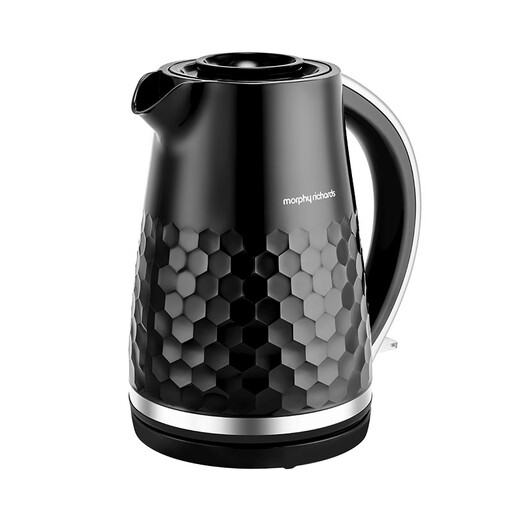
Why it suits this profile: The 1.5-litre capacity is suitable for everyday use without immediately opting for a large kettle. The Easy Fill function makes filling the kettle through the lid easier.
The water-level indicator helps prevent overfilling. The product details also list automatic shut-off, boil-dry protection and a removable limescale filter.
1.5-litre capacity, 3,000 watts, 360-degree rotating base and a removable limescale filter.
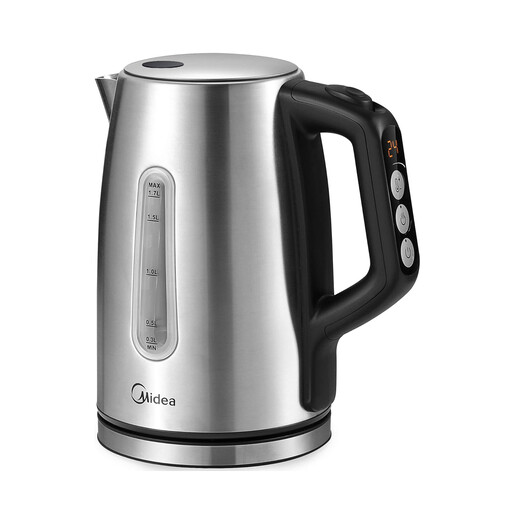
Why it suits this profile: This model combines a stainless-steel housing with temperature selection and a keep-warm function. It is well suited to households where tea and coffee are prepared at different temperatures.
The six temperature settings mean you do not have to use the boiling setting for every drink. The product description also states that it has automatic shut-off, boil-dry protection and a limescale filter.
1.7 litres, 2,200 watts, six temperature settings, up to 60 minutes of keep-warm operation and a BPA-free product listing.
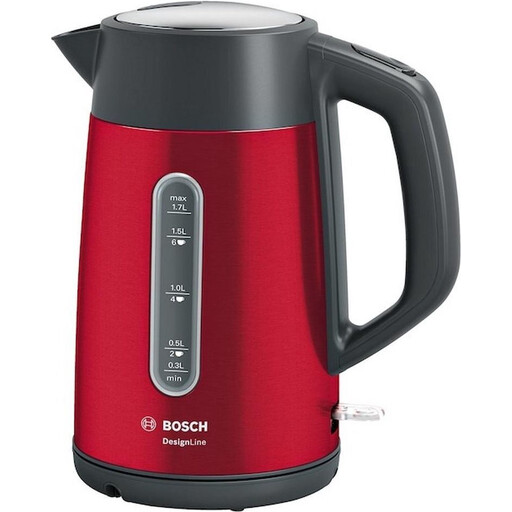
Why it suits this profile: The 1.7-litre capacity and 2,400 watts are suitable for multiple users. The model also has a removable limescale filter and integrated cord storage.
The product details mention automatic shut-off and boil-dry protection. The removable filter can be rinsed under running water, making maintenance straightforward.
2,400 watts, 1.7-litre capacity, water-level indicator, limescale filter and cord storage.
We have put together a complete, up-to-date list of products that fully meet these strict selection criteria and the applicable European safety regulations.
Always fill the kettle between the indicated minimum and maximum marks. Too little water may activate the boil-dry protection; too much water may cause it to overflow when boiling. Only place the kettle on a dry base, and never immerse the kettle, plug or base in water.
Limescale build-up depends on the hardness of the water and how often the kettle is used. Rinse a removable filter regularly and descale the kettle according to the manufacturer’s instructions. Use the appliance only for clean water unless the manual states otherwise. Allow a stainless-steel, glass or plastic housing to cool down after use before cleaning it.
For everyday household use, models with around 2,200 watts are practical. Higher power may speed up heating, but the actual boiling time also depends on the amount of water, its starting temperature and the design of the heating element.
Not necessarily. The function can help prevent the water from being heated beyond what is needed. A lower setting may be sufficient for green tea or instant coffee. Ideally, heat only the amount of water you will actually use.
This depends on the hardness of the water and how often you use the kettle. If you notice flakes, a dull layer on the heating element or longer boiling times, maintenance is needed. A limescale filter catches particles, but it does not replace descaling.
