
Vandaag of morgen in huis

Kwaliteit gegarandeerd

Welkomstaanbiedingen ontgrendelen: GRATIS bezorging | Tot 80% korting | Gratis 30 dagen JoyPlus-proefperiode
Download de app
A kettle may seem like a simple purchase, but small differences determine how convenient it is to use every day. A compact model is handy in a studio flat, while a large family may benefit more from a 1.7-litre kettle. If you mainly want to fill a single cup quickly, a hot water dispenser could be the better choice.
When comparing models, don’t just look at the colour or wattage. The most important questions are: how much water do you usually boil, how easy is the appliance to clean and which safety features does it have?
A 1.7-litre kettle is practical for several cups of tea or coffee, but a 1-litre kettle may be more convenient for one person. A larger model can take up unnecessary space and encourage you to boil more water than you need. This wastes extra time and energy.
So check both the minimum and maximum filling levels. A clear water-level indicator, preferably with cup markings, helps you fill the kettle with precisely the right amount of water.
A fast kettle often has a power rating of 2,200 to 3,000 watts. This can reduce heating time, but speed also depends on the amount of water, the starting temperature and the heating element. A high wattage is therefore no guarantee that every use will be equally quick.
Also check that the product is suitable for a Dutch socket and a mains voltage of 220–240 volts. Some models list a different nominal voltage. Always read the technical product specifications carefully.
A black kettle or glass model can look stylish on your worktop, but limescale remains a practical consideration. In some parts of the Netherlands, limescale can build up noticeably, depending on the local water hardness and how often the kettle is used.
A kettle with a limescale filter catches limescale particles when you pour. However, it does not prevent limescale from forming inside the appliance. Regular descaling is still necessary. A concealed heating element is generally easier to wipe clean than an exposed coil.
Never fill the kettle above the indicated maximum line. Too little water can also cause problems with some models. So look for boil-dry protection and a clear minimum indicator.
An electric kettle should have, at a minimum, an automatic switch-off function that activates when the water boils. Some models also switch off as soon as you lift the jug off its base. Boil-dry protection stops the heating process when there is no water or too little water in the kettle.
A cordless kettle is usually a jug that sits on a separate powered base. A 360° base allows you to place the kettle on it from different directions. Also check whether the cord can be stored in the base; this helps keep your worktop tidy.
Temperature control and a keep-warm function are useful for certain types of tea or instant coffee, but they are not essential if you mainly boil water for standard tea and pasta.
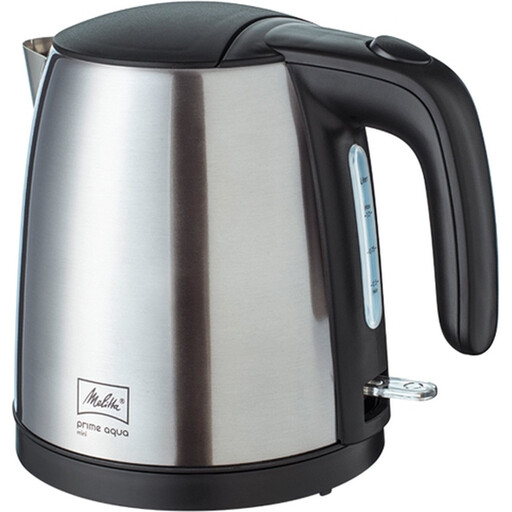
Why it suits this profile: The 1-litre capacity and 0.73 kg weight make it a good fit for a smaller kitchen or a household that usually prepares a few cups at a time.
The water-level indicator helps you fill it accurately. The product details also list automatic switch-off and boil-dry protection.
Stainless-steel casing, 2,200 watts, 360° base and a 1-litre capacity.
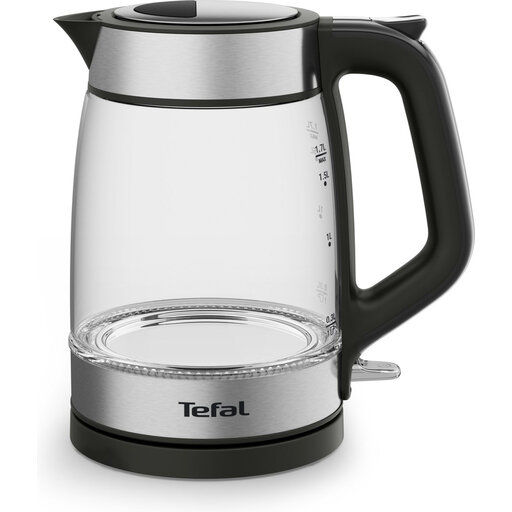
Why it suits this profile: The glass design with measurement markings combines visibility with a generous capacity for families and tea or coffee enthusiasts.
The product description lists a removable limescale filter, automatic switch-off and boil-dry protection. The glass makes overfilling visible.
1.7 litres, 2,200 watts, 360° base and LED lighting during use.
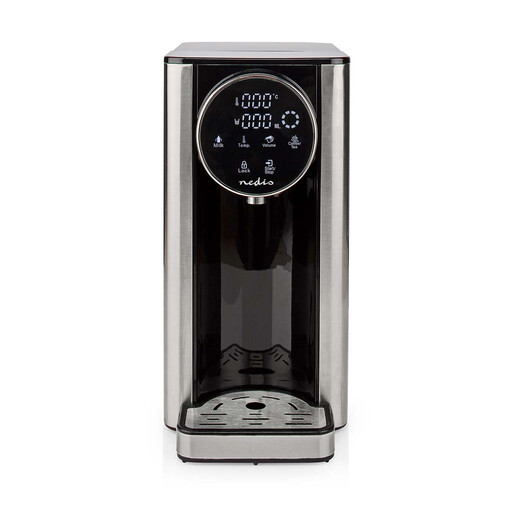
Why it suits this profile: If you often need hot water one cup after another, adjustable volumes and temperatures can be useful, as you do not have to boil a full jug every time.
According to the product specifications, the dispenser has a 2.7-litre water tank, boil-dry and overheating protection, and a descaling alert.
Seven temperature settings, five volume options, touch controls and a child lock.
An electric kettle is usually simpler, more compact and suitable when you occasionally boil a full jug. A hot water dispenser is better suited to repeated use, for example during a working day or in a household where several people make a hot drink one after another.
A stainless steel stovetop kettle works without electricity on a suitable hob. The trade-off is that you have to keep an eye on it while the water boils, and the jug can become hot. With a stovetop kettle, always check which heat sources it is suitable for; according to the product details, the Redcliffs model in this selection is suitable for gas.
We’ve put together a complete, up-to-date list of products that fully meet these strict selection criteria and the applicable European safety regulations.
This depends on the water hardness, how often you use it and how much limescale you can see. Rinse the limescale filter regularly and descale the appliance as soon as you notice a build-up or boiling takes noticeably longer. Follow the instructions and use a product that is suitable for the model.
Consumption depends mainly on the amount of water and the wattage. A 2,200-watt kettle only uses that amount of power while it is heating. By filling it with only the amount you need, you reduce both boiling time and energy consumption. A hot water dispenser can be practical for small portions because, according to the product description, it only heats the amount you select.
Lifespan varies depending on the model, frequency of use and maintenance. Empty the jug after use, do not allow the appliance to boil dry and remove limescale regularly. Before buying, check whether parts such as the filter can be removed and whether the manufacturer provides information about the warranty, repairs or spare parts. The statutory guarantee in the EU is at least two years for the models listed; additional terms may vary by product.
