
Vandaag of morgen in huis

Kwaliteit gegarandeerd

Welkomstaanbiedingen ontgrendelen: GRATIS bezorging | Tot 80% korting | Gratis 30 dagen JoyPlus-proefperiode
Download de app
A kettle may seem like a simple kitchen appliance, but you quickly notice the differences between models in everyday use. One that is too small can be inconvenient for a family, a metal casing can become hot on the outside, and a model with lots of features is not automatically suitable for everyone.
When comparing models, therefore, do not focus only on a high wattage or a modern product photo. Above all, check the capacity, materials, safety features and how easy the kettle is to clean.
A power rating of 2,200 or 3,000 watts sounds appealing, but the actual boiling time also depends on the amount of water, its starting temperature and the heating element. A fast-boiling kettle can be useful, but always check the capacity for which the stated speed applies.
For one cup of tea, filling the whole kettle is unnecessary anyway. It takes more time and electricity than heating only the amount you need.
A 1.7-litre kettle is practical for families, guests or an office. However, you do not need to fill it to the maximum mark every time. Also check the minimum water level. If there is too little water, the appliance may not operate properly unless the boil-dry protection cuts in.
For students or one-person households, a 1.25- or 1.5-litre model may be more compact and practical.
A stainless-steel kettle is sturdy and easy to wipe clean, but stainless steel can become hot during and after boiling. So look at the handle, spout and, where applicable, whether it has a double-wall construction. An inner wall made from food-grade stainless steel does not automatically mean that the outside will stay cool.
You should also read terms such as ‘pure water’ or ‘healthier drinking’ critically. A manufacturer may describe material properties, but that is not a medical or health claim.
A water-level indicator with clear measurements helps you avoid boiling more water than necessary. Also check that the model is suitable for 220–240 volts, as commonly used in Dutch households.
A standard kettle generally heats water to boiling point. For green tea, filter coffee or certain instant drinks, a kettle with temperature control may be more convenient. Models with preset levels, such as 40, 60, 70, 80, 90 and 100 °C, give you more control than a simple on/off model.
A kettle with a keep-warm function keeps the water at the desired temperature for a specified period after heating. This avoids boiling the water again, but uses electricity for longer. So check how long the function remains active and whether you can set the temperature yourself.
At a minimum, look for:
Limescale is normal in Dutch households and depends on the water hardness in your area. Descale the kettle according to the instructions and do not use abrasive products. A filter catches limescale particles, but does not prevent limescale from forming inside the appliance.
With a BPA-free kettle, you should check exactly which parts are BPA-free. According to the product descriptions of some models, the plastic components do not come into contact with the water; treat this as a manufacturer’s product specification and check the latest information on the product page.
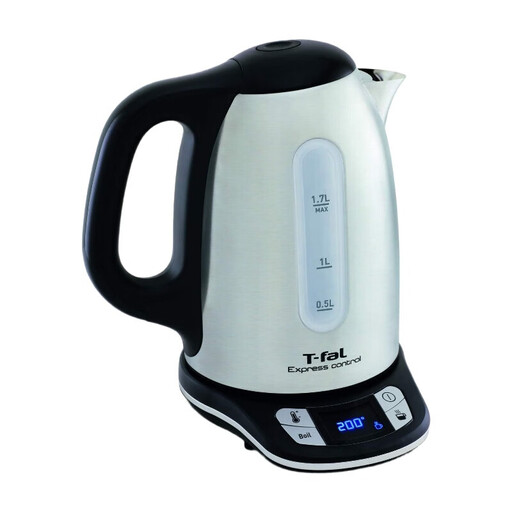
Why it suits this profile: The 1.7-litre capacity is suitable for several cups of tea or coffee. Operation remains simple, with an on/off function and water-level indicator.
The product description lists automatic switch-off, boil-dry protection and a concealed heating element. This means you do not have to rely on wattage alone.
1.7-litre capacity, 3,000 watts, 360° cordless base, limescale filter and boil-dry protection according to the product details.
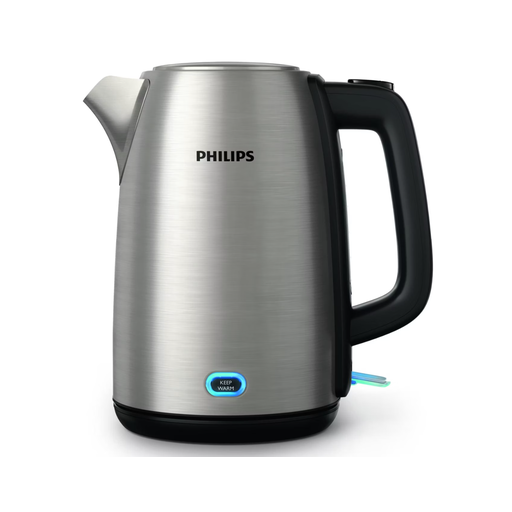
Why it suits this profile: This stainless-steel kettle combines a generous capacity with features for regular use, such as a keep-warm function, limescale filter and rotating base.
The concealed flat heating element and removable micro-mesh limescale filter make maintenance more straightforward than with a completely exposed heating element.
1.7 litres, food-grade stainless steel, keep-warm function, water-level indicator and 360° cordless base according to the product information.
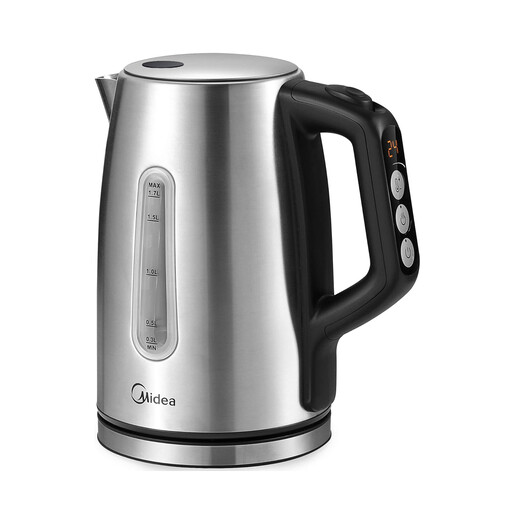
Why it suits this profile: The six temperature settings from 40 to 100 °C are practical for different types of tea, coffee and situations where boiling water is not required.
You do not have to heat a full kettle to boiling point every time. The product description lists temperature selection, keeping warm for up to 60 minutes, automatic switch-off and boil-dry protection.
2,200 watts, 1.7 litres, six settings, BPA-free designation in the product title, limescale filter and keep-warm function according to the listing.
We have put together a complete, up-to-date list of products that fully meet these strict selection criteria and the applicable European safety regulations.
Only fill the kettle with the amount you need and use the water-level indicator. Never switch on a kettle without water and do not exceed the maximum mark. Do not touch the casing or steam outlet while the water is boiling.
A power rating of 2,200 watts does not mean that the appliance continuously uses that much electricity: consumption depends on how long it runs and how often you boil water. If you make several cups every day, you can save most by heating exactly the amount of water you need.
Its lifespan depends on usage, water hardness, maintenance and the quality of its components. Descaling regularly, not allowing the kettle to boil dry, and handling the lid and base carefully can help limit wear. When buying, also check the warranty and statutory guarantee rights stated for the product.
A metal kettle can be used safely when it has the correct safety features, such as automatic switch-off and boil-dry protection. However, the outside may become hot. Always use the handle and keep the appliance out of children’s reach.
That depends on your drinking habits. If you only drink black tea or instant coffee, a standard electric kettle is often sufficient. If you drink different types of tea or want to keep water at a chosen temperature for longer, you may benefit from a kettle with temperature control and a keep-warm function.
