
Vandaag of morgen in huis

Kwaliteit gegarandeerd

Welkomstaanbiedingen ontgrendelen: GRATIS bezorging | Tot 80% korting | Gratis 30 dagen JoyPlus-proefperiode
Download de app
A kettle may seem like a simple kitchen appliance, but the differences between models can be significant. For example, a higher wattage does not automatically mean that an appliance will be faster or more economical in every situation. Features such as temperature control and keep-warm functions are only useful if they suit the way you use the kettle every day.
Anyone focusing mainly on a low price or striking design may encounter several common problems:
Below, you’ll find the most important points for comparing electric kettles effectively.
A small kettle may be sufficient for one person. A model holding around 0.4 to 1 litre takes up little space and prevents you from regularly heating more water than necessary. For families and shared use, a 1.7-litre kettle is more practical. According to the product information for some models, it allows you to prepare several cups at once.
Power is measured in watts. Models of around 2,000 to 2,400 W are often marketed as fast-boiling kettles. However, the actual heating time also depends on the amount of water, its starting temperature and the design of the heating element. A product listing may state, for example, that 1.5 or 1.7 litres can be heated in a few minutes. Treat this as a stated product specification rather than a guaranteed result in every kitchen.
Also pay attention to the MIN and MAX levels. Too little water can activate the safety feature, while overfilling may cause the kettle to boil over or produce hot splashes.
A stainless-steel kettle generally has a sturdy interior and a neutral appearance. However, check whether the stainless steel actually comes into contact with the water. On some models, only the exterior is made of metal.
A glass kettle makes the water level immediately visible. Borosilicate glass is often mentioned in product descriptions because of its resistance to temperature changes. However, it still needs to be handled with care. A glass body and metal components may become hot during and after boiling.
Plastic models are often lightweight and affordable. If you are looking for a BPA-free kettle, check whether the BPA-free claim applies to all parts that come into contact with water. According to the product information for various Midea and Tefal models, certain plastic components are BPA-free. This is a product specification provided by the manufacturer or seller, not a general guarantee for every model in the same product category.
A kettle with temperature control is particularly useful for green tea, coffee-brewing methods that do not require boiling water, or households that prepare a range of different drinks. Many models use preset settings, for example between 40 and 100 °C. Check that the selected temperature is clearly displayed and that the appliance switches off automatically once that temperature has been reached.
A kettle with a keep-warm function can maintain the water at a certain temperature for a specified period. The product information for some Midea models mentions a keep-warm time of up to 60 minutes. This avoids having to reheat the water for a second cup, but it does use electricity for longer.
The following features are the minimum you should look for:
A CE marking may be included in the product information, as stated for certain models. Also check the supplied manual, the voltage and the contact details of the responsible party in the European Union.
The following selection is based on the stated capacity, wattage, features and safety provisions. Product information may change, so always check the current specifications on the product page.
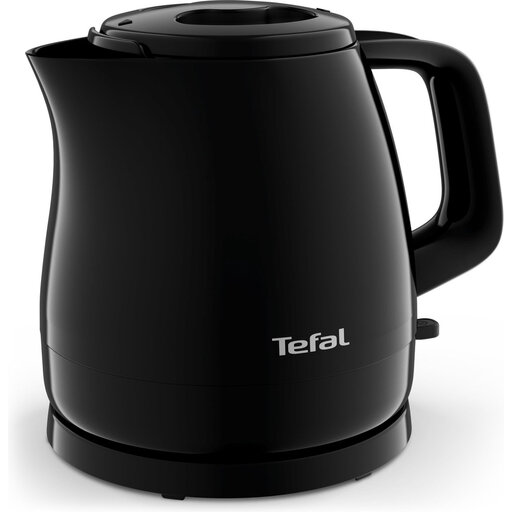
Why it suits this profile: The 0.8-litre capacity is suitable for a student bedroom, home office or household with one or two users.
The water-level indicator helps you avoid boiling more water than necessary. The stated automatic shut-off and boil-dry protection help to reduce a common safety risk.
0.8 litres, 2,400 W, 360° rotating base, removable washable filter and concealed heating element according to the product listing.
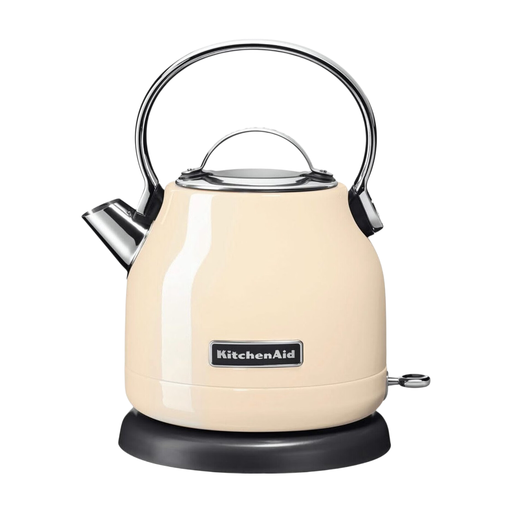
Why it suits this profile: This model is ideal for anyone who values a classic design, metal body and simple operation more than temperature settings.
The product specifications list both automatic shut-off and boil-dry protection. The removable limescale filter makes maintenance more straightforward.
1.25-litre capacity, 2,000 W power, stainless-steel body, 360° base and a stated statutory warranty of at least two years in the EU.
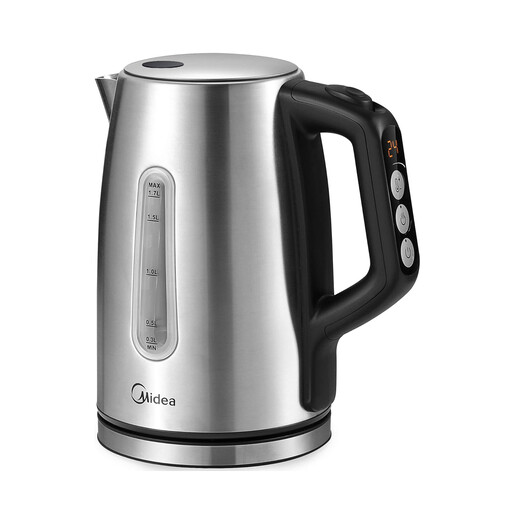
Why it suits this profile: The combination of a large capacity, temperature selection and keep-warm function is ideal for families, tea lovers and coffee drinkers who use their kettle several times a day.
According to the product description, the kettle has a large water-level indicator, a limescale filter, automatic shut-off and boil-dry protection. This makes its capacity, maintenance requirements and safety features easier to assess.
1.7 litres, 2,200 W, six temperature settings from 40 to 100 °C and a keep-warm function lasting up to 60 minutes according to the product listing.
We’ve compiled a complete, up-to-date list of products that fully meet these strict selection criteria and the applicable European safety regulations.
Its lifespan depends on how often it is used, limescale build-up, the material and maintenance. There is no fixed period that applies to every model. A kettle used several times a day requires more maintenance than one that is only switched on occasionally. Clean the limescale filter according to the instructions and stop using the kettle if the cable, plug, body or lid is damaged.
That depends on the amount of water, the efficiency of your hob and your usage pattern. A kettle often heats exactly the amount of water you need. So do not automatically fill the whole kettle for one cup of tea. The wattage specification alone does not determine how much you will ultimately pay; usage time, quantity and your energy tariff are the deciding factors.
This varies depending on the drink and your personal preference. A kettle for tea and coffee with temperature control gives you more control than a standard model that only heats water to boiling point. Green tea is often prepared with cooler water than black tea, but for specific types of coffee or tea, follow the instructions on the packaging. Treat a temperature setting as a practical adjustment option, not a guarantee of a particular flavour.
