
Vandaag of morgen in huis

Kwaliteit gegarandeerd

Welkomstaanbiedingen ontgrendelen: GRATIS bezorging | Tot 80% korting | Gratis 30 dagen JoyPlus-proefperiode
Download de app
A kettle may seem like a simple kitchen appliance, but the differences between models become particularly noticeable in everyday use. A kettle that is too small can be impractical for a family, a poorly readable water gauge can lead to waste, and an awkward lid can make filling and cleaning more difficult.
If you focus only on wattage or eye-catching design, you may end up paying more for features you hardly use. Before choosing an electric kettle, look out for these common pitfalls.
A 3000-watt kettle can heat water quickly, but that does not automatically make it the right choice for every kitchen. The actual speed also depends on the amount of water, its starting temperature and the heating system. You should also check that your socket and electrical circuit can safely handle several high-powered appliances at the same time.
A 2200-watt kettle is a practical middle ground for many households. 3000-watt models are worth considering if speed is important and you usually boil larger quantities.
A 1.7-litre model sounds spacious, but you will not always need to boil its full capacity. For one person, a 1-litre glass kettle may be more convenient. For a family or a household with several coffee drinkers, a 1.7-litre kettle is generally a better fit.
Also check the minimum fill level. A high minimum capacity can lead to unnecessary energy consumption when you only need one cup.
A kettle with temperature control is useful for different types of tea, instant coffee or pour-over coffee. A kettle with a keep-warm function can save you from having to boil the water again when several people are making a hot drink one after another.
Do you usually only need boiling water? In that case, extra programmes may make the controls unnecessarily complicated. Choose features based on your routine, not just on the product packaging.
These guidelines are practical for everyday use:
A product page may state a specific boiling time. Treat this as the manufacturer’s stated result under particular conditions, not as a guaranteed time in every kitchen. For example, according to its own product description, Midea states that its 1.7-litre, 2200-watt model heats 1.7 litres of water in under five minutes.
A stainless-steel kettle often has a robust body and a neutral appearance. However, check whether the water comes into contact with stainless steel on the inside and whether the model has double-wall insulation. The exterior can become hot during use.
A glass kettle makes the water level and boiling process easy to see. Borosilicate glass is used in various models because of its stated heat resistance. Glass is still more fragile than plastic or steel, however, and requires careful handling.
Plastic models are often lightweight and affordable. When choosing a BPA-free kettle, check the specific product details and which parts come into contact with water. A BPA-free label does not automatically indicate anything about insulation, service life or ease of cleaning.
The most useful basic safety features include:
A limescale filter catches particles, but it does not prevent limescale from building up inside the kettle. Descale the appliance according to the instructions. Never fill the kettle above the maximum mark and use it only for clean water unless the manufacturer expressly states otherwise.
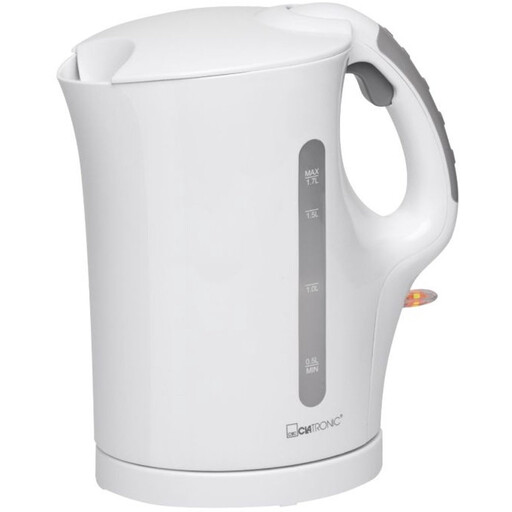
Why it suits this profile: The combination of a 1.7-litre capacity, 2200 watts and simple controls is ideal for households looking for a practical kettle for tea and coffee without complicated settings.
The water-level indicator helps you determine how much water you need. According to the product information, it also has automatic switch-off and boil-dry protection.
1.7-litre capacity, 2200 watts, ergonomic handle and a pouring spout according to the listed specifications.
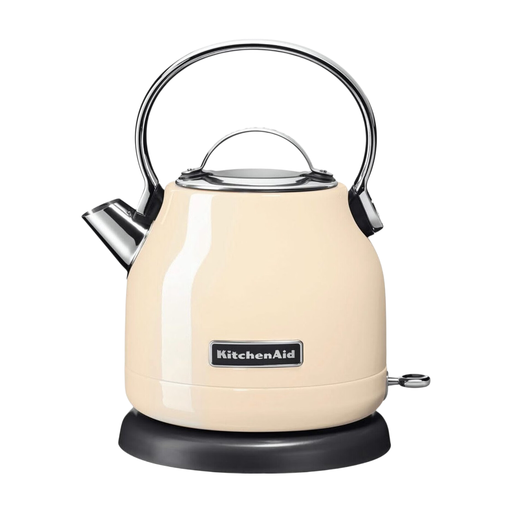
Why it suits this profile: This stainless-steel model has a capacity of 1.25 litres and is ideal for users who value a classic design, compact dimensions and a simple boiling function.
The capacity is clearly lower than 1.7 litres, so you are not paying for unused space. The product information states that it has a removable limescale filter.
Stainless-steel body, 2000 watts, boil-dry protection, automatic switch-off and a rotating base.
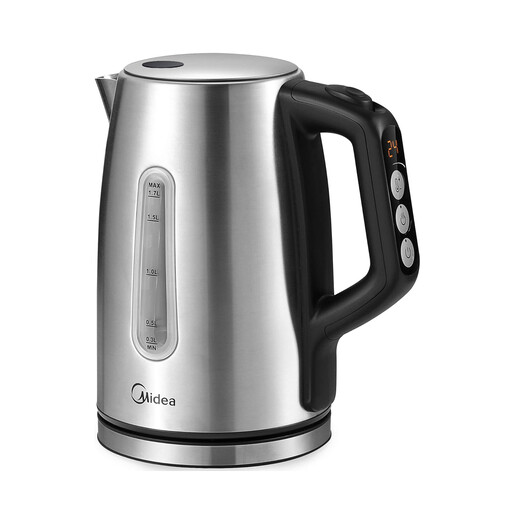
Why it suits this profile: According to the product description, tea and coffee drinkers get six temperature settings from 40 to 100 degrees Celsius, plus a keep-warm function for up to 60 minutes.
The settings allow you to heat water to below 100 degrees when needed. The water-level indicator, limescale filter and automatic switch-off help minimise practical problems during use.
1.7 litres, 2200 watts, six temperature settings, keep-warm function for up to 60 minutes and a BPA-free designation in the product information.
We have put together a complete, up-to-date list of products that fully meet these strict selection criteria and the applicable European safety regulations.
A kettle mainly uses energy according to the amount of water you heat. Only fill it with the amount you need. A water-level indicator on both sides is useful when several people use the appliance.
Also bear the following points in mind:
A double-walled body can make the exterior feel less hot, but the water and steam remain hot. Do not therefore regard a cooler outer wall as complete protection against burns.
Its service life depends on how often it is used, water hardness, maintenance and the quality of components such as the switch and thermostat. Regular descaling and avoiding boiling the kettle dry can help reduce wear. When buying, also check the warranty terms and whether replacement filters are available.
That depends on the appliance, the amount of water and the energy price. A kettle heats a measured amount of water directly, whereas a hob can also lose heat to the pan and surrounding area. The biggest difference comes from not boiling more water than you need.
For standard black tea and boiling water, a simple kettle with automatic switch-off is sufficient. For green tea, white tea or different coffee-making methods, a kettle with temperature control is more practical. A keep-warm function is particularly useful when you make several cups over a longer period.
