If you already have a fridge with enough space that can cool to around 4 °C, you don’t need a new appliance to keep radishes fresh for a weekend lunch. Store them in the fridge, remove the leaves if you like, and prevent them from drying out, as advised by the Netherlands Nutrition Centre. If you’re replacing an appliance anyway, compare the practicality of the salad drawer, the fridge and freezer capacity, the external dimensions and the annual electricity consumption. A freshness claim alone doesn’t prove how long radishes will keep.
Who is this advice relevant to?
People storing fresh vegetables
You keep radishes and other fresh vegetables for later in the week and want to choose a suitable place to store them while preventing them from drying out. The Netherlands Nutrition Centre provides storage advice for radishes, while the Consumers’ Association measures how much moisture vegetables lose in salad drawers during fridge tests.
People with limited kitchen space
You need fridge space and some freezer capacity, but have to make sure the external dimensions, access route and available storage space all work together. Milieu Centraal recommends choosing a size that suits your needs.
People replacing a fridge and keeping an eye on energy use
You’re replacing an appliance that runs every day and want to take the right size and annual electricity consumption into account. Milieu Centraal and the European Commission highlight the importance of choosing the right size and checking the energy label information.
What should you look for when buying?
Start by asking whether you simply want to keep radishes chilled or need a fridge-freezer anyway. If you’re replacing an appliance, you’ll also need to consider the available space, layout and energy consumption.
| What to consider |
What should you check? |
Who is this important for? |
| Keeping radishes fresh |
Check that there’s a practical salad drawer and set the fridge to 4 °C, as advised by the Netherlands Nutrition Centre. |
If I only want to keep radishes fresh for a weekend lunch, I’ll focus on having a suitable place to chill them and protecting them from drying out. Around 36% of consumers say keeping food fresh is their top priority when buying. |
| Choosing the right size |
Measure the available space, access route and doorway; compare the external dimensions with the separate fridge and freezer capacities. |
With limited kitchen space, I want to know in advance that the appliance will fit without leaving me short of fridge space. Around 29% of consumers prioritise finding the right size. |
| Annual electricity consumption |
Check the model-specific energy label for the energy class, annual consumption in kWh and capacity. |
As a fridge runs continuously, I want to compare the annual consumption of appliances in a suitable size. Around 21% of consumers say electricity consumption is their top priority. Milieu Centraal and the European Commission describe the energy label as a useful tool for making this comparison. |
| Maintaining the freezer compartment |
Check whether the specific model has No Frost in the freezer compartment and whether the balance between fridge and freezer space suits your needs. |
If I use the freezer compartment regularly, I want to know whether the model has No Frost, without losing sight of the fridge space I need for fresh shopping. Around 14% of consumers prioritise ease of freezer maintenance. |
Common pitfalls
-
Assuming a freezer compartment or No Frost keeps fresh radishes better
For radishes, the Netherlands Nutrition Centre recommends using the fridge; its specific advice for this food says freezing isn’t suitable. No Frost doesn’t replace a suitable place to chill them or protection from drying out.
First, check the usable fridge space and temperature. Choose No Frost only if the feature also suits the way you use the freezer compartment.
-
Taking a freshness feature name as a guarantee of storage life
A manufacturer’s name for a drawer doesn’t prove how long radishes will keep in it. The Consumers’ Association measures how much moisture vegetables lose in salad drawers during fridge tests.
Look at the drawer layout and, where possible, search for independent measurements of moisture loss. Don’t base your choice on the feature name alone.
-
Comparing only the energy rating or total capacity
The energy class and annual consumption in kWh tell you different things. The appliance also needs to fit your kitchen and provide the amount of fridge and freezer space you’ll use.
Compare models in a suitable size by checking their external dimensions, separate fridge and freezer capacities, and annual consumption on the model-specific label.
Brands to consider
Bosch
The range in the Netherlands includes fridge-freezers with VitaFresh drawers. According to Bosch, the KGN36VIBT model reviewed has a capacity of 321 l.
- Bosch Netherlands lists separate temperature controls and Total No Frost for the KGN36VIBT.
- These model specifications don’t show how long radishes will keep. Check whether the drawer layout suits your shopping.
Liebherr
According to Liebherr, the CNsdc 5703 Pure NoFrost model reviewed has a total volume of 371 l and an EasyFresh drawer.
- Liebherr says the sealed EasyFresh drawer increases humidity and lists NoFrost for the freezer compartment.
- This doesn’t independently prove how well it keeps radishes fresh. Check that the external dimensions will also fit.
Samsung
According to Samsung, the Dutch RB34C600ESA/EF is a fridge-freezer with a capacity of 344 l and No Frost.
- Samsung says this model uses air circulation for even cooling.
- This is a manufacturer’s claim, not an independent test of how well it keeps radishes fresh.
Beko
According to Beko, the Dutch B5RCNE366HXB1 combines a salad drawer with HarvestFresh and a No Frost cooling system.
- The range combines a salad drawer with No Frost.
- Check the energy label for the specific model before comparing its consumption.
Fridge-freezers at Joybuy
These Joybuy products are fridge-freezers for people who want to keep fresh vegetables chilled and stored separately. The selection includes built-in, freestanding and compact models, so check the niche dimensions or available space before buying. Don’t take a freshness claim as proof of how long radishes will keep.
 No image available
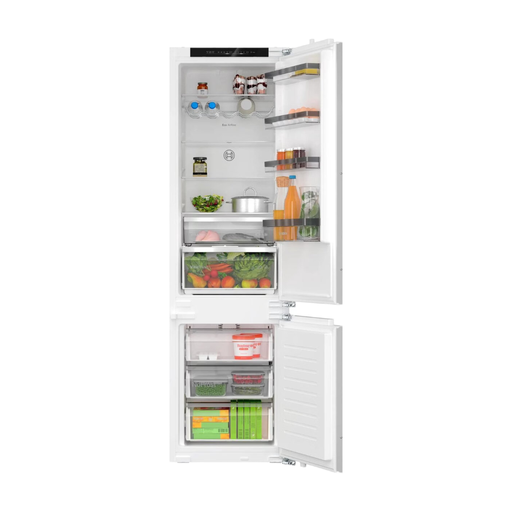
Bosch KIN96VFD0 built-in fridge-freezer
A good fit if you’re looking for a built-in model with a drawer for fresh vegetables.
The product name lists No Frost, VitaFresh Pro and Home Connect; the minimum niche dimensions are 194 × 56 × 55 cm.
Joybuy
 No image available
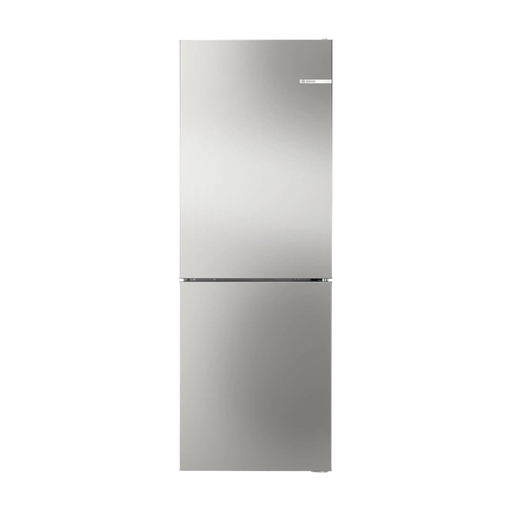
Bosch KGN33NSDB freestanding fridge-freezer
A freestanding model for anyone looking for a separate space for vegetables in the fridge.
The product name lists VitaFresh, NoFrost, a capacity of 308 L and a 4-star freezer compartment.
Joybuy
 No image available
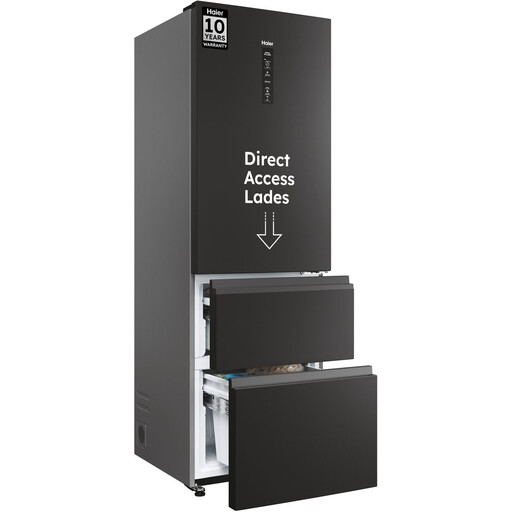
Haier HTW5618DNPT fridge-freezer
For anyone looking for a fridge-freezer with a salad drawer for fresh vegetables.
The product name lists Total No Frost, Wi-Fi and 3D Cooling.
Joybuy
 No image available
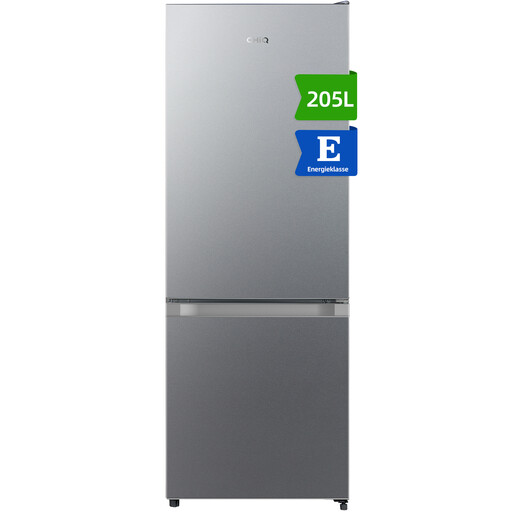
CHiQ JR205LSE compact fridge-freezer
A compact option for anyone looking for fridge and freezer space in one appliance.
The product name lists 153 L of fridge space, 52 L of freezer space, Low Frost, a reversible door, a width of 540 mm and energy class E.
Joybuy
 No image available
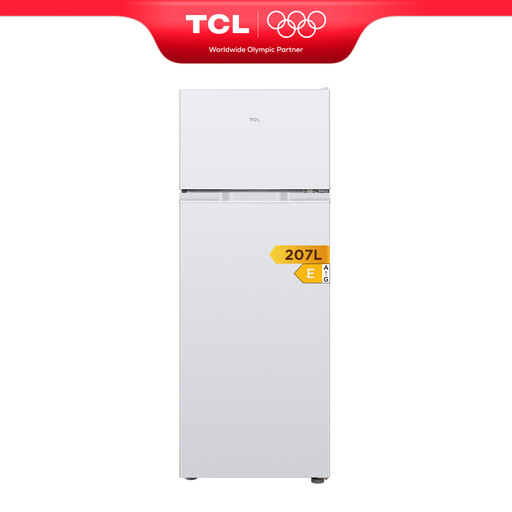
TCL RF207TWE1 compact fridge-freezer
For anyone looking for a compact model with a separate drawer for vegetables.
The product name lists 167 L of fridge space, 40 L of freezer space, Power Cool & Freeze, adjustable shelves and feet, and energy class E.
Joybuy
Frequently asked questions
How should you store radishes until your weekend lunch?
Keep radishes in the fridge, use suitable packaging to stop them drying out, and remove the leaves if you like. The Netherlands Nutrition Centre recommends keeping opened radishes in the fridge for six days; check them before use. Its general advice is to set your fridge to 4 °C.
Can you put fresh radishes in the freezer compartment?
Freezing isn’t suitable for this purpose, according to the Netherlands Nutrition Centre’s specific advice for radishes. Use the fridge compartment to store radishes for lunch.
What should you check when installing a new fridge-freezer?
Measure the available space and the route into your kitchen before choosing a model. Once it’s installed, check the actual fridge temperature too; the Netherlands Nutrition Centre recommends setting your fridge to 4 °C.
What information is shown on a fridge’s energy label?
For household fridges covered by EU rules, the current energy class ranges from A to G. According to the European Commission, the label includes information such as annual energy consumption, capacity and noise level. As well as the class, compare the kWh consumption of models in a suitable size.


