
Cyclist with coeliac disease looking for a filled biscuit
You want to take something with you that’s similar to a Kano. The gluten-free labelling and allergen information for the exact biscuit matter more than its shape or flavour.


If you have coeliac disease, don’t choose a biscuit based on its name or resemblance to a Kano: check the current gluten-free labelling and allergen information for the exact variant. A gluten-free biscuit can be a handy snack before or after a short ride; for a long, intense ride, the carbohydrates in each portion you take with you and what you can eat on the go become more important.
You want to take something with you that’s similar to a Kano. The gluten-free labelling and allergen information for the exact biscuit matter more than its shape or flavour.
For a short or leisurely ride, you want a biscuit that’s easy to take with you. Consider the portion size and what you find comfortable to eat before or after cycling.
You want to top up your carbohydrates while you’re out. A biscuit is one option; depending on your ride plan, you could also consider a gluten-free bar, gel or drink.
First, choose a product whose gluten-free labelling and allergen information you can check for the exact variant. Then decide whether you’re looking for a Kano-style biscuit, a small snack or something to eat on the go during a long ride.
A good fit for: anyone mainly looking for a biscuit similar in style to a Kano; Jumbo, for example, lists a 60 g gluten-free filled biscuit.
Consider: a filled biscuit isn’t automatically suited to eating during an intense ride.
A good fit for: anyone who wants to take a small biscuit along and doesn’t need a filled one.
Consider: check the carbohydrates per portion if the biscuit is part of your plan for a longer ride.
A good fit for: anyone who wants to take a targeted source of carbohydrates along for a long, intense ride.
Consider: according to the Netherlands Nutrition Centre, sports bars and gels are generally unnecessary for rides lasting less than an hour.
| What to consider | What to check when buying | Particularly relevant to |
|---|---|---|
| Gluten-free labelling | Check the current packaging for the 'gluten-free' label, allergen information and any cross-contamination warnings. | If I have coeliac disease, I don’t want to rely on a biscuit’s name or appearance. For around 36% of these consumers, checking the gluten-free label would be the top priority. |
| Carbohydrates during the ride | For a long, intense ride, compare the carbohydrates per portion you’ll actually take with you. | If I’m cycling for a long time at high intensity, I want to plan what I’ll eat on the go. Around 29% of these consumers would prioritise carbohydrates for the ride. |
| Portion size and portability | Check the portion size and try a new snack on a training ride first. | I don’t want to eat a large portion just before setting off, and my snack needs to be easy to carry. For around 21% of these consumers, this would be the main consideration. |
| Type of biscuit | Look specifically for a gluten-free filled biscuit if the style matters to you; even then, check the exact variant. | I’m mainly looking for the experience of eating a filled biscuit and don’t want to choose just any other type. For around 14% of these consumers, this product style would come first. |
The shape or product name doesn’t tell you whether that particular biscuit is suitable for someone with coeliac disease.
Every time you buy, check the current gluten-free labelling, allergen information and warnings on the packaging.
What you want to eat on the go depends partly on the duration and intensity of your ride. According to the Netherlands Nutrition Centre, sports bars and gels are generally unnecessary for exercise lasting less than an hour.
First consider what your ride will involve, then decide which portion size or other type of food is right for it.
The Netherlands Nutrition Centre advises against large portions and foods high in fat, protein or fibre just before exercise, as they may cause gastrointestinal discomfort.
Keep your pre-ride snack small and try new products on a training ride first.
Ingredients and allergens vary from product to product. For example, Jumbo lists soya as an allergen in Schär Choco Chip Cookies; that doesn’t tell you anything about other Schär biscuits.
Read the information for the exact variant, even if you’ve bought a product from the same brand before.
These brands offer different types of gluten-free biscuits. Always assess the individual product and its current packaging, not just the brand name.
Worth considering if you’re looking for an oat biscuit rather than a Kano-style filled biscuit.
Worth considering if you want to compare a filled biscuit with other types of gluten-free biscuits.
Worth considering if you’re looking for a gluten-free filled biscuit or another type of biscuit.
Worth considering if a chocolate-chip biscuit would suit you and you’re not specifically looking for a filled biscuit.
This oat biscuit suits anyone looking for a snack before or after a short or leisurely ride. If you’re looking for a Kano-style filled biscuit or food to top up your carbohydrates during a long, intense ride, consider that need separately.
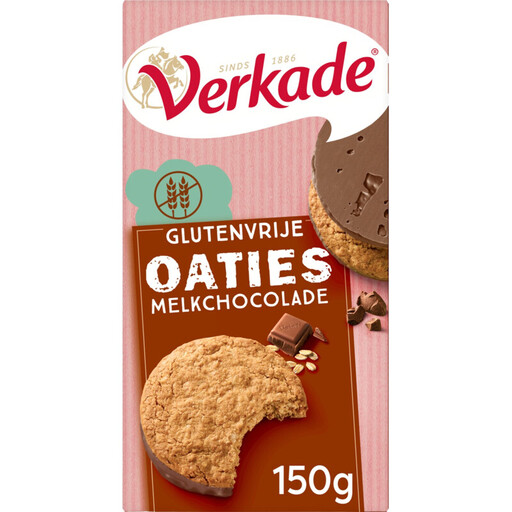 Image unavailable
A biscuit option for anyone who wants to take something along for a short or leisurely bike ride without choosing a filled biscuit.
Verkade describes Oaties as gluten-free. For this Milk Chocolate variant, check the current gluten-free labelling, ingredients and allergen warnings on the packaging.
The pack contains 150 g; choose a portion to take with you that suits your ride.
No. If you have coeliac disease, check both the gluten-free label and the current allergen information for the exact biscuit. If you’re choosing it to eat on the go, also consider the portion size and the nutritional information relevant to your ride.
Take that warning into account if you have coeliac disease, rather than relying on the ingredients list alone. The Dutch Coeliac Association describes these statements as warnings about possible cross-contamination; check the wording on the product’s current packaging.
No. According to the Netherlands Nutrition Centre, sports bars and gels are generally unnecessary for exercise lasting less than an hour. For a longer, intense ride, you can choose the carbohydrates you take with you based on the duration of your effort and the portions of the products you select.
Yes. Gluten-free doesn’t mean that a biscuit is free from other allergens. For example, Jumbo lists soya as an allergen in Schär Choco Chip Cookies, so always read the allergen information for the exact variant you’re buying.