
Students looking to cut down on sugar
You want a sweet snack, but you’d like to compare the amount of sugars it contains. Check the nutritional information per 100 g, and distinguish a lower sugar value from the claim ‘no added sugars’.


If you want a snack with demonstrably less sugar after moving, don’t choose based on the name ‘kano’ alone: product information from Jumbo and Albert Heijn lists 36.8 to 39 g of sugars per 100 g for three standard kano pastries. If you want to stick with the kano shape, compare the nutritional information on the packaging. If you’re open to a biscuit, Jumbo lists 1.7 g of sugars per 100 g for Verkade San Francisco Zero. This biscuit isn’t a kano pastry and contains maltitol, with a warning about excessive consumption.
You want a sweet snack, but you’d like to compare the amount of sugars it contains. Check the nutritional information per 100 g, and distinguish a lower sugar value from the claim ‘no added sugars’.
After moving, you’re looking for something to keep at home for coffee or visitors. Pack size and storage advice can help you decide what’s practical; the packaging separately tells you how much sugar the product contains.
If you or a housemate needs to avoid certain ingredients, check the current packaging before sharing biscuits. For the kano pastries reviewed, product information from Albert Heijn and Jumbo lists ingredients including milk, egg, cereals containing gluten, soya and almonds; the exact declaration varies by product.
First, decide whether it really needs to be a kano pastry. If another biscuit or cracker would do, compare the sugars per 100 g for each product and read any warnings on the packaging.
Choose this when: You specifically want a kano pastry with almond paste filling and are happy with the sugar value shown on the packaging.
The trade-off: The three kano pastries for which Albert Heijn and Jumbo list nutritional values contain 36.8 to 39 g of sugars per 100 g.
Choose this when: You’re mainly looking for a product with a verifiably lower sugar value and don’t need to have a kano pastry.
The trade-off: Jumbo lists 1.7 g of sugars per 100 g for Verkade San Francisco Zero; it’s a biscuit containing maltitol, not a kano pastry.
| What to consider | What should you check? | Who does this matter to? |
|---|---|---|
| Demonstrably less sugar | Compare the ‘of which sugars’ figure per 100 g; consider a claim about added sugars separately. | After moving, I want to choose a snack whose sugar value I can compare, even if it isn’t a kano pastry. This is the top priority for around 45% of consumers. |
| Pack size and storage | Check the pack weight and storage advice to see whether the packaging suits how you’ll use it. | If I’m stocking my new room with something for coffee or visitors, I want a pack I can store and use. Around 33% of consumers prioritise this need. |
| Allergens and availability | Read the current allergen declaration and any ‘may contain’ warning; check where the product is available. | Before sharing biscuits with housemates, I need to know which allergens they contain and whether I can buy the product. This combination is the main concern for around 22% of consumers. |
A lower value than another biscuit doesn’t automatically mean a product qualifies for the ‘low sugar’ claim. The Netherlands Nutrition Centre says this claim applies to products with no more than 5 g of sugar per 100 g; the values listed by Albert Heijn and Jumbo for the three standard kano pastries are higher.
Check the nutritional information per 100 g on the product you’re actually choosing, rather than relying on a difference compared with just one other pack.
A product carrying the claim ‘no added sugars’ may still contain sugars. According to Jumbo, Verkade San Francisco Zero contains 1.7 g of sugars per 100 g and includes maltitol, for which there is a warning about excessive consumption.
Before choosing an alternative, check the claim as well as the nutritional information, ingredients and usage warning.
Ingredients and nutritional values can change. Jumbo also listed the Aviateur kano pastry as no longer available online, while Lidl describes the Sondey kano pastry as an in-store product.
Check the latest product information shortly before buying and read the label when it arrives, particularly if allergens matter to you or a housemate.
AH Roomboter kano’s are standard kano pastries in a 270 g pack.
Jumbo Kano’s met Roomboter are standard kano pastries in a 275 g pack.
Aviateur Gevulde Kano’s are kano pastries with almond paste filling; Jumbo’s product information describes a pack of seven, weighing 325 g.
According to Lidl, Sondey Kano’s are butter biscuits filled with almond paste, in a 325 g pack.
ALDI lists Heerlijck Banket Kano’s in a 330 g pack.
Verkade San Francisco Zero is a biscuit alternative for anyone who isn’t specifically looking for a kano pastry.
If a kano pastry isn’t essential, you could also consider a cracker as a snack. Compare the nutritional information per 100 g and check the allergens on the packaging before choosing.
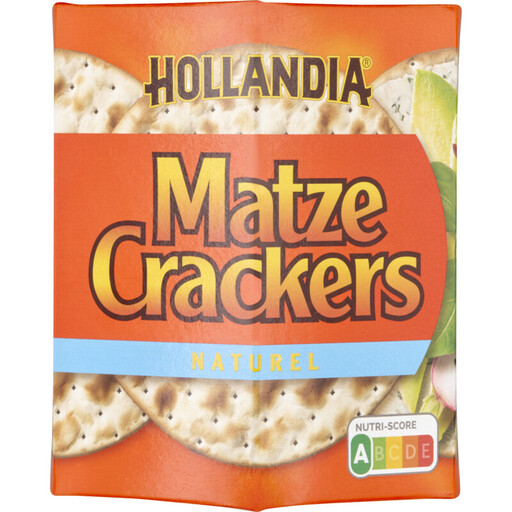 Image unavailable
A cracker to consider if you’re looking for a different kind of snack from a kano pastry for your student room. According to the product name, the pack contains 16 pieces; check the nutritional information and allergen declaration to see if it’s right for you.
The three kano pastries for which Albert Heijn and Jumbo list nutritional values are above the level the Netherlands Nutrition Centre gives for the ‘low sugar’ claim. Jumbo lists 36.8 g of sugars per 100 g for its kano pastries and 38 g for Aviateur; Albert Heijn lists 39 g per 100 g for AH Roomboter kano’s. The Netherlands Nutrition Centre sets a maximum of 5 g per 100 g for this claim.
No, those terms don’t mean the same thing. A biscuit carrying the claim ‘no added sugars’ may still contain sugars, so check the ‘of which sugars’ figure per 100 g as well.
Compare the sugars per 100 g so that different portion sizes don’t skew the comparison. Also read the ingredients list if you want to know which sources of sugar or sweeteners have been used.
Before sharing, check the allergens and any ‘may contain’ warning on the current packaging. For the kano pastries reviewed, product information from Albert Heijn and Jumbo lists ingredients including cereals containing gluten, milk, egg, soya and almonds, but the declaration varies by product.