
Fans of a filled treat
Want to put biscuits out for a film night? Your preference for a soft almond paste filling or a crumbly biscuit is the main thing to consider when choosing.


Choose kano biscuits if you want to serve a soft butter biscuit filled with almond paste; choose digestives if you’d prefer a crumbly wheat biscuit. To compare the exact varieties, check the nutritional values per 100 g as well as how much you plan to serve, and check the allergens on the packaging.
Want to put biscuits out for a film night? Your preference for a soft almond paste filling or a crumbly biscuit is the main thing to consider when choosing.
Want to take sugars, saturated fat, fibre and portion sizes into account? The Netherlands Nutrition Centre recommends comparing nutritional values per 100 g. Also consider how much you’ll actually serve.
If you need to avoid wheat or gluten, milk, egg, soya or almonds, the allergen information on the exact pack you choose is what matters. This can vary between types of biscuit and individual varieties.
Start by considering the difference between a filled kano biscuit and a crumbly digestive. Then compare the varieties within the type of biscuit you want to serve.
Choose these if: you want to serve a soft, filled butter biscuit for your film night.
Bear in mind: Albert Heijn and Jumbo’s product information lists sugars and saturated fat, which you can take into account when comparing the specific varieties.
Choose these if: you’d prefer to serve a crumbly wheat biscuit, either plain or covered in chocolate.
Bear in mind: nutritional values and allergens vary between varieties. A digestive isn’t automatically suitable if you need to avoid gluten.
| What to consider | What to check before buying | Who should pay particular attention? |
|---|---|---|
| Filling and texture | Choose between a kano biscuit with almond paste and a crumbly digestive. For kano biscuits, check the stated proportion of filling. | If I’m sharing biscuits during a film, I’m mainly looking for a soft biscuit with a filling. That treat is the priority for around 44% of consumers choosing between these types of biscuit. |
| Nutritional values and portion size | Compare sugars, saturated fat and fibre per 100 g, then consider how much you’ll serve. | When putting together a plate, I want to know what the difference per 100 g means for my portion. Around 33% of these consumers prioritise comparing nutritional values. |
| Allergens and ingredients | Check the ingredients and allergens on the exact pack, including any mentions of wheat, milk, egg, soya and nuts. | If not everyone at the table can eat the same ingredients, I need to be able to check the variety I’ve chosen in advance. Suitability is the priority for around 23% of these consumers. |
The kano biscuits described by Albert Heijn and Jumbo are butter biscuits filled with almond paste. The digestives examined are wheat biscuits, so their filling and texture aren’t interchangeable features.
First decide which type of biscuit you want to serve, then compare the packs and labels within that category.
A fibre claim, a vegan variety or the use of butter doesn’t tell you everything about a biscuit’s nutritional values and ingredients. For example, PLUS lists wheat as an ingredient in its vegan Digestive biscuit.
Check the nutritional information per 100 g, along with the ingredients and allergen information for the variety you want to buy.
The kano biscuits and digestives examined have different ingredients and allergens. Even within the same type of biscuit, you can’t assume the information for one variety applies to another.
Before serving, check the packaging of the exact product you’ve bought, including any warnings about possible traces.
Albert Heijn lists AH Roomboter kano's in a 270 g pack.
Jumbo lists both its own-brand kano biscuits and McVitie's Digestives, which are two different types of biscuit.
PLUS describes both butter kano biscuits and its own-brand Digestive biscuit.
In the product information examined, McVitie's Digestives are represented by Original and a milk chocolate variety.
Verkade makes various biscuits and has published information about Digestive Cream.
Lidl describes Sondey Kano's as butter biscuits with almond paste filling, in a 325 g pack.
These two products are on the digestive side of the choice for a film night: one biscuit with milk chocolate and one plain variety. Choose a kano biscuit separately if you’re looking for a filled butter biscuit.
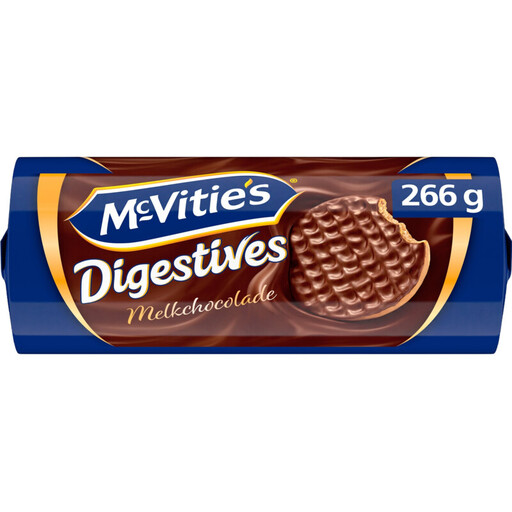 Image unavailable
For a film night when you want to serve a digestive with milk chocolate. The pack contains 266 g. For this variety, Joybuy’s product information lists 28,5 g of sugars and 12,4 g of saturated fat per 100 g. Check the current packaging for allergens, including milk, soya and wheat.
 Image unavailable
For anyone who’d rather serve a plain digestive. The pack contains 400 g. According to the product information for Original, this wheat biscuit is made with 16% wholemeal wheat flour and contains 3,7 g of fibre and 10,1 g of saturated fat per 100 g. Check the current packaging for allergens, including wheat.
No. The kano biscuits described by Albert Heijn and Jumbo are butter biscuits filled with almond paste, while the digestives examined are wheat biscuits. So for your film night, start by choosing based on the filling and texture you prefer.
Of the specific varieties mentioned, PLUS lists 1,8 g of saturated fat per 100 g for its Digestive biscuit. For comparison, Albert Heijn and Jumbo each list 8,8 g for their kano biscuits, while the product information gives 10,1 g for McVitie's Original and 12,4 g for McVitie's Milk Chocolate per 100 g. This one nutritional value doesn’t give you the full picture of a product.
Check the allergen information on the exact pack you’ve bought. The kano biscuits described list different combinations of wheat, milk, egg, soya and almond or other nuts. The digestives examined contain wheat, and some varieties also list milk or soya.
Follow the storage advice on the packaging for the variety you’ve chosen. Albert Heijn recommends keeping its butter kano biscuits in a sealed tin after opening. For McVitie's Digestives Original, the advice is to store them in a dry, preferably cool place.