
For serving warm rolls to each guest
Bake-at-home Kaiser rolls are ideal for individual portions that you can top or fill just before dinner. Factor in the baking time and the space available in your oven, too; instructions vary by product.


Choose Kaiser rolls if you want to serve each guest an individual roll that you can bake shortly before serving. For sturdy, thick slices to share, choose a loaf you can slice yourself, such as a baguette or ciabatta: Kaiser rolls are small individual rolls, not thick slices. Then tailor the quantity, preparation and ingredients to your guests.
Bake-at-home Kaiser rolls are ideal for individual portions that you can top or fill just before dinner. Factor in the baking time and the space available in your oven, too; instructions vary by product.
If by ‘thick cut’ you mean genuinely thick slices, a loaf you can slice yourself lets you choose how thick they are. You can cut a Kaiser roll in half horizontally, but it remains a small individual roll.
White, wholemeal and explicitly labelled gluten-free breads are different options. Check the ingredients and allergens for the exact product, and consider how you’ll prepare and serve it.
First decide whether you want to serve individual rolls or slices you cut yourself. Then compare the quantity, preparation and labelling of the products you’re considering.
| What to consider | What to check when buying | Who this matters most to |
|---|---|---|
| Type of bread | Do you want one roll per guest, or a loaf you can cut into thick slices yourself? | For sharing, I want to be able to cut sturdy slices, rather than just put out individual rolls. An estimated 36% of consumers choosing bread for a dinner party put serving style first. |
| Timing and quantity | Compare the number of pieces per pack and the baking instructions with the space in your oven. | If the rolls need to arrive at the table warm at the same time, I want to know how many I can bake in one go. An estimated 29% of these consumers prioritise timing and quantity. |
| Ingredients and allergens | Check the exact packaging to see what the product contains and which traces may be present. | If a guest needs to avoid a particular ingredient, I want to know which bread and preparation method are suitable. For an estimated 21% of these consumers, a guest’s dietary requirement is the first consideration. |
| Nutritional information | Compare fibre and salt per 100 g; check the ingredients list if the type of salt used matters. | I want to compare rolls using their labels, particularly for fibre, salt and whether iodised salt is listed. An estimated 14% of these consumers put this information first. |
Kaiser rolls are small individual rolls. They won’t automatically give you the thick slices you had in mind for sharing as open sandwiches.
Decide how you want to serve the bread before choosing: pick Kaiser rolls for individual portions, or a loaf you can slice yourself if the thickness matters.
The wholemeal Kaiser rolls described from Albert Heijn and PLUS contain wheat. Other ingredients and possible traces also vary by product.
Check the current allergen information on each pack you choose. If a guest needs to eat strictly gluten-free, also consider how you slice, bake and serve the bread.
The Kaiser rolls reviewed are sold in packs of four or six, and each product has its own baking instructions. How many fit in your oven or air fryer at once will determine when you can serve them.
Count the rolls you’ll need, read the pack instructions and plan to bake them in batches if necessary.
The name Kaiser roll doesn’t tell you which type of salt is used in the product you’ve chosen.
Check the ingredients list on the exact pack if the use of iodised salt or baker’s salt matters to your choice.
These examples show the types of products you can compare. Ingredients and preparation instructions apply to individual products, not to the brand as a whole.
Offers white bake-at-home Kaiser rolls, white rolls with sesame or poppy seeds, and a wholemeal Kaiser roll.
Offers white bake-at-home Kaiser rolls in packs of four, as well as a separate wholemeal Kaiser roll.
De Afbakker offers white bake-at-home Kaiser rolls; its bake-at-home range described here also includes baguettes and ciabatta.
Offers Kaiser rolls to bake at home in a pack of six.
Offers a pack of four bake-at-home Kaiser rolls, weighing 200 g in total.
The Kaiserbrötchen described are explicitly labelled gluten-free and sold in packs of four.
These loaves and baguettes suit anyone looking to cut their own slices for sharing. Choose the thickness you want and check the packaging before planning how to prepare the bread for dinner.
 No image available
A round loaf you can slice to your preferred thickness for sharing.
The loaf weighs 550 g. Check the baking time on the pack before planning when to serve it.
 No image available
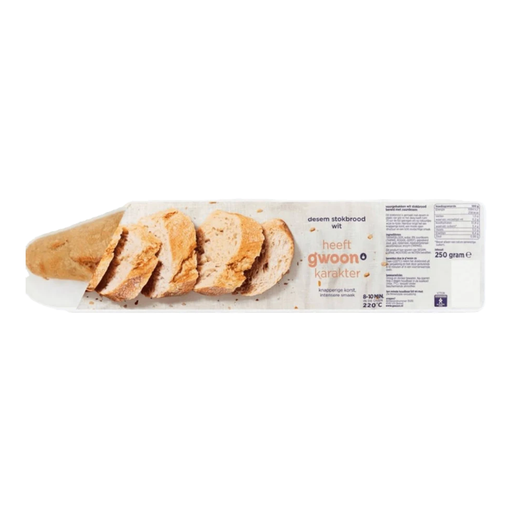
A baguette you can slice yourself to make topped bites to share.
This variety weighs 250 g. Work out how many bites you’ll get from the slices you cut, and check the pack for preparation instructions.
 No image available
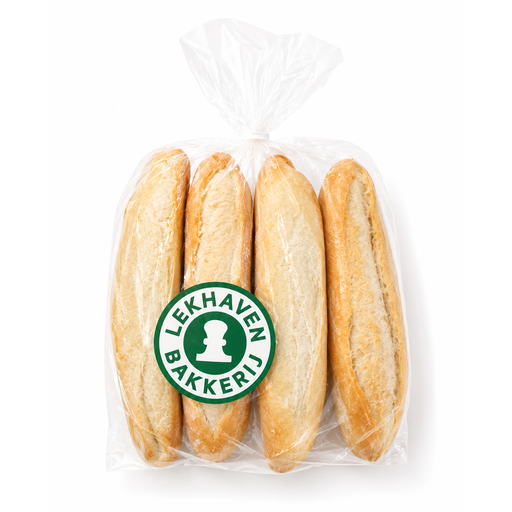
Four individual baguettes let you choose the slice thickness yourself for dinner.
The pack contains 4 × 135 g. Check the preparation instructions on the pack and make sure you have enough space in your oven.
No. Kaiser rolls are small individual rolls that you can, for example, cut horizontally and top or fill. If you want thick slices to share, choose a loaf you can slice yourself, such as a baguette or ciabatta.
First decide how many individual rolls you want to serve, then count the number of rolls in each pack. The Albert Heijn, PLUS and Dirk packs described contain four rolls; the ALDI and Lidl packs contain six. For bake-at-home rolls, also plan how many will fit in your oven or air fryer at once.
Not on the basis of the wholemeal label: the wholemeal rolls described from Albert Heijn and PLUS contain wheat. If needed, choose a product explicitly labelled gluten-free and check the other allergens and preparation instructions too. For example, the Schär Kaiserbrötchen described contain soya and may contain traces of mustard.
Read the ingredients list on the exact pack and look for iodised salt or baker’s salt. If the type of salt used matters to your choice, don’t rely on the name of the bread or the retailer alone.
Compare the same values per 100 g on the packs you’re considering, such as fibre and salt. Albert Heijn lists 2,9 g of fibre per 100 g for the white bake-at-home Kaiser rolls described, and 7,1 g per 100 g for the wholemeal Kaiser roll described. These values apply to these specific products, not to all white or wholemeal rolls.