A half a loaf is handy if you want to cut soft pieces yourself and store the rest in portions. Individual Kaiser rolls may be a better fit if your household doesn’t use many rolls at once, but their size doesn’t tell you whether the crust or texture is suitable for your baby. So choose based on your baby’s eating skills first, then check the packaging for ingredients, allergens, salt and storage instructions.
Who is this choice for?
Parents whose baby is learning to eat bread
You’re looking for bread you can adapt to what your baby can already eat. For babies starting solids after six months, the Netherlands Nutrition Centre recommends brown or wheat bread without seeds or kernels; the texture matters more than the size of the pack.
Small households looking to waste less bread
If you don’t use much bread at a time, you can weigh up a half loaf against a pack of rolls, depending on what you can store. Jumbo and PLUS offer packs of four rolls, but the type of bread and its texture still matter, whatever the pack size.
Households that need to check allergens or childcare rules
If your baby has a diagnosed dietary requirement, or you’re packing bread for childcare, check the information for that exact product. The products reviewed differ in how they list wheat, milk and the possible presence of other allergens. Ask the childcare provider what rules apply.
What should you look for when choosing?
Half a loaf
When to choose it: You want to cut soft bread into pieces yourself and store the remaining portions.
The trade-off: You’ll need to portion the bread yourself and adapt the crust and texture to your baby’s eating skills.
Individual Kaiser rolls
When to choose them: Your household prefers individual rolls, and the texture you choose suits what your baby can already eat.
The trade-off: A small roll doesn’t automatically have a soft crust. Bake-at-home and frozen options also need preparation and planning.
Only compare how much bread you use once you’ve decided which type and texture are suitable. Then check the label on the specific product.
| What to consider |
What to check when buying |
Who it matters to |
| Eating skills and texture |
Check the type of bread, whether it contains seeds or kernels, the crust and whether you can make soft pieces. |
My baby is still learning to eat bread, so I want to offer pieces that suit their stage. This is the top priority for around 31% of consumers. |
| Quantity and waste |
Compare the amount in each pack with how much you use and can store. |
I don’t use much bread at a time and don’t want the rest to go stale. Having less bread left over is the main concern for around 25% of consumers. |
| Allergens and salt |
Check the ingredients, allergen information and salt content on the label of the exact product. |
If there are dietary requirements or childcare rules, I need to know what’s in the roll before choosing it. Around 25% of consumers prioritise checking the label. |
| Preparation and storage |
Check how to store and prepare the bread, and how to use it after defrosting. |
At busy mealtimes, I want to know whether baking and cooling the bread fit into my routine. This is the main consideration for around 19% of consumers. |
Common mistakes
-
Assuming a small roll has a suitable texture
A Kaiser roll is a handy portion for a household, but its crust, firmness and any seeds or kernels still affect how you can offer it to your baby.
Choose bread you can serve in a suitable way first. For babies starting solids after six months, the Netherlands Nutrition Centre recommends brown or wheat bread without seeds or kernels.
-
Assuming all rolls have the same allergen profile
Jumbo lists wheat and milk, among other ingredients, in its white rolls. Other types of bread have different ingredients and allergen information.
Check the details for the exact product every time you buy it. For unpackaged bread, ask what allergen information is available.
-
Defrosting frozen rolls without planning how you’ll use them
According to Jumbo’s storage instructions, its frozen Kaiser rolls must not be refrozen after defrosting. Bake-at-home rolls also need time to cook and cool.
Work out how many rolls you need and follow the preparation and storage instructions on the packaging.
-
Assuming bread contains iodised salt based on its type
The Netherlands Food and Consumer Product Safety Authority explains that iodine compounds may be added to bread and bakery products through bakers’ salt. This doesn’t tell you whether the roll you’ve chosen contains iodised salt.
Check the ingredients list for the type of salt and the nutritional information for the salt content of the specific product.
Brands compared
Jumbo
Jumbo offers white rolls, frozen Kaiser rolls and a gluten-free Schär Kaiserbrötchen option. The white rolls are a different product from the Kaiser rolls.
- Product information for the options reviewed helps you compare ingredients, allergens and storage instructions.
- Jumbo says its white rolls contain wheat and milk; the frozen option has its own preparation and storage instructions. Check each product individually.
PLUS
PLUS offers individual wholemeal Kaiser rolls and packs of four white bake-at-home Kaiser rolls.
- The choice between one roll and a pack of four makes it easy to compare pack sizes.
- The white bake-at-home option reviewed lists wheat, rye and iodised salt, among other ingredients. Check the current packaging for ingredients, allergens and preparation instructions.
Albert Heijn
Albert Heijn offers regular and wholemeal Kaiser rolls, as well as a gluten-free Schär Kaiserbrötchen option.
- You can compare different types of bread as separate products.
- Albert Heijn recommends checking the packaging, as ingredients, nutritional values and allergen information may change.
Products in two bread formats
These products show two ways to choose bread for several mealtimes: cut pieces from a round loaf yourself, or buy a pack of Kaiser rolls. The round loaf is not half a loaf. Whichever you choose, check the finished texture and the label before offering it to your baby.
 Image unavailable
Lekhaven Bakkerij wholemeal round loaf, 550 g
A round loaf may suit you if you want to cut pieces for different mealtimes yourself. This one weighs 550 g and is not half a loaf.
After preparation, check whether the crust and texture suit your baby’s eating skills. Follow the instructions on the packaging and check the nutritional information and allergen details.
View at Joybuy
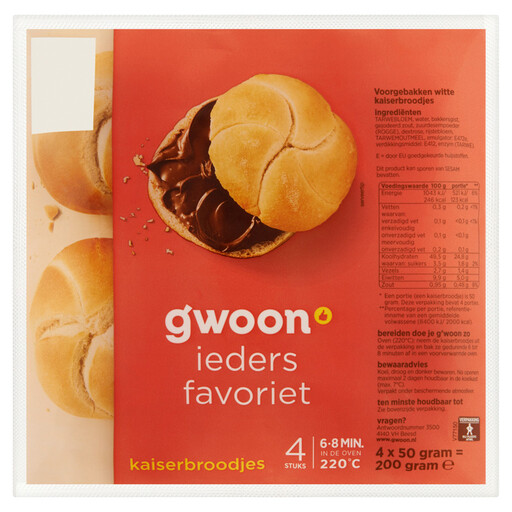 Image unavailable
g'woon Kaiser rolls, 4 rolls, 200 g
Four individual Kaiser rolls may suit a household that uses only a few rolls at a time; the pack weighs 200 g in total.
Check the texture of a roll before offering it to your baby. Read the current label for allergen, salt and storage information.
View at Joybuy
Frequently asked questions
When can my baby eat bread?
For babies starting solids after six months, the Netherlands Nutrition Centre suggests brown or wheat bread without seeds or kernels as an option to start with. Adapt the pieces and texture to what your baby can already eat; don’t choose based on the shape of the bread alone.
Are Kaiser rolls more convenient than half a loaf?
Kaiser rolls are more convenient if your household uses individual rolls and the texture you choose suits your baby. A half loaf gives you more freedom to cut pieces to size yourself. Also compare how much you’ll actually use and can store.
Should I choose gluten-free rolls?
A gluten-free roll isn’t automatically more suitable for baby-led weaning; its texture still needs to be right. If you suspect a food intolerance, the Netherlands Nutrition Centre recommends speaking to your GP. Discuss any diagnosed dietary requirements with the healthcare professional involved.
Does every roll contain iodised bakers’ salt?
You can’t assume that based on the type of bread. The Netherlands Food and Consumer Product Safety Authority explains that iodine compounds may be added to bread and bakery products through bakers’ salt. Check the ingredients list on the roll you’ve chosen to see whether it lists iodised salt.
Can I pack a Kaiser roll for childcare?
First, ask about the food and allergen policies at your childcare provider. Then check the current packaging, as standard options contain wheat and may list other allergens or the possible presence of them.


