
Anyone serving bread with a roast
If you want to serve individual rolls alongside meat, vegetables and gravy, a Kaiser roll is a shape worth considering. If you choose a part-baked option, time the baking to coincide with serving the main course.


Choose a white Kaiser roll if the familiar shape and serving it soon after baking are your priorities. If you’d prefer a wholemeal base, look for a wholemeal Kaiser roll. If visible seeds matter more than the Kaiser shape, consider a multigrain roll whose ingredients confirm that it contains the seeds you want. Always check the packaging of your chosen product for oven timings and allergen information.
If you want to serve individual rolls alongside meat, vegetables and gravy, a Kaiser roll is a shape worth considering. If you choose a part-baked option, time the baking to coincide with serving the main course.
A dark appearance or the name ‘multigrain’ doesn’t tell you whether a roll is wholemeal. Check separately for the wholemeal label and for seeds in the ingredients list. According to the Voedingscentrum, bread labelled ‘wholemeal’ is made with wholemeal flour.
If you have a relevant allergy, check the ingredients and allergen information on the current packaging, including any mention of sesame and cereals containing gluten. If using iodised salt is important to your choice, check the salt information too: according to the Voedingscentrum, bakers aren’t required to use bakers’ salt.
First decide whether you want to stick with the Kaiser shape or would prefer seeds in your bread. Then compare the preparation instructions with your oven schedule and check the label for any ingredients that matter to you.
| What to consider | What to check | Who it matters to |
|---|---|---|
| Wholemeal base and seeds | Look for the wholemeal label if you want wholemeal bread. To get the seed texture you’re after, check which seeds are listed in the ingredients. | I want more than just a dark roll with my roast: I want to choose wholemeal flour or rolls that contain seeds. For around 44% of consumers, this nutritional choice would be the main reason for their decision. |
| Serving and oven schedule | Compare the baking time and temperature on the packaging with the roast’s cooking instructions, and consider how much oven space you have available. | If the oven is already in use for the main course, I want to know when the rolls can go in. Ease of serving would be the top priority for around 33% of consumers. |
| Ingredients and salt | Read the current allergen information, including any warnings about cross-contamination. If needed, check whether iodised salt or bakers’ salt is listed. | Before serving, I want to be able to check which ingredients the bread contains and what type of salt has been used. Around 23% of consumers would make checking the label their top priority. |
Having several types of grain or visible seeds doesn’t automatically make a roll wholemeal. You could end up choosing a different flour base from the one you intended.
Look for the wholemeal label on the packaging. If you specifically want seeds, check the ingredients list too.
The seeds and allergens present vary from product to product. PLUS lists sesame and cereals containing gluten among the ingredients in its multigrain triangles.
Check the current ingredients and allergen information for the roll you’re buying, including any warnings about cross-contamination.
According to the Voedingscentrum, bakers aren’t required to use bakers’ salt. The type of bread alone won’t tell you what salt has been used.
Check the salt information on the label. If you’re buying unpackaged bread, ask in store for the product information.
Lidl says its fresh bread selection can vary between branches. This is worth bearing in mind if you’re counting on a particular roll for your Sunday roast.
Check what your store stocks before finalising your menu, and read the product information again when you buy it.
Worth considering if you want to stick with the Kaiser shape and choose between a white part-baked option and a wholemeal one.
Worth considering if you want to compare white and wholemeal Kaiser rolls, including frozen options, with other types of bread.
Worth considering when seeds matter more to you than the traditional Kaiser shape.
Worth considering for multigrain rolls if the Kaiser shape isn’t essential.
Worth considering if you want to compare a white Kaiser roll with other fresh rolls, including a wholemeal roll with seeds and kernels.
Worth considering if a whole multigrain loaf with seeds would also suit your table.
These bread options suit a table where the Kaiser shape isn’t essential: a brioche roll with a seed topping, individual multigrain baguettes and a round multigrain loaf. None of these is a Kaiser roll. If you’re looking for specific seeds, check the current ingredients list before choosing.
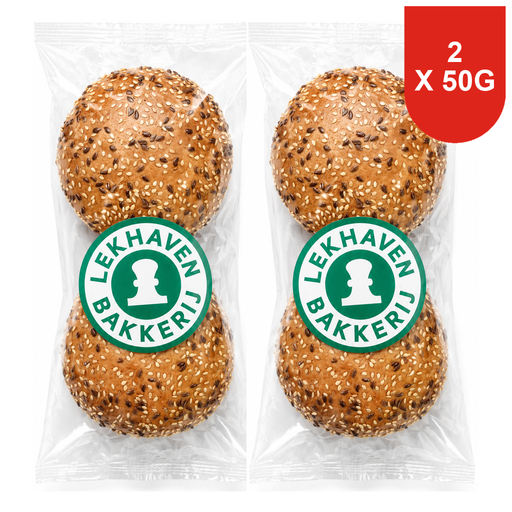 Image unavailable
A brioche roll to serve alongside the main course if you’re not set on the Kaiser shape. The product name specifies a sesame and linseed topping and a pack of two 50 g rolls.
Check the current packaging for preparation instructions, allergen information and the type of salt used.
 Image unavailable
Four individual 135 g multigrain baguettes for serving bread without insisting on the Kaiser shape.
Before adding them to your oven schedule, check the packaging for the seeds used, allergen information, and baking time and temperature.
 Image unavailable
A 550 g round multigrain loaf to serve in pieces with your roast, instead of giving everyone a Kaiser roll.
Remember to slice it before serving. Check the packaging for the seeds and allergens listed, and for the recommended preparation method.
No. According to the Voedingscentrum, bread labelled ‘wholemeal’ is made with wholemeal flour; the word ‘multigrain’ alone doesn’t tell you that. Check the ingredients list too if you’re looking for specific seeds.
Choose according to what matters most to you: a white Kaiser roll keeps the familiar shape, while a wholemeal Kaiser roll gives you a wholemeal base. If you want seeds too, check the ingredients; wholemeal doesn’t automatically mean the roll contains seeds or has them on top.
No, the seeds used vary from product to product. PLUS lists sesame seeds in its Triangels Meergranen, but that doesn’t tell you anything about another roll. If you have a sesame allergy, check the current allergen information and any warnings about cross-contamination.
No. According to the Voedingscentrum, bakers aren’t required to use bakers’ salt. Check the label to see which salt is listed, or ask for the product information if you’re buying unpackaged bread.
Start with the time and temperature on the packaging, then work out when there’s room in the oven. Albert Heijn lists an oven time of 6–8 minutes for its white part-baked Kaiser rolls; don’t use that product-specific timing for other rolls.