
Anyone making a special meal for one
You want a warm roll with your meal, but a pack of four only makes sense if you’re going to use the other rolls too.


For a meal for one, a fresh Kaiser roll sold individually is a good choice if you’re going to eat it the same day. A pack of four premium bake-at-home rolls is better if you want to use several and have time to prepare them. If wholemeal, fibre or a gluten-free label matters more to you, compare those features separately and check the allergen and storage information too.
You want a warm roll with your meal, but a pack of four only makes sense if you’re going to use the other rolls too.
You’re looking for one roll for today, or want to know in advance how to store rolls from a larger pack.
Fibre, ingredients or allergens influence your choice. In that case, the nutritional information for the individual roll matters more than a ‘premium’ label alone.
First, work out how many rolls you’ll actually eat. Then compare the preparation method, ingredients and nutritional information of the options that suit that quantity.
| What to consider | What to check when buying | Who should consider this? |
|---|---|---|
| Flavour and preparation | Check the flavourings, such as sesame and poppy seeds, the number of rolls and the preparation method on the pack. | If I want to serve several warm rolls with a special meal, flavour and presentation matter more to me than a single portion. This is the top priority for around 31% of consumers. |
| Portion size and storage | Compare rolls sold individually with packs of four, and read the storage and freezing instructions. | If I’m eating one roll today, I don’t want to be left with rolls I can’t use in time. Portion control is the main concern for around 38% of consumers. |
| Wholemeal and fibre | Check the ingredients and the amount of fibre per 100 g; the shape of the roll doesn’t tell you whether it’s wholemeal. | If I often have a Kaiser roll with my meal, I give more weight to wholemeal ingredients and the stated fibre content than to a premium white version. This is the deciding factor for around 23% of consumers. |
| Gluten-free and allergens | Look for a clear gluten-free label and check the information about other allergens too. | If my roll needs to be gluten-free, a flavoured option only comes into consideration once that requirement is met. Gluten-free is the primary buying requirement for around 8% of consumers. |
A larger pack won’t necessarily suit a single meal. For example, Albert Heijn says its premium bake-at-home Kaiser rolls aren’t suitable for freezing at home.
Choose a roll sold individually if you only need one today, or decide before you buy when you’ll use the rest and check the pack’s storage instructions.
According to Albert Heijn, the white AH Luxe Kaiser rolls examined contain 2.7 g of fibre per 100 g; the AH wholemeal Kaiser roll examined contains 7.1 g per 100 g. Flavourings and fibre content are therefore different things to consider.
If wholemeal ingredients or fibre matter to you, compare the ingredients and fibre content per 100 g.
The Schär Kaiserbrötchen examined carry a gluten-free label, but the product information also lists soya and possible traces of mustard.
Always read the full allergen information on the current packaging for each roll.
The product ranges examined include both packs of four premium bake-at-home Kaiser rolls and a wholemeal Kaiser roll sold individually.
The Kaiser roll range includes standard packs, frozen options and wholemeal varieties.
The products examined offer a choice between packs of four bake-at-home Kaiser rolls and a fresh roll sold individually.
According to the product information, the Kaiserbrötchen examined are gluten-free.
This product is a pack of four Kaiser rolls. It’s best suited to anyone who wants to use several rolls; for a meal for one, check how to prepare them and store the rest.
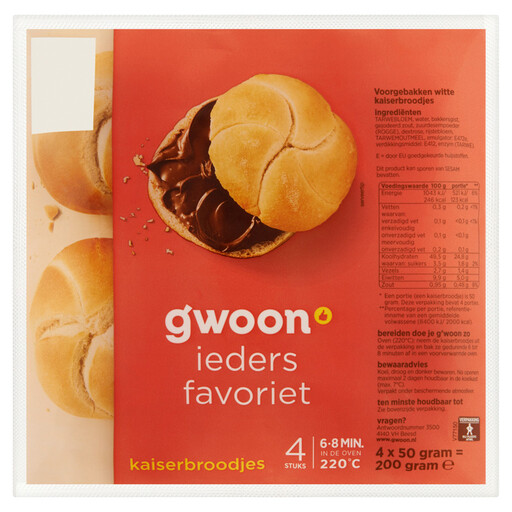 Image unavailable
A pack for anyone who wants to use several Kaiser rolls, rather than just one roll for today.
Four rolls, 200 g in total. Check the pack for preparation instructions, storage instructions after opening and the latest allergen information.
Yes, as long as the product’s storage instructions fit your plans. Before buying, check how long the rolls keep after opening and whether they can be frozen; the label on AH Luxe Kaiser rolls says they aren’t suitable for freezing at home.
Compare the nutritional information for the specific products. Albert Heijn states that the wholemeal Kaiser roll examined contains 7.1 g of fibre per 100 g, while the white AH Luxe bake-at-home option examined contains 2.7 g per 100 g. These figures don’t apply to all wholemeal or white Kaiser rolls.
No. A gluten-free label doesn’t tell you about all other allergens. According to the product information, the Schär Kaiserbrötchen examined contain soya and may contain traces of mustard; always check the latest label.
Don’t assume so based on the product category. The ingredients lists for some of the Kaiser rolls examined include iodised salt; check the label of the roll you want to buy if this ingredient matters to you.