
Road-trippers looking for a wholemeal option
They look for a roll labelled ‘wholemeal’ and, if necessary, compare the fibre content per 100 g. The kaiser shape and any seeds are separate preferences.


Choose a kaiser roll labelled ‘wholemeal’ if that matters more to you than simply having seeds or a darker colour. If you mainly want seeds and extra texture, check the ingredients; a roll without the kaiser shape could still be suitable. If you’re setting off straight away, a fresh roll is more practical than one you still need to bake or defrost at home.
They look for a roll labelled ‘wholemeal’ and, if necessary, compare the fibre content per 100 g. The kaiser shape and any seeds are separate preferences.
They want to see seeds or kernels listed as ingredients. A name such as ‘multigrain’ isn’t enough on its own; if you’re happy to forgo the kaiser shape, there are other rolls to consider too.
They want to take a roll with them without having to bake or defrost it at home. With bake-at-home and frozen options, the preparation and storage instructions will determine whether they fit your departure plans.
First, compare what matters most to you: a wholemeal kaiser roll, clearly listed seeds or a roll you can take with you without any preparation. Then consider the type of product and how many rolls you need.
| What to consider | What should you check? | Who is this most important for? |
|---|---|---|
| Wholemeal and fibre | Look for the ‘wholemeal’ label and, when comparing specific products, check the fibre content per 100 g. | If I specifically want to take a wholemeal kaiser roll, I want to be able to identify it on the packaging. Around 33% of consumers put this wholemeal choice first. |
| Seeds and kernels | Check which seeds are listed as ingredients; ‘may contain sesame’ is an allergen warning, not an ingredient. | Seeds and the texture they add matter more to me than the exact shape of the roll. This is the main priority for around 27% of consumers. |
| Preparation | Check whether the roll is fresh, bake-at-home or frozen, and follow the preparation and storage instructions. | When I shop shortly before setting off, I want to know whether I’ll need to prepare anything at home. Preparation is the biggest consideration for around 20% of consumers. |
| Shop and quantity | Check how many rolls are in each pack and whether your chosen option is available at your shop. | I want to take enough rolls for the journey without having to visit another shop for a different type. Around 20% of consumers prioritise this practical choice. |
Having several grains or seeds doesn’t, by itself, tell you whether a roll is wholemeal. If that’s what you’re looking for, you could end up choosing a different product from the one you intended.
Look for the ‘wholemeal’ label and, if you wish, compare the fibre content per 100 g. Check for seeds separately in the ingredients.
According to the Voedingscentrum, using baker’s salt when baking bread isn’t compulsory. So the name ‘kaiser roll’ doesn’t tell you which salt has been used.
Read the ingredients list if you want to know whether your chosen roll contains baker’s salt or iodised salt.
A bake-at-home roll still needs to be prepared; a frozen option also requires you to follow its storage instructions. This matters if you’re setting off straight after doing your shopping.
Choose a fresh roll if you can’t prepare it at home. For bake-at-home or frozen rolls, check the instructions on that specific pack in advance.
‘May contain sesame’ means something different from sesame being listed in the ingredients. Allergen information can also vary between types of bread.
If you have an allergy, check both the ingredients and allergen information for the roll you’re actually buying.
The rolls mentioned here show the different types of products you might come across; a white, wholemeal or seed-topped roll isn’t automatically the same option.
Albert Heijn has a product page for AH Kaiserbroodjes.
Jumbo lists, among other options, frozen wholemeal kaiser rolls.
Lidl lists a white kaiser roll, as well as a wholemeal roll with seeds and kernels.
ALDI lists white De Afbakker kaiser rolls and separate multigrain rolls.
PLUS lists white bake-at-home kaiser rolls and a separate wholemeal kaiser roll.
Dirk lists white kaiser rolls to bake at home.
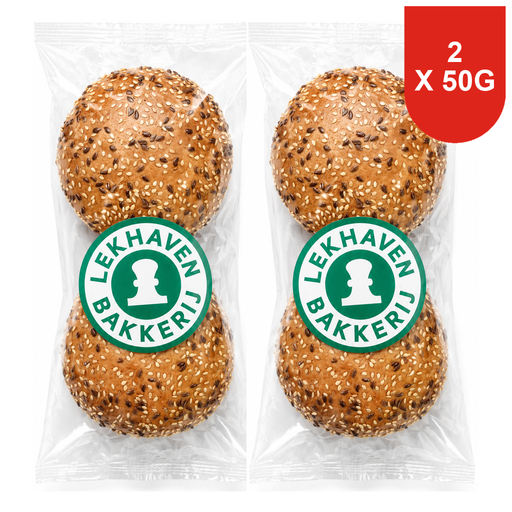
If you’re mainly looking for a seeded roll to take on the road and don’t need the kaiser shape, you could consider this brioche option. Check the preparation and storage instructions on the packaging before you set off.
 No image available
An alternative if you’re looking for sesame and flaxseed and don’t need a kaiser roll. The product name lists a pack of two 50 g rolls; check the current allergen information and preparation and storage instructions.
No, ‘multigrain’ doesn’t automatically mean ‘wholemeal’. According to the Voedingscentrum, wholemeal bread is made from 100% wholemeal flour. So if that’s what you’re looking for, check for the ‘wholemeal’ label, and check the ingredients list separately for seeds.
No, it’s an allergen warning, not confirmation that sesame has been added as an ingredient. If you have a sesame allergy, read the full allergen information on the pack you’ve chosen.
No, according to the Voedingscentrum, using baker’s salt to bake bread isn’t compulsory. Check the label on the specific roll to see whether baker’s salt or iodised salt is listed as an ingredient.
It depends on the product and appliance. PLUS says its white bake-at-home kaiser rolls take 6–8 minutes in the oven; Dirk gives a cooking time of 6–8 minutes in an oven or air fryer for its white kaiser rolls. Follow the instructions on your own pack and let the rolls cool before packing them.
Yes, as long as you can prepare and store your chosen option according to the packaging before you set off. Jumbo says not to refreeze its frozen wholemeal kaiser rolls after defrosting.