
Lunch shoppers who care about fibre
You want to be able to choose a wholemeal option and compare fibre per 100 g. Albert Heijn lists 7,1 g per 100 g for its wholemeal Kaiser roll; PLUS lists 6,9 g per 100 g for its wholemeal version.


Choose a wholemeal Kaiser roll if fibre per 100 g is your priority. Buy white and wholemeal rolls side by side when organising lunch for people with different preferences. With bake-at-home or frozen rolls, preparation, storage and pack size also matter.
You want to be able to choose a wholemeal option and compare fibre per 100 g. Albert Heijn lists 7,1 g per 100 g for its wholemeal Kaiser roll; PLUS lists 6,9 g per 100 g for its wholemeal version.
You’re buying rolls for people who don’t all like the same things. Offering white and wholemeal rolls side by side lets everyone choose for themselves.
You want to bake the rolls when it suits you. Check whether you’re buying fresh, bake-at-home or frozen rolls, then follow the preparation and storage instructions for that specific version.
First decide whether fibre, choice for a mixed group or when you’ll prepare the rolls is your main consideration. Then check the packaging of the version you actually want to buy.
| What to consider | What to check when buying | Who it matters to |
|---|---|---|
| Wholemeal and fibre | Check whether the version is labelled wholemeal and compare fibre per 100 g. | If fibre is my priority, I want to know how much each roll contains per 100 g rather than judging by its colour. Around 44% of consumers prioritise this. |
| Choice for the group | Check which white and wholemeal versions are available, then choose quantities to suit your group. | When I’m serving lunch to people with different tastes, I don’t want to offer everyone just one type of roll. Around 33% of consumers prioritise having a choice for the group. |
| Preparation and keeping a stock | Check whether the rolls are fresh, bake-at-home or frozen, as well as the preparation and storage instructions. | If I want to serve the rolls later, the type of product needs to fit my plans and the equipment I have available. This is the main consideration for around 23% of consumers. |
Colour or a multigrain name doesn’t tell you how much fibre a Kaiser roll contains. Albert Heijn lists 7,1 g of fibre per 100 g for its wholemeal Kaiser roll, compared with 2,9 g per 100 g for its white bake-at-home version.
If wholemeal is a deciding factor for you, check the product name, ingredients and fibre per 100 g.
According to the Netherlands Nutrition Centre, using baker’s salt in bread is not compulsory. So you can’t assume that a Kaiser roll is made with iodised salt based on the type of bread alone.
For packaged bread, check the ingredients list for baker’s salt or iodised salt. For unwrapped rolls, ask the seller.
If you’re having a small group for lunch, you may end up with rolls left over.
Choose a quantity to suit the number of people eating. If you want to prepare rolls later, consider bake-at-home or frozen versions and follow their storage instructions.
Fresh, bake-at-home and frozen rolls may have different preparation methods and ingredients.
Check the preparation instructions and allergen information for the exact version you’re buying, especially if anyone in your group has a food allergy.
For anyone weighing up a single wholemeal Kaiser roll against a pack of white bake-at-home rolls.
For anyone looking at white, wholemeal and frozen Kaiser rolls.
For anyone looking for a single wholemeal Kaiser roll for lunch.
For anyone considering a fresh white Kaiser roll or white bake-at-home rolls.
For anyone looking for a smaller pack of bake-at-home rolls.
This pack of four Kaiser rolls could suit a smaller lunch group. Check the packaging to see which type of roll you’re buying before planning it as a white or wholemeal option.
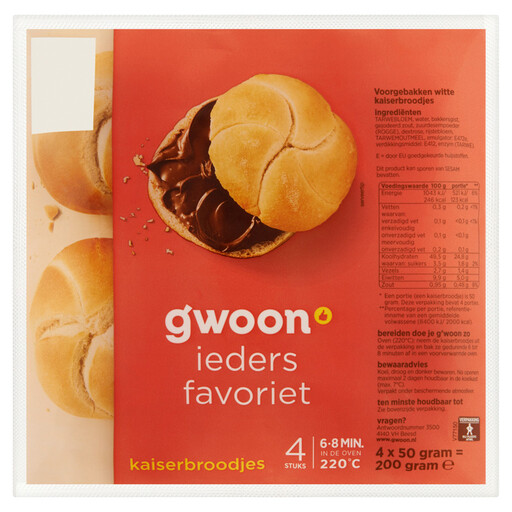 Image unavailable
A pack of four rolls lets you match the quantity to the number of people at a smaller lunch.
Pack size: 4 rolls, 200 g in total.
Check the packaging to see whether this version is white or wholemeal, how to prepare the rolls and which allergens are listed. Compare fibre using the nutritional information per 100 g.
No. Colour and a multigrain name aren’t enough to tell you. Check that the product name and ingredients indicate it’s a wholemeal version, and compare fibre per 100 g if that matters to your choice.
No. According to the Netherlands Nutrition Centre, using baker’s salt when baking bread isn’t compulsory. For packaged bread, check the ingredients list for baker’s salt or iodised salt. For unwrapped rolls, ask the seller.
Preparation times vary by version. For its white bake-at-home rolls reviewed, Albert Heijn lists 8–10 minutes at 220 °C. For its white frozen rolls reviewed, Jumbo lists 6–8 minutes at 200 °C, straight from the freezer. Follow the instructions on the packaging you buy.
Check the latest ingredients and allergen information for the exact Kaiser roll you’re buying. Don’t rely on information for another white, wholemeal or frozen version, even if the rolls look similar.