
Parents of a fussy bread eater
Looking for a manageable portion without pressure to eat a lot or try something new. The Netherlands Nutrition Centre advises offering small portions to children who eat very little, without forcing them to eat.


For a fussy eater, choose a kaiser roll you can serve in a small portion: a white roll may feel familiar, while wholemeal is an option if its taste and texture are accepted. Cut the roll at home to suit, and check the fibre, iodised salt and allergens for each product. If gluten needs to be avoided, choose a product explicitly labelled gluten-free and check for other allergens too.
Looking for a manageable portion without pressure to eat a lot or try something new. The Netherlands Nutrition Centre advises offering small portions to children who eat very little, without forcing them to eat.
Want to compare the nutritional information for white and wholemeal bread, while making sure the taste and texture remain acceptable to the eater. The Netherlands Nutrition Centre advises replacing white bread with wholemeal or brown bread as often as possible.
Looking for a product clearly labelled gluten-free, while also checking for other allergens. For example, the product information for Schär Kaiserbrötchen lists soya and possible traces of mustard.
When choosing kaiser rolls for a fussy eater, first decide what matters most: an acceptable portion, nutritional information, allergens or practicality. Then check the label and the preparation and storage instructions for the specific roll.
| What to consider | What to check | Who is this important for? |
|---|---|---|
| Portion and texture | Check whether you can serve the roll in a suitable portion and whether preparing it gives it the texture you want. | If a large portion causes resistance, I want to be able to offer a small roll without putting pressure on anyone at the table. Acceptance comes first for around 36% of consumers. |
| Fibre and iodised salt | Compare the fibre per 100 g and check whether iodised salt is listed in the ingredients. | For an everyday bread occasion, I want to pay attention to the nutritional information, as long as the eater accepts the texture. Fibre and iodised salt matter most to around 29% of consumers. |
| Gluten and other allergens | Check the current allergen information for the specific product, even if it is gluten-free. | If gluten or another allergen needs to be avoided, I want to know whether the roll is suitable. This check comes first for around 14% of consumers. |
| Preparation and storage | Read the preparation and storage instructions, especially for an opened pack. | When appetites vary, I want to be able to store any leftovers according to the pack instructions. Practicality is the main consideration for around 21% of consumers. |
That search term doesn’t tell you how a kaiser roll is cut or what texture the eater prefers.
Choose a roll based on its type and product information, then cut it in half or into smaller pieces at home to suit.
A familiar white roll can be practical, but if bread is a regular part of the diet, the choice between white and wholemeal matters too. The Netherlands Nutrition Centre advises replacing white bread with wholemeal or brown bread as often as possible.
Compare the fibre per 100 g on the label and offer a wholemeal option without pressure if its taste and texture seem manageable.
Gluten-free doesn’t mean a roll is free from other allergens: the product information for Schär Kaiserbrötchen lists soya and possible traces of mustard.
Read the full, up-to-date allergen information before choosing a roll for someone with a food allergy.
If appetites vary, you may have rolls left over. According to the product information, AH Kaiserbroodjes have specific instructions for after opening and are not suitable for freezing at home.
Choose a pack size that suits how much you expect to use, and follow the instructions for the product you buy.
An opened pack that isn’t used in time can lead to food waste.
Albert Heijn describes both white bake-at-home kaiser rolls and a wholemeal kaiser roll.
Jumbo’s category information distinguishes between white, frozen, wholemeal and gluten-free kaiser rolls, among other options.
According to Albert Heijn’s product information, Schär Kaiserbrötchen are gluten-free and wheat-free.
This roll suits anyone looking for individually portioned bread. Check the packaging to see whether the texture is right for the eater and which allergens apply.
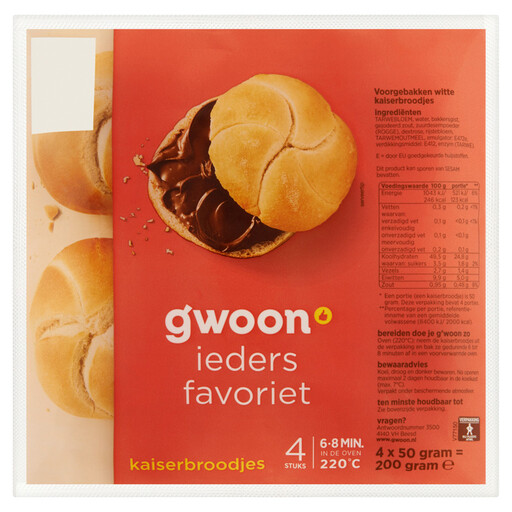 Image unavailable
For anyone who wants to serve one roll at a time: the pack contains 4 Kaiser Rolls, totalling 200 g.
Check the ingredients, allergens and preparation instructions on the packaging before serving.
Choose a portion the eater can manage, then compare the types of bread. The Netherlands Nutrition Centre advises replacing white bread with wholemeal or brown bread as often as possible; Albert Heijn states that its wholemeal kaiser roll contains 7,1 g of fibre per 100 g. Offer a wholemeal option without pressure if its taste and texture are still unfamiliar.
Offer a small portion and don’t force anyone to eat. This follows the Netherlands Nutrition Centre’s advice for children who eat very little; cut the roll into a portion that suits the occasion.
Look for iodised salt in the ingredients list. Albert Heijn lists this ingredient for its white and wholemeal kaiser rolls, but check each product individually before you buy it.
Not necessarily. According to the product information for Schär Kaiserbrötchen, the product is gluten-free and wheat-free, but contains soya and may contain mustard. So check the current allergen information on the packaging.
Follow the storage instructions for the specific product. According to the product information, AH Kaiserbroodjes are not suitable for freezing at home; once opened, they should be kept chilled and have a limited shelf life.