
Organisers who want to serve generously filled rolls
With thick or moist fillings, you’ll want to decide for yourself how to slice the roll. Try it with the actual filling to see whether it’s still easy to serve after the planned waiting time.


For generously filled kaiser rolls at a conference lunch, choose rolls that you can confirm will be delivered whole before ordering. That way, you can slice them yourself shortly before serving. Don’t assume they will have a standard ‘thick cut’ or hold up well with moist fillings without confirmation from the supplier. Try your planned roll and filling together, allowing for the expected waiting time. Plan baking and serving around the time available, and check the ingredients and allergen information for each option you choose.
With thick or moist fillings, you’ll want to decide for yourself how to slice the roll. Try it with the actual filling to see whether it’s still easy to serve after the planned waiting time.
A fixed lunch break makes the preparation method important. Part-baked rolls need time and oven space for baking, followed by time to fill and serve them.
If guests ask for a wholemeal or gluten-free option, you’ll need information about the exact product. Keep the latest ingredients and allergen information available when serving, too.
Start with the filling and serving time. Then choose a preparation method that suits the venue and check the details for each specific product variant.
| What to consider | What to check before buying | Who is this most important for? |
|---|---|---|
| Thick or moist fillings | Ask whether the rolls will be delivered whole. Try one with your planned filling and expected waiting time. | If I want to serve generous fillings, the roll needs to stay easy to handle when served. This is a priority for around 36% of consumers. |
| Baking and serving | Check the preparation and storage instructions for the exact product, and plan the oven batches you’ll need. | With a short break, I don’t want baking to delay filling and serving the rolls. This planning is the main concern for around 29% of consumers. |
| Dietary requirements and allergens | Choose a separate variant for a confirmed request and check the latest ingredients and allergen information. | When guests have specific dietary questions, I need to know which roll I can offer to each person. This is a priority for around 21% of consumers. |
| Range and packaging | Compare the number of rolls in each pack with the quantity you need, and confirm availability at your chosen retailer. | For a group, I want to order suitable pack sizes without having to switch variants on the day. Around 14% of consumers prioritise this. |
Kaiser rolls aren’t necessarily pre-sliced or cut to a particular thickness. Assuming they are could make it harder to fill them just before lunch.
Ask the supplier whether the exact product is delivered whole or pre-sliced. Try your preferred cut with the planned filling.
Part-baked rolls need to be finished in the oven, and storage instructions vary by product. For a short break, you’ll need a workable schedule for baking, filling and serving.
Read the instructions for your chosen product, plan the oven batches and check what storage options are available at the venue.
These labels answer different questions. The product name alone also won’t tell you everything you need to know about ingredients and allergens.
Ask about dietary requirements in advance and check the latest packaging or supplier information for each variant you choose. If you offer a separate gluten-free option, also consider cross-contact during preparation and serving.
According to the Netherlands Nutrition Centre, bakers aren’t required to use baker’s salt. The type of bread alone therefore doesn’t tell you which salt is used in a particular roll.
Check the ingredients list on a packaged product, or ask the baker or supplier which salt is used for unwrapped rolls.
Albert Heijn lists product pages for AH Kaiserbroodjes and AH Kaiserbroodje volkoren. AH Zakelijk also includes kaiser rolls in its lunch range.
Jumbo has a category for kaiser rolls and bread rolls, as well as a separate range of part-baked rolls.
ALDI lists white De Afbakker kaiser rolls for baking at home, with a baking time of 5–7 minutes for the product described.
Lidl offers a range of oven-fresh bread that may be useful when shopping in store.
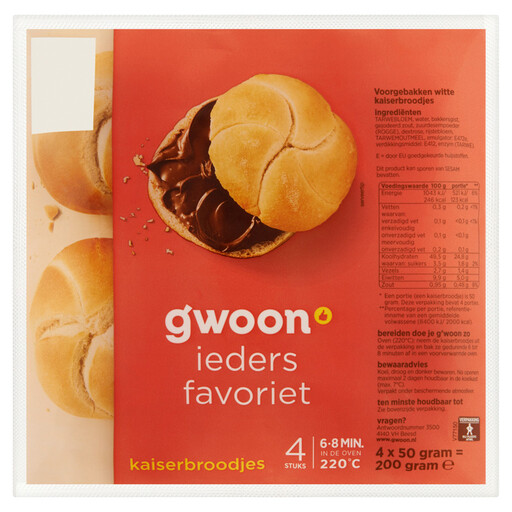
This range includes a pack of kaiser rolls to consider for a conference lunch. Before ordering, confirm that the rolls will be delivered whole if you want to choose how to slice them.
 No image available
For a lunch where you fill the rolls yourself: ask whether these kaiser rolls will be delivered whole, and try them with your planned filling and waiting time.
Pack: 4 rolls, 200 g.
No. Don’t assume a particular slice thickness unless it’s confirmed for the exact product. Ask whether the rolls will be delivered whole or pre-sliced. If they’re whole, you can choose the cut yourself and try it with your planned filling.
Yes. According to the Netherlands Food and Consumer Product Safety Authority, businesses offering non-prepacked food to consumers must provide information about allergens. Keep the latest product information for each type of bread available, and make sure staff can access it when serving.
No. According to the Netherlands Nutrition Centre, bakers aren’t required to use baker’s salt. For packaged rolls, read the ingredients list; for unwrapped rolls, ask the baker or supplier which salt is used.
Part-baked kaiser rolls are suitable when you have enough oven space and time before the lunch break. Jumbo describes part-baked rolls as products that are finished in the oven; check the preparation and storage instructions for your chosen option, too.