
Parents looking for a wholemeal bread snack
For a regular snack where the type of bread matters. The Netherlands Nutrition Centre recommends brown or wholemeal bread for primary school children; you can serve vegetables or fruit alongside it.


Choose a wholemeal kaiser roll if it’s a regular snack and gluten isn’t an issue. If you want a roll that’s quick to bake or easy to store, check the preparation and storage instructions for the specific product. If your child needs to avoid gluten, choose a product explicitly labelled gluten-free and check for other allergens too. ‘Thick cut’ isn’t a standard thickness description for kaiser rolls, so you can serve a suitable portion by offering a whole roll or half.
For a regular snack where the type of bread matters. The Netherlands Nutrition Centre recommends brown or wholemeal bread for primary school children; you can serve vegetables or fruit alongside it.
For anyone whose choice is affected by gluten or other allergens. The ingredients and any warnings on the exact product must be suitable for what your child can eat.
For anyone who needs to consider the number of rolls, portion size and time needed to bake or defrost them. Serving a whole or half roll can help you tailor the portion to snack time.
First, decide which type of bread and allergen requirements are right for your child. Then compare the portion size and how long it takes to prepare the roll for serving.
| What to consider | What to check when buying | Who should pay particular attention? |
|---|---|---|
| Type of bread | Check that it’s labelled wholemeal and compare the fibre per 100 g in the products you’re considering. | If the roll is a regular snack, I want to make a considered choice about the type of bread. Around 36% of consumers say this is their primary need. |
| Allergens | Read the ingredients, allergen information and any ‘may contain’ warning on the exact product; check the school or childcare setting’s policy too, if needed. | If a child needs to avoid an ingredient, I don’t want to rely on the name of the bread or a gluten-free label alone. For around 29% of consumers, checking allergens comes first. |
| Preparation and storage | Check the baking or defrosting instructions and whether a defrosted roll can be frozen again. | I want to be able to serve a few rolls at different times without overlooking the storage instructions. For around 21% of consumers, this convenience is the main consideration. |
| Portion | Compare the number of rolls and the weight of each one; choose whether to serve a whole or half roll. | When choosing a snack that a child can hold easily, I mainly want to be able to adjust the amount. Around 14% of consumers put portion size first. |
The kaiser rolls described here are whole rolls, not a standard thickness category. The term alone tells you nothing about the size of a roll or the right portion for a child.
Compare the weight per roll and decide whether a whole or half roll is suitable when serving it.
The Netherlands Nutrition Centre recommends brown or wholemeal bread for primary school children. The wholemeal option described by Albert Heijn contains 7.1 g of fibre per 100 g, compared with 2.9 g per 100 g for its white bake-at-home option; this comparison applies to these two products.
If bread is a regular snack, consider a wholemeal option too, and check that the ingredients are suitable for your child.
The standard kaiser rolls reviewed contain gluten-containing cereals. The gluten-free Schär Kaisersemmel described by Jumbo contains soya and may contain other allergens too.
Check the latest allergen information for the exact product every time you buy it. Before packing it, check the school or childcare setting’s rules as well.
Albert Heijn says its white bake-at-home option described here isn’t suitable for home freezing. Jumbo says its frozen kaiser rolls described here must not be refrozen after defrosting.
Choose the type of packaging to suit when you plan to use the rolls, and follow that product’s storage and defrosting instructions.
Its product ranges described here include both white bake-at-home kaiser rolls and a wholemeal kaiser roll.
Its product ranges described here include white frozen kaiser rolls and the separate gluten-free Schär Kaisersemmel.
Its white and wholemeal kaiser rolls described here can be compared with other options of the same type.
The white De Afbakker Kaiserbroodjes described here are an option to compare with other white bake-at-home rolls.
Worth considering if you want to pick up kaiser rolls from the fresh-from-the-oven range at a store.
Its white own-brand option described here can be compared with other bake-at-home kaiser rolls.
This pack of four kaiser rolls is handy if you want to serve individual portions as a children’s snack. Before serving, check the latest ingredients and instructions on the packaging.
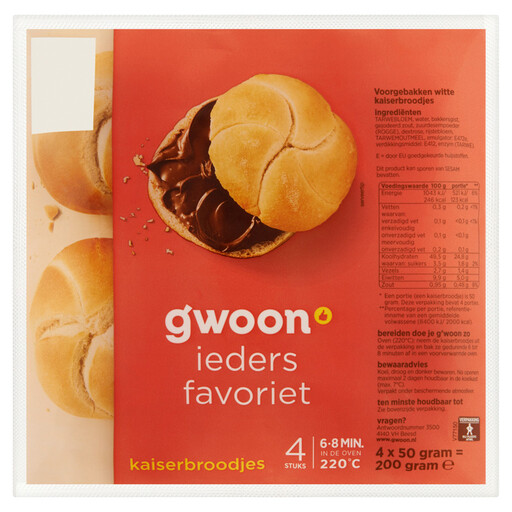 Image unavailable
The pack of four means you can choose one roll for each snack time and halve it if needed.
The product description lists gluten-containing cereals, milk, sesame and soya. Check the current packaging for ingredients, allergens and preparation instructions, especially if you’re packing the rolls for a child or want to serve them warm.
If the roll is a regular snack and gluten isn’t an issue, wholemeal fits with the Netherlands Nutrition Centre’s advice to choose brown or wholemeal bread for primary school children. Do compare the exact products: Albert Heijn’s wholemeal option described here contains 7.1 g of fibre per 100 g, while its white bake-at-home option contains 2.9 g per 100 g.
No. Albert Heijn’s white and wholemeal options described here, as well as Jumbo’s white frozen option, list gluten-containing cereals. The Schär Kaisersemmel described by Jumbo is explicitly labelled gluten-free, but contains soya and may contain other allergens. Always read the label on the pack you choose.
It depends on the product. Albert Heijn says its white bake-at-home option described here isn’t suitable for home freezing; Jumbo’s white frozen option described here must not be refrozen after defrosting. Follow the storage and defrosting instructions on the packaging you buy.
Check the latest ingredients and allergen information for the roll, as well as the rules at the relevant school or childcare setting. Look out for any ‘may contain’ warnings and check the ingredients of any filling you add.
You can’t assume that every kaiser roll does. The white and wholemeal products described by Albert Heijn list iodised salt; for other rolls, check the ingredients on the pack you choose.