
Host on a budget
You want to serve warm rolls with soup, fillings or another special meal. A standard par-baked kaiser roll can provide the base, while the fillings and presentation make the meal your own.


Choose a white par-baked kaiser roll if you want to serve it warm and let the fillings make the meal feel special. A multigrain roll or a sourdough-style roll is a good choice if you’re looking for a different grain mix or style of bread; check whether multigrain also means wholegrain. If anyone needs to eat gluten-free, the latest ingredient and allergen information takes priority over presentation or bread style.
You want to serve warm rolls with soup, fillings or another special meal. A standard par-baked kaiser roll can provide the base, while the fillings and presentation make the meal your own.
You’re looking for a roll with a grain mix that suits your preferences. Check the product name, ingredients and fibre per 100 g: multigrain does not automatically mean wholegrain.
You need to check which ingredients and possible traces are relevant to those eating the rolls. Read the latest packaging, even for a roll advertised as gluten-free.
First, decide what matters most for your meal: a warm base, a particular grain mix, convenient storage or ingredients that suit the people eating.
| What to consider | What to check | Who it matters to |
|---|---|---|
| Presentation | Check how many rolls are in the pack and the oven or air fryer instructions. | I want to serve warm rolls with a special meal, but I’m happy to let the fillings do most of the work. For around 42% of consumers, a standard par-baked roll is the priority. |
| Grain mix | Check whether the product is labelled wholegrain, along with the ingredients and fibre per 100 g; you may also want to compare salt per 100 g. | If I want the rolls themselves to meet my wholegrain preference, I need to look beyond the word ‘multigrain’. This grain mix is the main consideration for around 33% of consumers. |
| Storage and preparation | Read the storage and freezing instructions and check whether the rolls can be baked from frozen. | I don’t always use a whole pack at once and want to be able to prepare the rest when it suits me. For around 17% of consumers, practical use matters most. |
| Gluten and allergens | Read the latest ingredient and allergen information, including any ‘may contain’ statements. | If someone needs to eat gluten-free or avoid an allergen, the rolls need to be suitable for them. For around 8% of consumers, this suitability is the first requirement. |
A sourdough- or stone-baked-style roll gives you a different type of bread, but it isn’t automatically a better match for fillings or soup than a standard par-baked kaiser roll.
Decide whether you want the roll itself to stand out on the table. If not, start by choosing a par-baked roll with a preparation method that suits your meal.
If you’re looking for wholegrain, choosing a roll based on the multigrain label alone may not meet your preference.
Check the exact product name, ingredients and fibre per 100 g in the nutritional information.
The standard kaiser rolls listed by retailers including Albert Heijn and PLUS contain wheat, rye and gluten. A gluten-free roll may still contain other allergens.
Check the latest packaging for each person eating, and take possible cross-contamination into account during preparation.
Storage options vary between an unopened pack, opened par-baked rolls and a frozen product.
Plan how many rolls you’ll serve, then follow the storage and freezing instructions on the pack for the rest.
The own-label range includes white par-baked kaiser rolls; Albert Heijn also offers a separate gluten-free option from Schär.
Jumbo offers standard white kaiser rolls as well as rolls in other styles, including sourdough multigrain.
ALDI lists De Afbakker white kaiser rolls alongside other par-baked rolls, such as ciabatta and stone-baked rolls.
PLUS lists white par-baked kaiser rolls as well as a separate wholemeal kaiser roll.
Dirk lists 1 de Beste Kaiserbroodje as a white par-baked option.
Lidl offers kaiser rolls to bake at home as an in-store purchase option.
This multigrain roll may suit you if you’re looking for a different grain mix for a special meal. Check the pack to see whether it’s wholegrain and how it needs to be prepared.
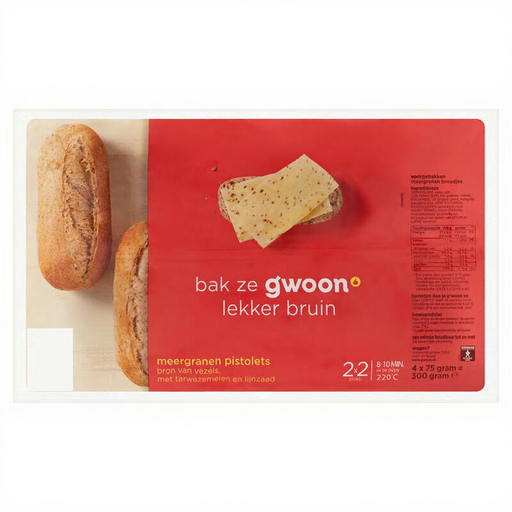 No image available
A good choice if you’re looking for a multigrain roll to serve with a meal. Check whether the rolls are wholegrain and whether the preparation method suits baking at home.
No. Multigrain and wholegrain don’t mean the same thing. If you’re looking for wholegrain, check the product name, ingredients and fibre per 100 g.
Read the allergen information on the latest packaging. The Netherlands Food and Consumer Product Safety Authority says allergens must be clearly listed on the labels of pre-packed foods; also check for any ‘may contain’ information that’s relevant to those eating the rolls.
No. Gluten-free doesn’t mean allergen-free. The Schär Kaiserbrötchen sold by Albert Heijn is labelled gluten-free and wheat-free, but contains soya and may contain mustard; always check the latest packaging.
For an unopened pack, follow the instructions on the label. For opened par-baked rolls, the Netherlands Nutrition Centre’s Storage Guide recommends 2–4 days in the fridge and 1–3 months in the freezer.
No. According to the Netherlands Nutrition Centre, using baker’s salt isn’t compulsory when making bread. If you want to know whether a roll is made with iodised salt, check the ingredients list on the latest packaging.