
Breakfast lovers who like generous toppings
If you want to fill a warm kaiser roll with, for example, egg or cheese, consider its size and how it’s prepared. You can’t tell from the term ‘thick cut’ whether a roll will hold your filling comfortably.


Don’t use ‘thick cut’ as the deciding factor when choosing kaiser rolls for a weekend breakfast: the product information reviewed doesn’t specify slice thickness or tested firmness for generous toppings. Start by considering the type of bread, how it’s prepared and how it should be stored. Then check the packaging to make sure the ingredients, allergens and nutritional information suit your needs.
If you want to fill a warm kaiser roll with, for example, egg or cheese, consider its size and how it’s prepared. You can’t tell from the term ‘thick cut’ whether a roll will hold your filling comfortably.
Compare a clearly labelled wholemeal option with white kaiser rolls by checking the ingredients and fibre per 100 g. Jumbo lists 6.7 g of fibre per 100 g for its frozen wholemeal kaiser rolls.
If you want to bake just a few rolls shortly before breakfast, compare frozen products with long-life bake-at-home rolls. Consider how much storage space you need and follow the packaging instructions for defrosting and storage.
First decide what matters most for your weekend breakfast: toppings, fibre, keeping a supply on hand or a specific dietary requirement. Then check the details of the particular roll. A white, wholemeal or frozen option doesn’t, by itself, tell you anything about slice thickness.
| What to consider | What to check before buying | Who it matters to |
|---|---|---|
| A roll for generous toppings | Check the size and preparation method. Once cut open, judge for yourself whether the roll suits your toppings. | If I want to pile my toppings high, I want to know how to prepare the roll in advance, even if its firmness isn’t specified. This is the main consideration for around 40% of consumers. |
| Fibre and wholemeal | Check whether the packaging says ‘wholemeal’ and compare the fibre per 100 g. | If fibre is my main concern, I want to be able to tell a wholemeal roll apart from a white one. This choice takes priority for around 30% of consumers. |
| Keeping a supply and baking at home | Compare pack size, storage instructions and baking instructions. For frozen rolls, check what to do after defrosting. | I only want to prepare the rolls we’ll eat this weekend and store the rest properly. Convenient storage matters most to around 20% of consumers. |
| Gluten and other allergens | Read the latest allergen information and, if you need a gluten-free option, look for an explicit gluten-free label. | If I need to choose gluten-free, I also have to check for other listed allergens. This dietary requirement is the deciding factor for around 10% of consumers. |
The product information reviewed doesn’t specify slice thickness. So the term doesn’t tell you whether a kaiser roll will hold generous toppings well.
Choose based on details you can check, then see how the cut-open roll works with your toppings the first time you use it.
Jumbo’s wholemeal option reviewed lists 6.7 g of fibre per 100 g; the white options reviewed list lower amounts. The colour of a roll is no substitute for checking the ingredients.
If wholemeal matters to you, check the product description, ingredients and fibre per 100 g.
Jumbo’s frozen kaiser rolls reviewed come with a warning not to refreeze them after defrosting.
Take only the rolls you need out of the freezer and follow the storage instructions on your pack.
Even a product clearly labelled gluten-free may contain other allergens. For the Schär Kaiserbrötchen reviewed, Albert Heijn lists soya and possible traces of mustard.
Read the full allergen statement on the current packaging. If you’re following a strict gluten-free diet, also take care to avoid cross-contamination during preparation.
Albert Heijn offers, among other options, white bake-at-home kaiser rolls and a separate gluten-free version from Schär.
Jumbo offers white and wholemeal kaiser rolls, including frozen options.
PLUS offers white bake-at-home kaiser rolls alongside fresh white and wholemeal options.
Dirk offers a pack of four bake-at-home kaiser rolls for a weekend breakfast.
ALDI lists both white kaiser rolls and white De Afbakker kaiser rolls for baking at home.
These kaiser rolls are an option if you’re looking for rolls to serve at a weekend breakfast. Check how to prepare them if you want to serve them warm, and decide for yourself whether their size works for generous toppings.
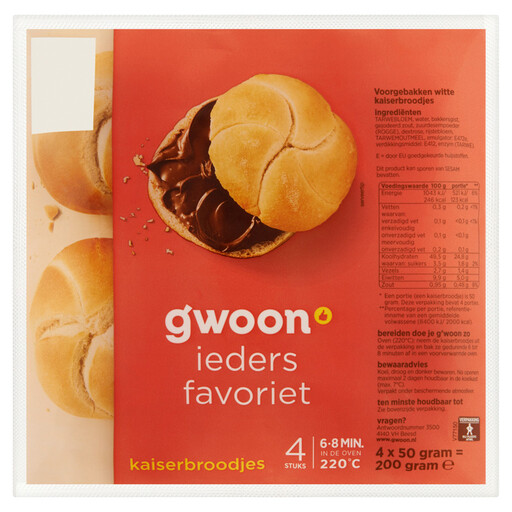 Image unavailable
A pack of kaiser rolls for anyone looking to serve rolls at a weekend breakfast. The product name lists four rolls and 200 g; check the packaging for preparation instructions and allergen information.
You can’t tell from the product information reviewed: it doesn’t specify slice thickness or tested firmness. Check the size and preparation method, then see whether the cut-open roll works with your toppings.
Look for an option explicitly labelled wholemeal and compare the fibre per 100 g. Jumbo lists 6.7 g of fibre per 100 g for its frozen wholemeal kaiser rolls; also check the ingredients and preparation instructions for the option you buy.
For the white frozen option from Jumbo that was reviewed, yes: Jumbo says to bake it straight from the freezer in an oven at 200 °C for 6–8 minutes. Follow the packaging instructions for other options, and don’t refreeze these rolls after defrosting.
The standard white options reviewed contain gluten-containing ingredients, so they aren’t suitable alternatives. If you need a gluten-free option, check that it’s explicitly labelled gluten-free, look for other allergens and prepare it carefully to avoid cross-contamination.
Don’t assume so from the name ‘kaiser roll’. Some of the ingredients lists reviewed mention iodised salt or baker’s salt; check the current ingredients list for the roll you choose.