
Families celebrating the start of term
If you want to make breakfast or lunch feel special with freshly baked kaiser rolls, it’s worth checking the preparation time and equipment you’ll need in advance.


For a special back-to-school breakfast, choose a luxury bake-at-home kaiser roll if presentation and freshly baking the rolls are your priorities. If wholemeal and fibre matter more, compare wholemeal options. If someone needs to avoid gluten, choose only a roll that is explicitly labelled gluten-free. Whatever you choose, check the latest allergen information, preparation instructions and school requirements.
If you want to make breakfast or lunch feel special with freshly baked kaiser rolls, it’s worth checking the preparation time and equipment you’ll need in advance.
If you regularly pack kaiser rolls and look for a wholemeal base and fibre, compare the product description and nutrition information per 100 g rather than judging by colour.
If gluten or other allergens need to be avoided, the label on the chosen option, how you handle crumbs and the requirements at school or the after-school club matter more than how the roll looks.
First, work out which allergens need to be avoided. Then compare wholemeal options and fibre content, when you plan to eat the rolls, and what’s practical to prepare and store at home or at school.
| What to consider | What to check when buying | Who should pay particular attention? |
|---|---|---|
| Allergens and school requirements | Check the ingredients and allergen information on the latest packaging. If you’re taking rolls in to share, ask about the requirements at school or the after-school club. | If someone needs to avoid gluten or another allergen, I want to know whether this particular roll is suitable and how to prepare it without contact with crumbs. For around 29% of consumers, this check comes first. |
| Wholemeal and fibre | Check whether the roll is described as wholemeal and compare the fibre per 100 g. Wholemeal does not mean gluten-free. | For a regular school lunch, I want to be able to tell a wholemeal roll apart from a white one. Around 29% of consumers give this choice top priority. |
| A special occasion | Check whether the rolls need to be baked at home and whether the instructions suit the oven or air fryer you have available. | I want to serve the rolls just before a celebratory back-to-school breakfast and can make time to bake them. This occasion matters most to around 21% of consumers. |
| Storage and planning | Check the number of rolls, storage instructions and local availability before planning the meal. | If the number of people eating may change, I want to be able to store the rolls and prepare only what I need. For around 21% of consumers, this planning is the main concern. |
A seed topping doesn’t, by itself, tell you anything about fibre content or whether a roll is suitable for someone with an allergy. According to Albert Heijn, the luxury AH option contains wheat, rye and sesame, among other ingredients.
For a regular lunch, compare the product description, allergens and nutrition information per 100 g with those of a wholemeal option.
The gluten-free Schär Kaiserbrötchen sold by Albert Heijn contains soya and may contain mustard. If gluten needs to be avoided, you’ll also need to take care when handling crumbs and using shared utensils for spreads and toppings.
Check the packaging for all relevant allergens and agree how the rolls will be stored and filled at home or at school.
Lidl says its fresh bread range may vary from one store to another. So seeing a particular roll on a product page doesn’t guarantee it will be available when you shop.
Check what’s available at your local store before planning the meal, and think of an alternative that meets the same needs.
The Jumbo frozen kaiser rolls included in our research are labelled as unsuitable for refreezing once thawed.
Follow the storage and preparation instructions on your pack, and take only the amount you need out of the freezer.
These examples show the different types of product you can compare. The details apply to the specific rolls mentioned, not to a brand’s entire range.
Albert Heijn lists AH Luxury bake-at-home kaiser rolls, a separate wholemeal kaiser roll and a gluten-free Schär option.
Jumbo sells white and wholemeal frozen kaiser rolls, which are handy if you want to plan a meal in advance.
ALDI’s Afbakker white kaiser rolls are designed to be baked at home.
The PLUS wholemeal kaiser roll is one example of a wholemeal option for a school lunch.
Lidl lists both a fresh white wheat kaiser roll sold in store and kaiser rolls to bake at home.
For a back-to-school breakfast with kaiser rolls, you could consider this pack of four. If you have specific requirements for baking, wholemeal ingredients or allergens, check that the current packaging meets them.
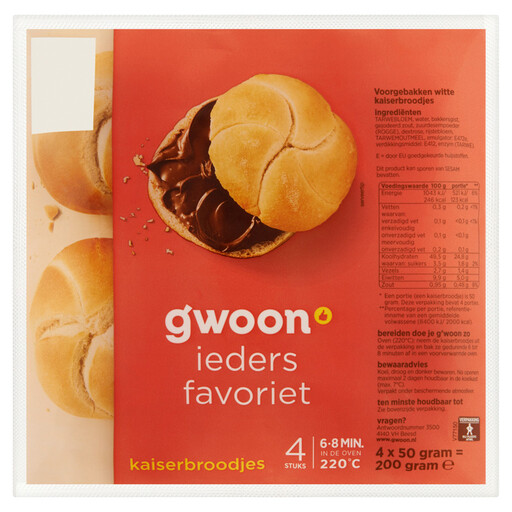 Image unavailable
A pack of kaiser rolls to consider for a back-to-school breakfast.
Four rolls, 200 g in total. Before buying, check the latest allergen information and preparation instructions on the packaging, especially if you plan to pack the rolls for school or bake them at home.
No, but the standard, luxury and wholemeal options mentioned contain gluten-containing cereals or wheat. Albert Heijn also sells a Schär Kaiserbrötchen labelled as gluten-free; it contains soya and may contain mustard. Always check the packaging of the option you choose.
Yes, especially if food will be shared or a pupil needs to avoid allergens. Ask the school or after-school club about its requirements for food brought in, storage and preventing contact with crumbs or shared utensils for spreads and toppings.
A luxury white roll to bake at home is a good choice for a planned special occasion if you have time to bake it just before serving. If a wholemeal base and fibre are priorities for a regular lunch, compare wholemeal options and their nutrition information per 100 g. Wholemeal is not automatically suitable for someone who needs to avoid gluten.
You can’t assume that. According to the Voedingscentrum, bread made with iodised baker’s salt can contribute to your iodine intake, but bakers aren’t required to use it. For packaged bread, check the ingredients list or ask the baker.
Not the Jumbo frozen options mentioned: according to Jumbo, they must not be refrozen after thawing. For other rolls, follow the instructions on their packaging and prepare only the amount you need.